



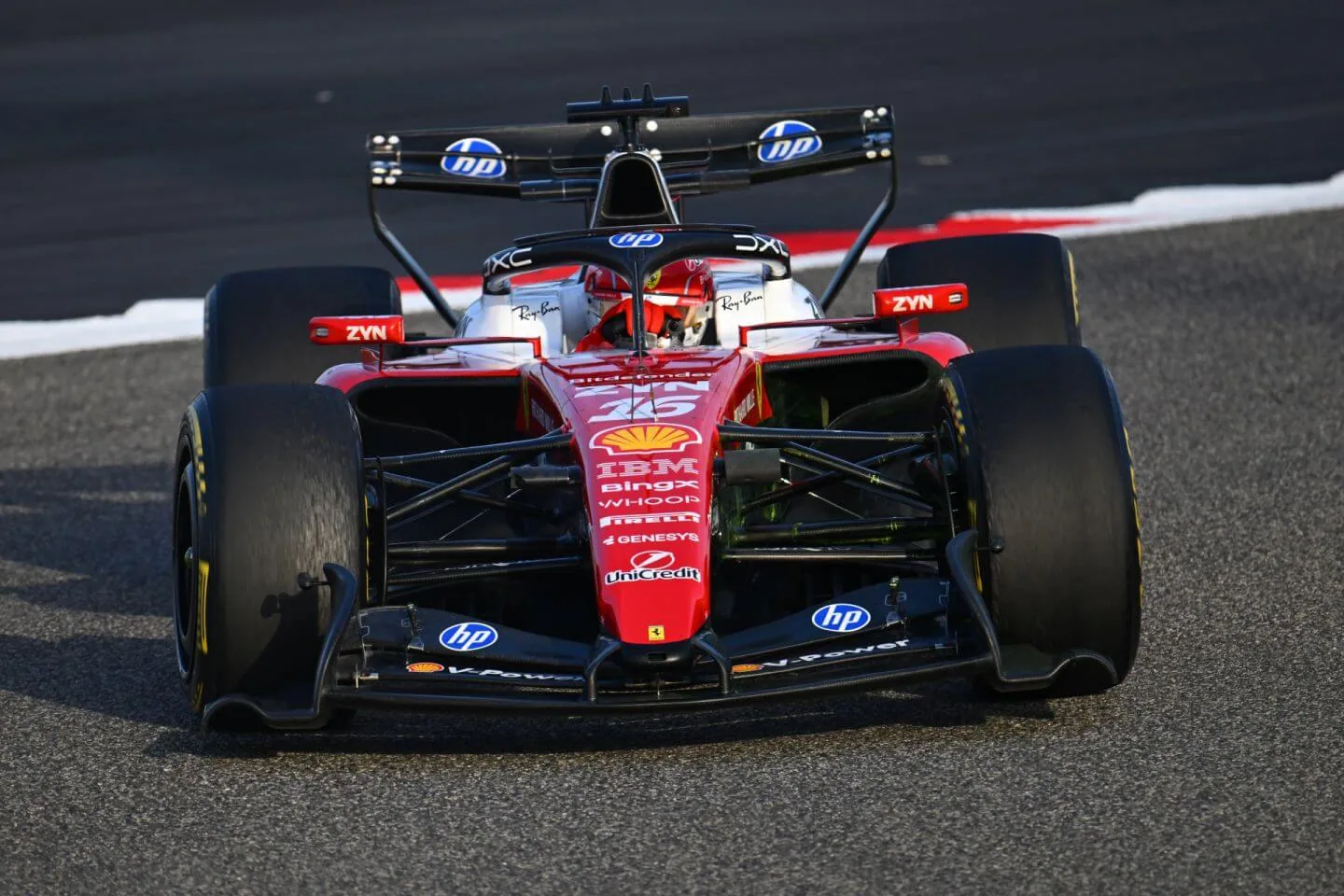
The Ferrari team introduced two very interesting technical solutions during the final round of testing in Bahrain. On the first day, these were additional aerodynamic elements in the exhaust pipe area, and on the second day, a completely differently designed mechanism for moving the rear wing flaps.
Read more F1 Fantasy and real team strategies – can the outcome be predicted?
Sometimes small aerodynamic solutions in F1 cars can make a bigger impression than large update packages. This is exactly the case with Ferrari, which started the second round of testing with a unique solution in the exhaust pipe area of the SF-26 car. On the second day of testing, they topped that with a rear wing that has a unique mechanism for moving the flaps. In 2026, Ferrari is becoming the team that sets the trends, and rivals will be thinking about copying them. As reported by the Italian media, Ferrari was said to have received the green light from the FIA for its aerodynamic solutions. They deliberately waited until the final tests to introduce them to the car so that rivals would have less time for their own analyses. Additionally, Ferrari is said to have a slightly smaller turbocharger in its engine, which gives them an advantage at starts.
Very interesting exhaust – the return of using exhaust gases to generate downforce
Between 2014 and 2025, it was not allowed to cover the exhaust pipe with anything; the exhaust gases had to exit in such a way that they did not provide aerodynamic benefits. Teams tried to tinker in this area, but nothing significant could be gained. This was introduced to F1 intentionally because in the earlier 2009–2013 seasons, first double and then blown diffusers reigned supreme. Teams directed the exhaust pipes to use the exhaust gases to generate downforce. V8 engine software was adapted for this, so that they emitted exhaust gases even in corners when the car was not using engine power, because that is when the most downforce is needed. Red Bull was the leader in this field, gaining significantly from its partnership with Renault, which was the best in this regard. In those days, additional fuel was burned to emit exhaust gases in corners, not to accelerate on the straights. Hence, one of the changes for the 2014 season was the introduction of an exhaust pipe configuration that prevented the use of exhaust gases.
When it seemed that it would be exactly the same in 2026, Ferrari debuted a large aerodynamic element at the second round of testing in Bahrain that covers most of the exhaust pipe. From the start of testing in Barcelona, they had some strange-looking elements there, but they were significantly changed during the first day of the final round in Bahrain. Hot exhaust gases exiting the exhaust pipe largely hit a wing mounted a few centimeters away. It is very extensive downwards; the exhaust gases are likely directed to various places there. This year, this could be exceptionally beneficial because the engines work while driving through corners when they generate electricity. Exhaust gases are therefore emitted when additional downforce is needed. It cannot be ruled out that the Ferrari engine has appropriate mapping that ensures exhaust emissions while driving in slow corners.
Below is a photo showing this solution. If it doesn’t load properly, you need to click here; it’s a link to the X service, where there is a post with the solution drawn out, and below another with photos.
Thanks to Maestro @xavigazquez we can have a good look and detailed explanation of Ferrari’s delicate exhaust dam and intricate symphony of multiple aerodynamic phenomena!
The common goal? Drive the central diffuser – and rear wing! – much harder during on-throttle cornering #F1 https://t.co/cUf7UFuTlP pic.twitter.com/VzG8tFNKvm
— Vanja H (@AeroTechVH) February 18, 2026
This definitely goes beyond my technical knowledge, but I have seen expert comments that Ferrari’s solution is legal. They intentionally applied certain solutions in the rear part of the car that “freed up” space for the introduction of an additional wing behind the exhaust pipe. Copying this during the season will be very difficult; it would require rebuilding the entire rear of the car. There is no guarantee that this is possible because it requires a specific gearbox shape. Rivals likely do not have such gearboxes.
Read more Selection of the most beautiful and interesting F1 car in 2026
Unique movable rear wing mechanism
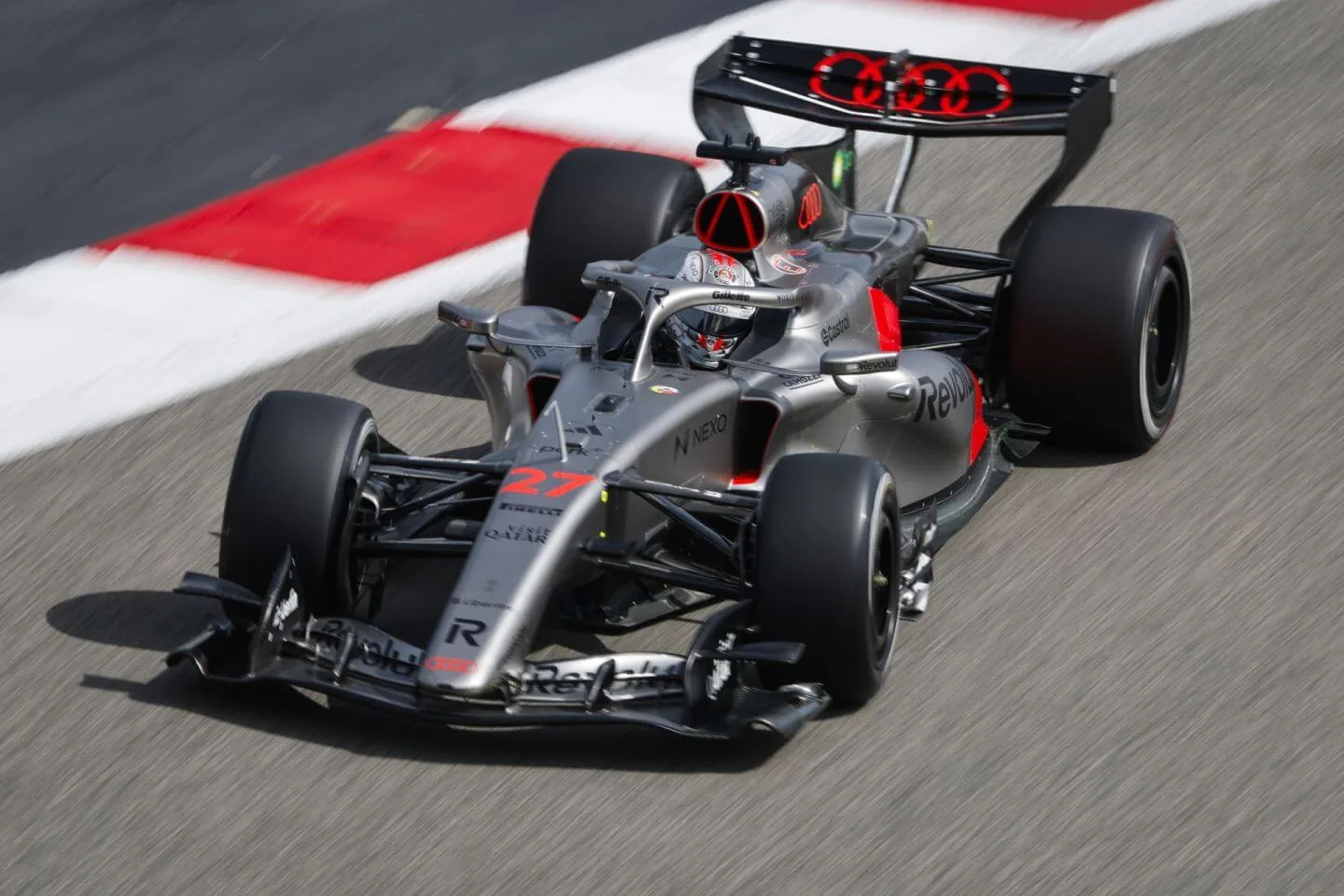
Ferrari showed a much more spectacular novelty during the second day of testing. Lewis Hamilton drove in the morning session with a rear wing in which the movable flaps rotate 180 degrees. He completed only a few laps with this wing because another fault appeared in the car, causing him to spend over three hours in the garage. In the afternoon session, he already had a standard rear wing. Until now, a classic solution, similar to the DRS system from previous years, dominated the field. Besides, Alpine has its unique solution where the wing flaps are lowered – Details, and Audi has a solution where the mechanism is connected to the middle flap – less spectacular, but also interesting.
Ferrari’s solution is definitely the most interesting and the most complicated for rivals to introduce. In their car, the movable flaps rotate 180 degrees. At first, as in the standard solution, they are raised upwards, but then additionally rotated. Looking at the open rear wing on the Ferrari, it is visible “to the naked eye” that the resulting opening in the wing is larger than in the classic solution, which will translate into less downforce and higher top speeds. The inverted wing can also generate lift, which will reduce the pressure on the ground. In the Ferrari wing, the movement mechanism is hidden in the side vertical parts of the rear wing; it is not in the middle in the form of a protruding element, as is standard in F1. Therefore, copying this solution by the competition will not be easy, as no one has used a similar mechanism before.
Below is a short video showing the wing in action. If it doesn’t work, there is a longer recording on the F1 YouTube channel – Link.
You spin me right round! 😵💫
Here’s Ferrari’s innovative solution to moving the upper flap of the rear wing as part of this season’s active aero introduction 👀 #F1 #F1Testing pic.twitter.com/yY0ZcI1Kph
— Formula 1 (@F1) February 19, 2026
Theoretically, such a solution will allow driving with a larger rear wing, which provides more downforce in corners, because after opening, the drop in downforce will be to a level similar to slightly smaller wings. On the other hand, opening and closing can be problematic because it takes longer, so at the moment of opening and closing, they will incur small losses compared to the classic solution. I also don’t know about safety, because in the event of a failure, the flaps should automatically close, and in Ferrari’s solution, they are twisted. There must be some safety mechanism there.
Summary
Ferrari looks very good throughout the pre-season tests, and during the final round, they introduced two major innovations plus several standard updates. It has been a very long time since Ferrari made such a good impression before the season. Of course, a key point must be remembered: Ferrari has liked starting seasons well over the last dozen or so years, but development during the season looks worse. To win the championship in 2026, it will be necessary to develop well during the season.
Complete information about all **Formula 1 car launches for the 2026 season can be found in a special summary here**. You will find dates, details, photos, and links to reviews of all presentations there.
Read more 2026 Formula 2 season preview