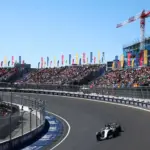
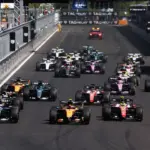
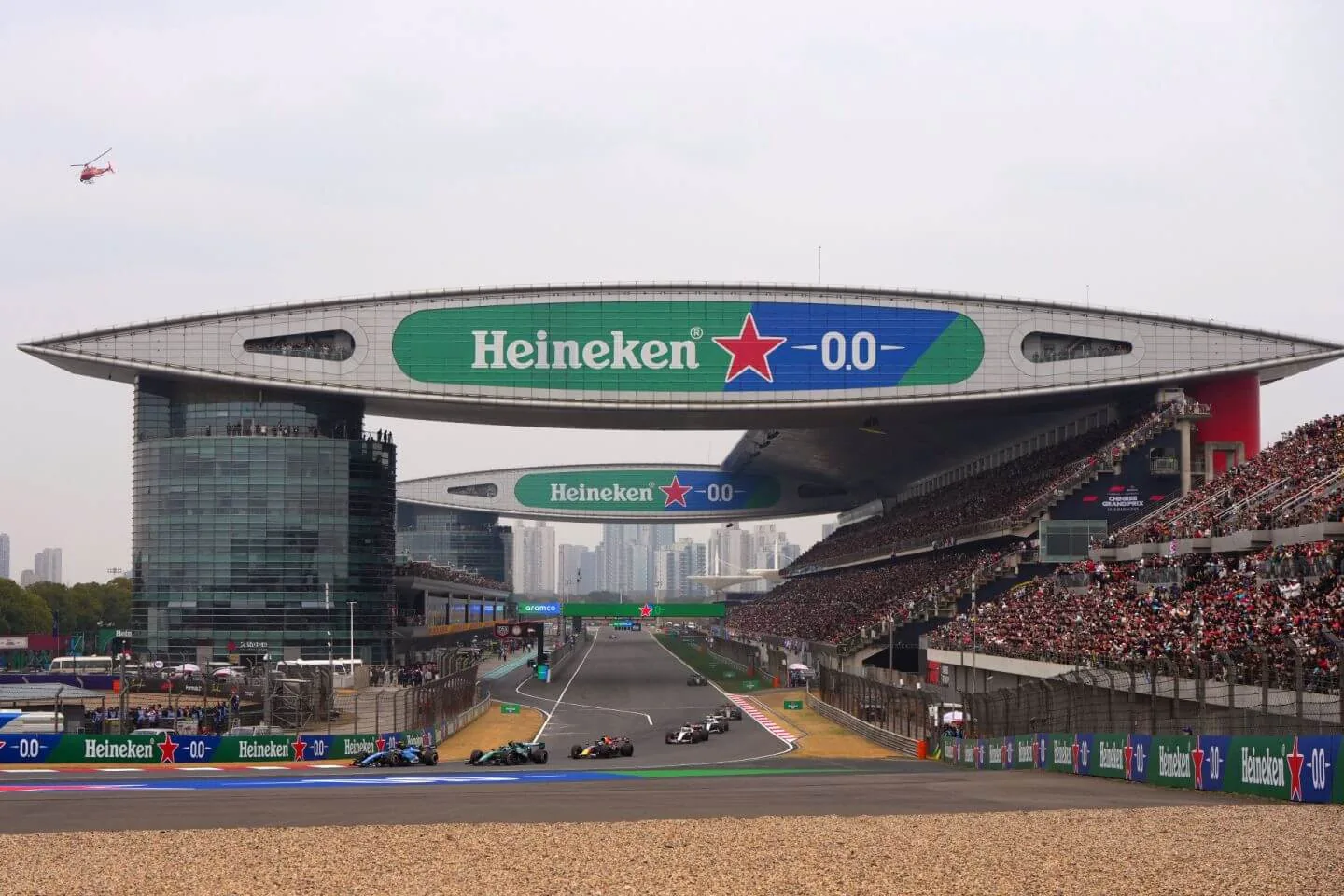
Kimi Antonelli won a Formula 1 race for the first time in his career, leading Mercedes to a 1-2 finish in the 2026 Chinese GP. The podium was completed by Lewis Hamilton, for whom this was the first such success at Ferrari. The Chinese GP was marked by many overtaking maneuvers, breakdowns, and surprises in the lower positions.
Read more Russell won an interesting sprint ahead of the 2026 Chinese GP
The race at the Shanghai circuit was held in very stable weather conditions. However, it was cool, with the track temperature barely exceeding 20 degrees Celsius. This significantly affected tire warm-up and wear. Only 18. drivers started the race, and three more retired during the competition due to breakdowns.
Race results for the 2026 Chinese GP
| Pos. | Driver | Team | Time | |
| 1. | Kimi Antonelli | Mercedes | 1:33:15.607 | 25 |
| 2. | George Russell | Mercedes | +5.515s | 18 |
| 3. | Lewis Hamilton | Ferrari | +25.267s | 15 |
| 4. | Charles Leclerc | Ferrari | +28.894s | 12 |
| 5. | Oliver Bearman | Haas | +57.268s | 10 |
| 6. | Pierre Gasly | Alpine | +59.647s | 8 |
| 7. | Liam Lawson | Racing Bulls | +80.588s | 6 |
| 8. | Isack Hadjar | Red Bull | +87.247s | 4 |
| 9. | Carlos Sainz | Williams | +1 lap | 2 |
| 10. | Franco Colapinto | Alpine | +1 lap | 1 |
| 11. | Nico Hulkenberg | Audi | +1 lap | 0 |
| 12. | Arvid Lindblad | Racing Bulls | +1 lap | 0 |
| 13. | Valtteri Bottas | Cadillac | +1 lap | 0 |
| 14. | Esteban Ocon | Haas | +1 lap | 0 |
| 15. | Sergio Perez | Cadillac | +1 lap | 0 |
| 16. | Max Verstappen | Red Bull | DNF | 0 |
| 17. | Fernando Alonso | Aston Martin | DNF | 0 |
| 18. | Lance Stroll | Aston Martin | DNF | 0 |
| NC | Oscar Piastri | McLaren | DNS | 0 |
| NC | Lando Norris | McLaren | DNS | 0 |
| NC | Gabriel Bortoleto | Audi | DNS | 0 |
| NC | Alexander Albon | Williams | DNS | 0 |
Both McLaren drivers did not start the race, so this race will not be counted for this team in the F1 participation statistics.
Plenty of technical troubles
Only 18. drivers started the race. Alex Albon planned to start from the pit lane after major changes to the car, but after completing the reconnaissance lap, a hydraulic system failure was detected that could not be repaired. An undisclosed technical problem also affected Gabriel Bortoleto’s Audi car. McLaren had the worst luck. First, a problem appeared in Lando Norris’s car (even before he left the garage), and later in Oscar Piastri’s (he was on the starting grid and they pulled him off). Electrical system problems with the power unit were detected in both cars, but they were two different faults. McLaren had the potential to fight Ferrari, or at worst finish behind the Ferrari drivers, so they suffered significant losses.
On the ninth lap, Lance Stroll stopped in the first corner, as his car simply shut down. A battery problem is suspected. The Canadian’s stoppage led to a full neutralization. Fernando Alonso retired on the 32. lap after experiencing severe vibrations earlier (he had to take his hands off the steering wheel on the straights to let them rest). The vibrations have been known since the start of testing and so far they have not managed to eliminate them. Max Verstappen also did not finish, retiring on the 45. lap. The reason here was said to be a leak from the cooling system. Verstappen drove into the pits himself.
Mercedes vs Ferrari duel for the top positions
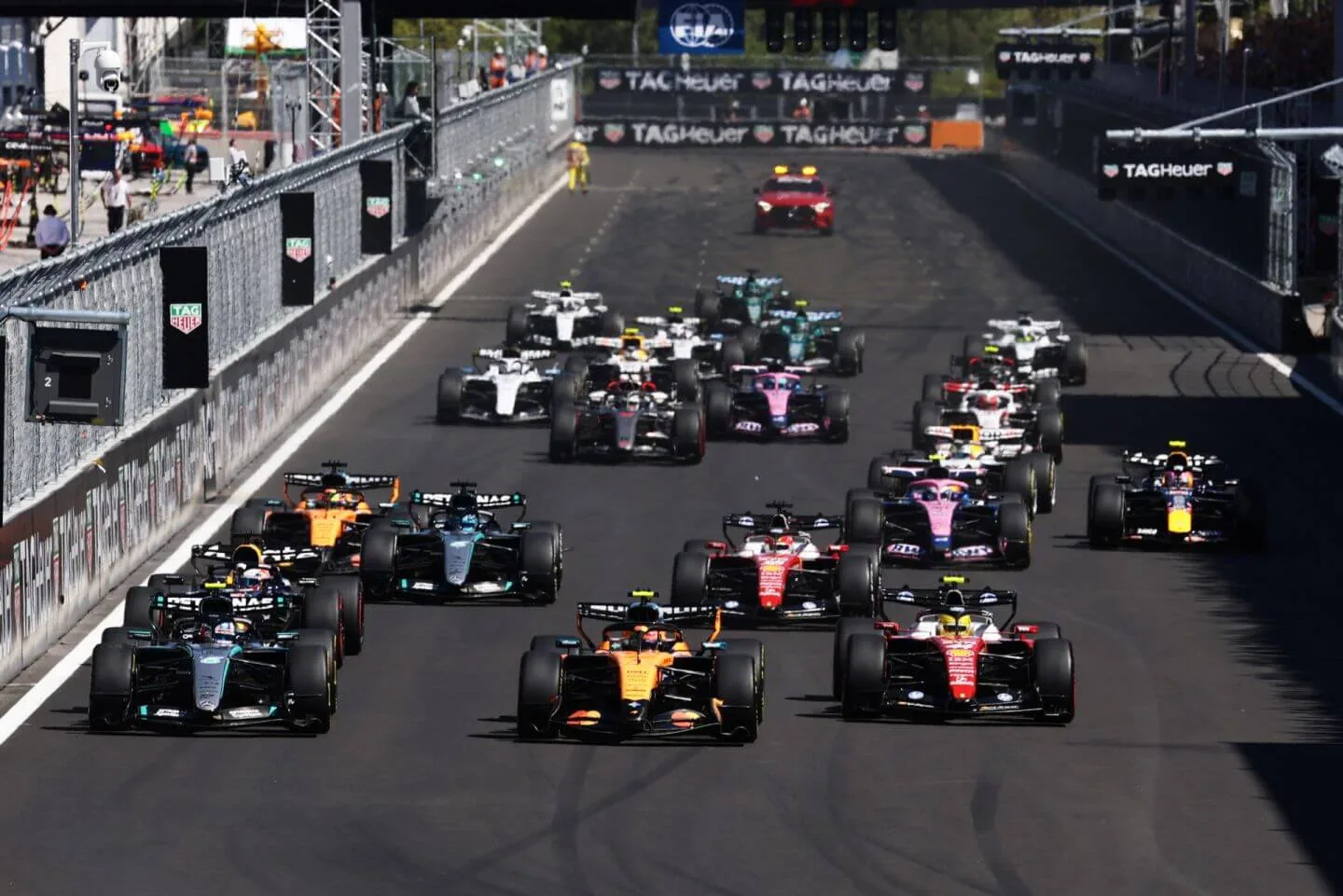
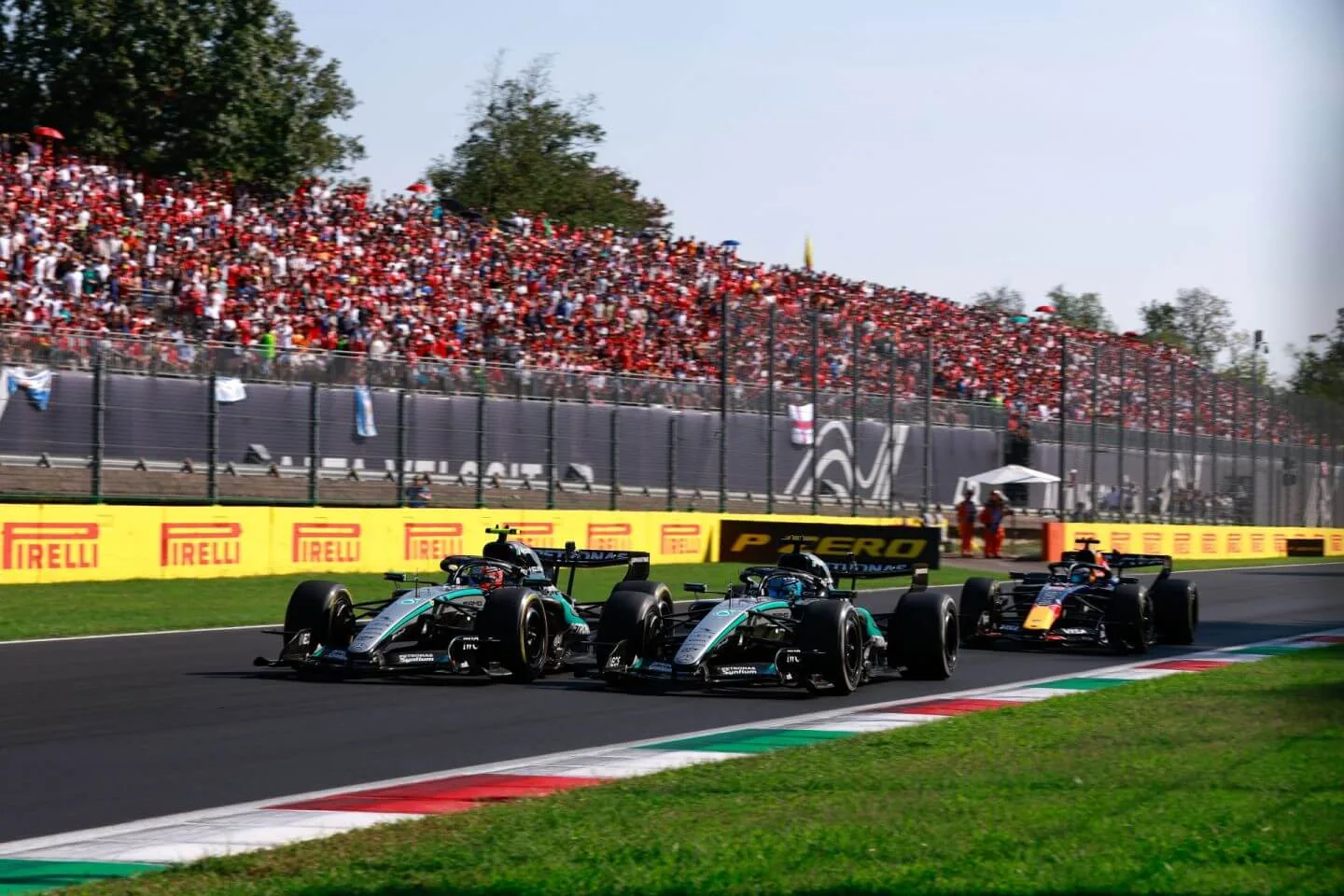
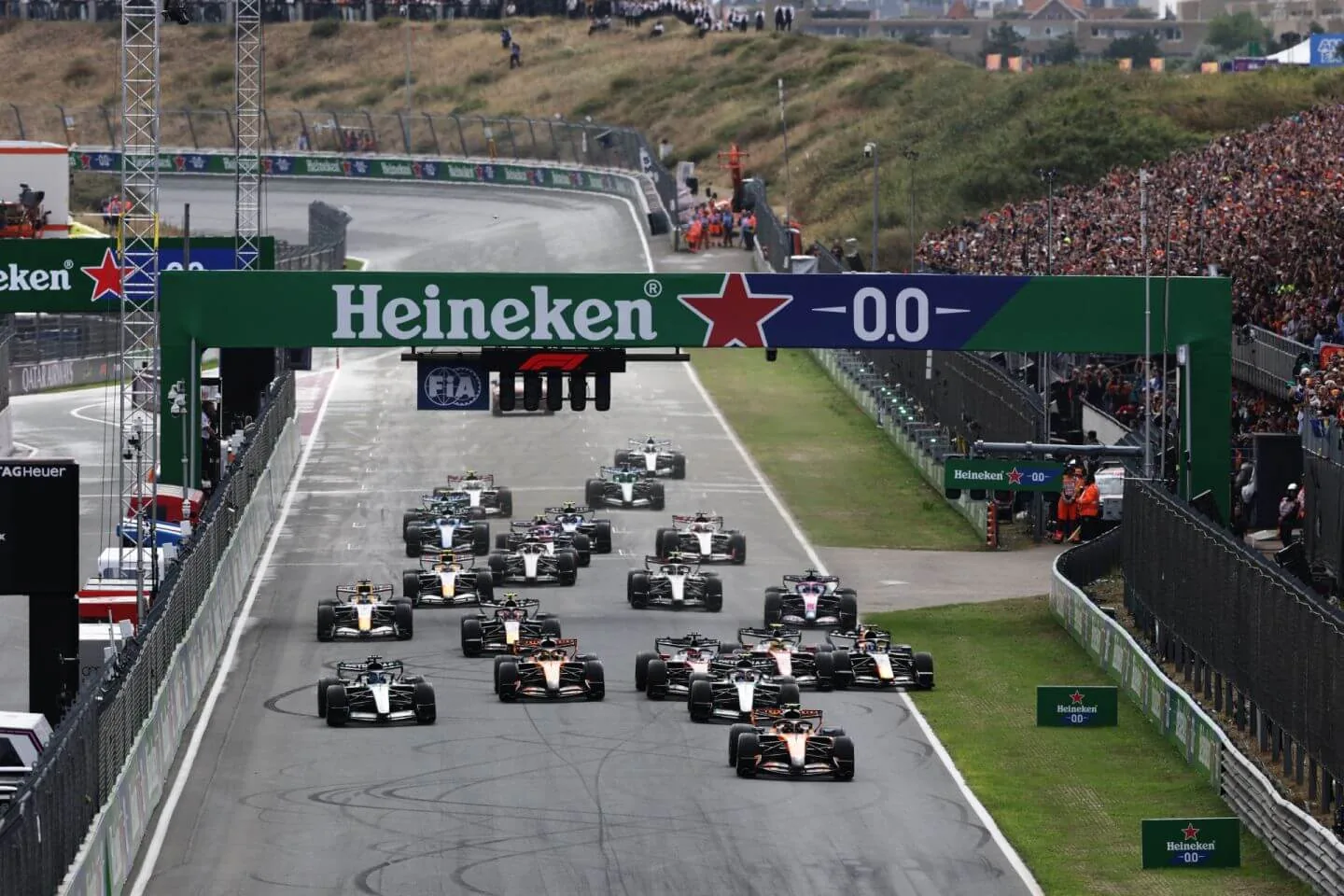
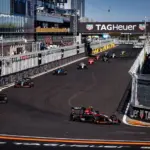
Mercedes and Ferrari drivers competed for the top four positions. At the start, Lewis Hamilton took the lead, overtaking both Mercedes drivers, and Charles Leclerc moved into third. Kimi Antonelli regained the lead on the second lap and controlled the race from then on, but initially his lead was very small, barely exceeding a second. Russell overtook both Ferrari drivers and returned to second place on the fourth lap. The Ferrari drivers did not fight hard this time and did not counter the maneuvers of their Mercedes rivals. They did so in the sprint, which resulted in excessive wear of the medium tires; this time they played it safe. There was also a clear difference in pace on the medium tires, as the Mercedes drivers quickly pulled away from them.
The race situation changed due to the neutralization at the end of the ninth lap. All the leaders then changed to hard tires, on which they finished the race. Antonelli maintained the lead, followed by Colapinto and Ocon, who did not change tires (they started on hards). After the restart, Hamilton quickly overtook Russell, Ocon, and Colapinto, and then closed in on Antonelli to less than a second, but was unable to attack. Both Mercedes drivers had trouble warming up the hard tires and their pace after the restart was poor. Once they did, Antonelli began to systematically pull away. Behind him, a duel between Hamilton, Leclerc, and Russell continued. Positions changed between them multiple times. At one point, Russell moved into second place, taking advantage of the fact that the Ferrari drivers were occupied with each other. Russell tried to chase the leader, but Antonelli already had a lead of over 7 seconds and very good pace.
Mercedes recorded a 1-2 finish. Antonelli won the race for the first time in his career, and Russell took second place. George lost his chance for victory due to losing positions at the start and restart. Antonelli had race pace as good as his and did not allow himself to be caught. Mercedes had a big advantage over Ferrari in tire management. Lap times (especially on medium tires) at Mercedes were very stable. Of course, there is also an advantage on the engine / car side. Ferrari is able to compete with Mercedes, but only over a short distance. I agree with what Fred Vasseur said after the race, that Mercedes has about 0,5 seconds advantage in race pace, because that’s exactly how it looks. The question remains if and when they will manage to make up for it. Ferrari is reportedly preparing a very large set of upgrades for the Miami GP, but then there will be new parts in all teams.
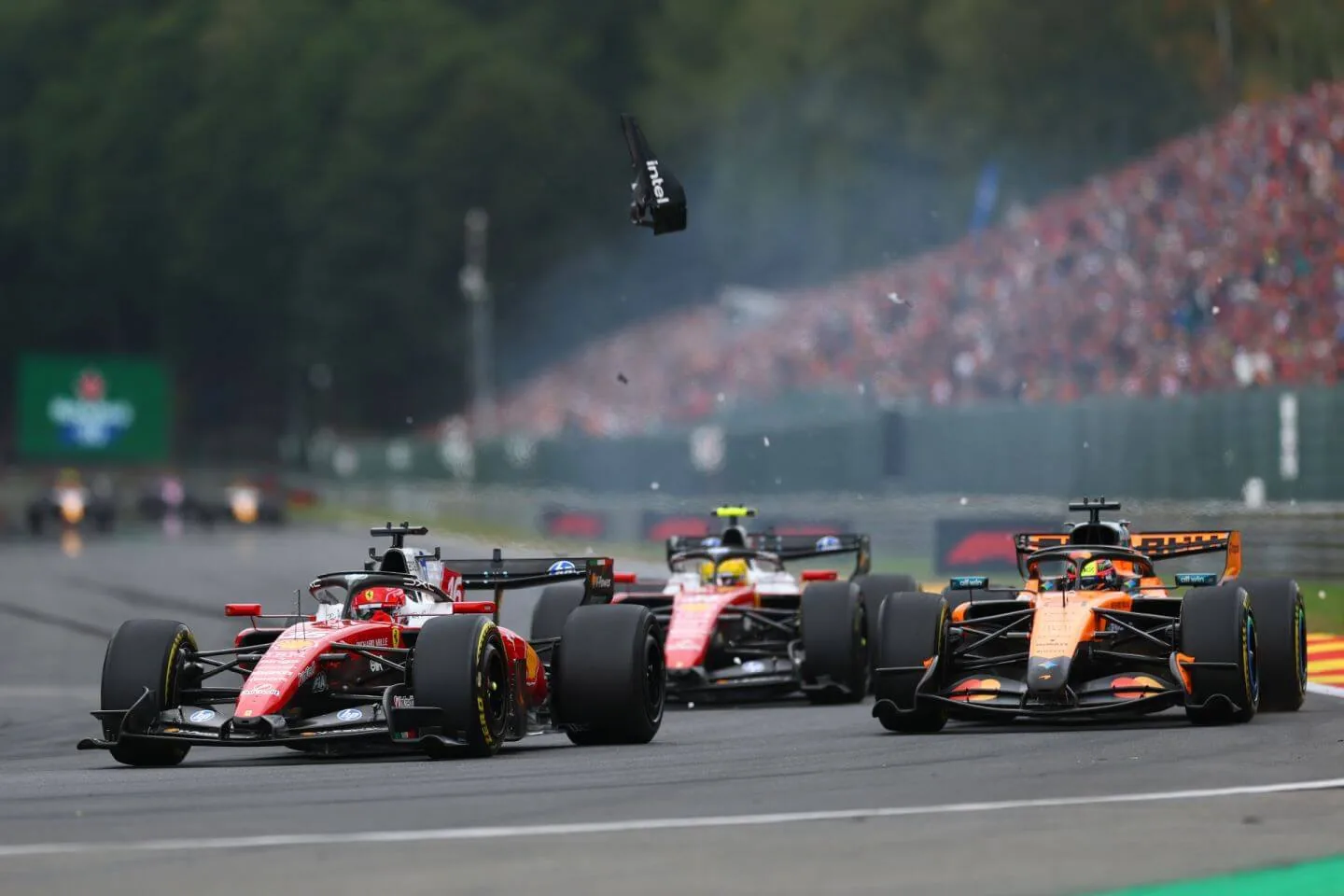
The highlight of the race was the internal duels between the Ferrari drivers, at times very tough. I was afraid of a collision, but the drivers drove cautiously enough to leave each other room and did not make a mistake. Ultimately, Hamilton emerged victorious from this rivalry, marking his first podium for Ferrari. It’s clear that he has been revitalized this year and the new cars suit him much better. He is always strong in China, so I am not surprised that he beat Leclerc, who has never had success at this track. The dynamics in the team are changing; the internal fight has become much tougher than a year ago when Leclerc knew he had the advantage.
Read more Qualifying analysis before the 2026 Chinese GP
Discussion of other significant driver and team results in the 2026 Chinese GP
We currently have a multi-speed Formula 1. Mercedes with an advantage over Ferrari, and Ferrari with an equally large advantage over the midfield. McLaren was missing, which at worst would have been behind Ferrari. The midfield is much more balanced, followed by Aston Martin and Cadillac in the final group. We have what had to happen under the new regulations: larger differences in pace. These should gradually decrease during the season.
Oliver Bearman performed excellently in this race, taking fifth place. The Briton was 12. after the first lap, but later made up positions and maintained a very good pace until the finish line, keeping his rivals behind him. Esteban Ocon, using a reverse strategy, should have scored points, but after his pit stop, he collided with Franco Colapinto, seriously damaging the car, suffering time losses, and receiving a 10-second penalty. A major mistake by the Frenchman.
The mood in the Alpine team must be very good. Pierre Gasly took sixth place after a successful performance. He fought several duels and if it weren’t for a lot of fighting in the midfield, he could even have thought about catching Bearman. Thanks to a reverse strategy, Colapinto was in second place for a moment, and significant points were expected, but Ocon hit him after the pit stop. Colapinto lost about 8 seconds in this collision, so at least one position.
Experience showed in the actions of the Racing Bulls drivers. Liam Lawson brought home a very good seventh place after a successful race. Arvid Lindblad had the potential for a good result, but made several mistakes and finished outside the points. Racing Bulls currently has as many points in the general classification as Red Bull. They have the same engines, so there may soon be comments that they built a better car than the parent team.
It was a disastrous performance for Red Bull. Isack Hadjar spun on the first lap, fell to the back of the pack, and immediately changed tires. He made a second pit stop during the neutralization – he was in last position then. He managed to break through to eighth place, but that was mainly due to the rivals’ problems rather than pure pace. Max Verstappen messed up the start and had to make up for it later. He changed tires the lap before the neutralization, which was very costly. Ultimately, he managed to break through to sixth place, but was unable to catch Bearman. In the end, the Dutchman retired from the race after problems with the car.
Williams is celebrating its first points of the season. Their form is terrible, but so many drivers dropped out that a steady Carlos Sainz secured two points. Considering Williams’ current form, this is a very big success. Audi did not score points, and the reason was the neutralization. Hulkenberg started on hard tires and made his only pit stop in the final phase of the race; it was more costly for him than for the rivals who changed tires during the VSC. The German’s pace was good, but not enough to fight for points in such a scenario. Cadillac was the weakest in the race, but for them, the success is both drivers reaching the finish line, and the time losses were not very large at all.
Current general classifications after the 2026 Chinese GP can be found here.
Summary and a look at current F1
The 2026 Chinese GP was a race with many surprises, as well as a fight at the front. The first four positions at the finish were the same as on the starting grid, but much changed among these drivers during the race. The new Formula 1 provides significantly more overtaking maneuvers; it is much easier to stay close to a rival without the risk of overheating tires / car. So the things the FIA hoped for most have come true. Of course, the problem is the larger differences in the hierarchy, but that’s how it must be with new regulations, especially engine ones. During the season, car development will be intense, so the hierarchy should change.
I understand that some will consider some of the overtaking maneuvers artificial, but that’s nothing new in F1. It was similar when the DRS system was introduced, or when Pirelli made tires that lasted only a few laps when there were races with 3-4 pit stops. There is always some factor that dominates in F1; currently, it is the engines and battery usage management. Of course, rule changes are possible here, even during this season. In my opinion, the FIA should reduce the maximum power of the electric motor, or at least for tracks where recovery is more difficult. Currently, it is 475 horsepower. If it were reduced to, for example, 350-375 horsepower, the electric power would last for a significantly longer distance, so there would be few straights where this power is lacking at the end and the cars slow down. However, such a change would negatively affect lap times. There is also the question of whether there will be widespread support for changes. Before the season, there was a coalition against the Mercedes engine. Now such agreement may not exist because the hierarchy has changed and some teams will not vote for something they believe will hit them. F1 will have a free April, so this is the perfect moment to develop something.