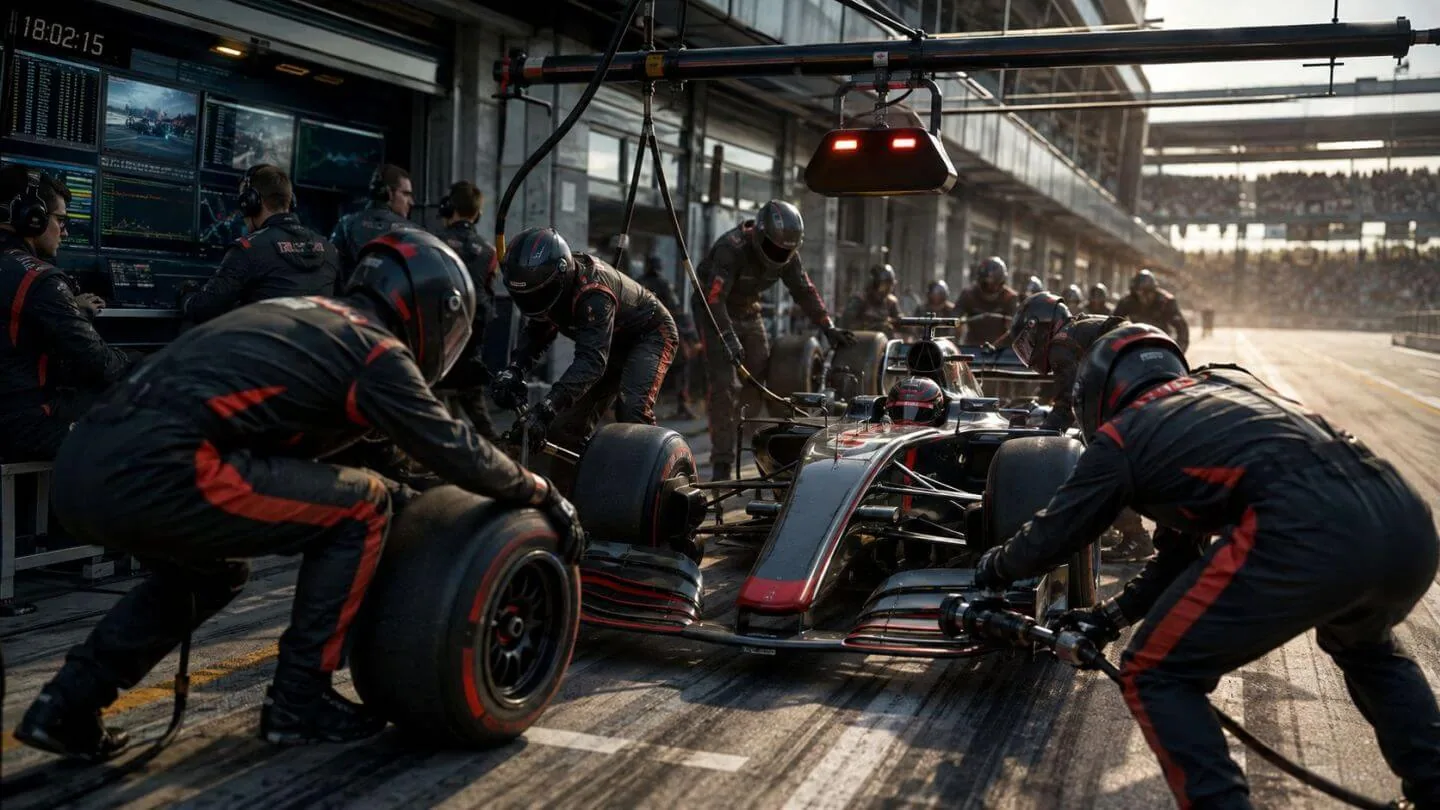









Modern car races are won not only thanks to huge engine power. The invisible, perfectly coordinated work of a team of experienced mechanics is of great importance. It is in the service area that the outcome of the competition is often decided.
Read more Kimi Antonelli with first F1 win at the 2026 Chinese GP
Why pit stops have become a tense and important part of racing
A stop means a moment of maximum focus for all participants. The smallest mistake can cost the driver a loss of position or even the end of their participation in the race. The emotions associated with waiting for the result can be compared to the thrill of risk at Pistolo casino, when the tension reaches its peak.
A quick wheel change allows for a tactical advantage without fighting on the track. Teams use an earlier stop to overtake a rival thanks to fresh tires. A delay of just half a second can completely ruin the precise calculations of strategists at the command post. Tension also rises due to the high speed of the car and the risk of serious injury. Mechanics stand in their places until the last moment and rely on the driver’s skills. The synergy of man and technology makes the service area both a dangerous and spectacular place.
Evolution of the pit stop and division of roles around the car
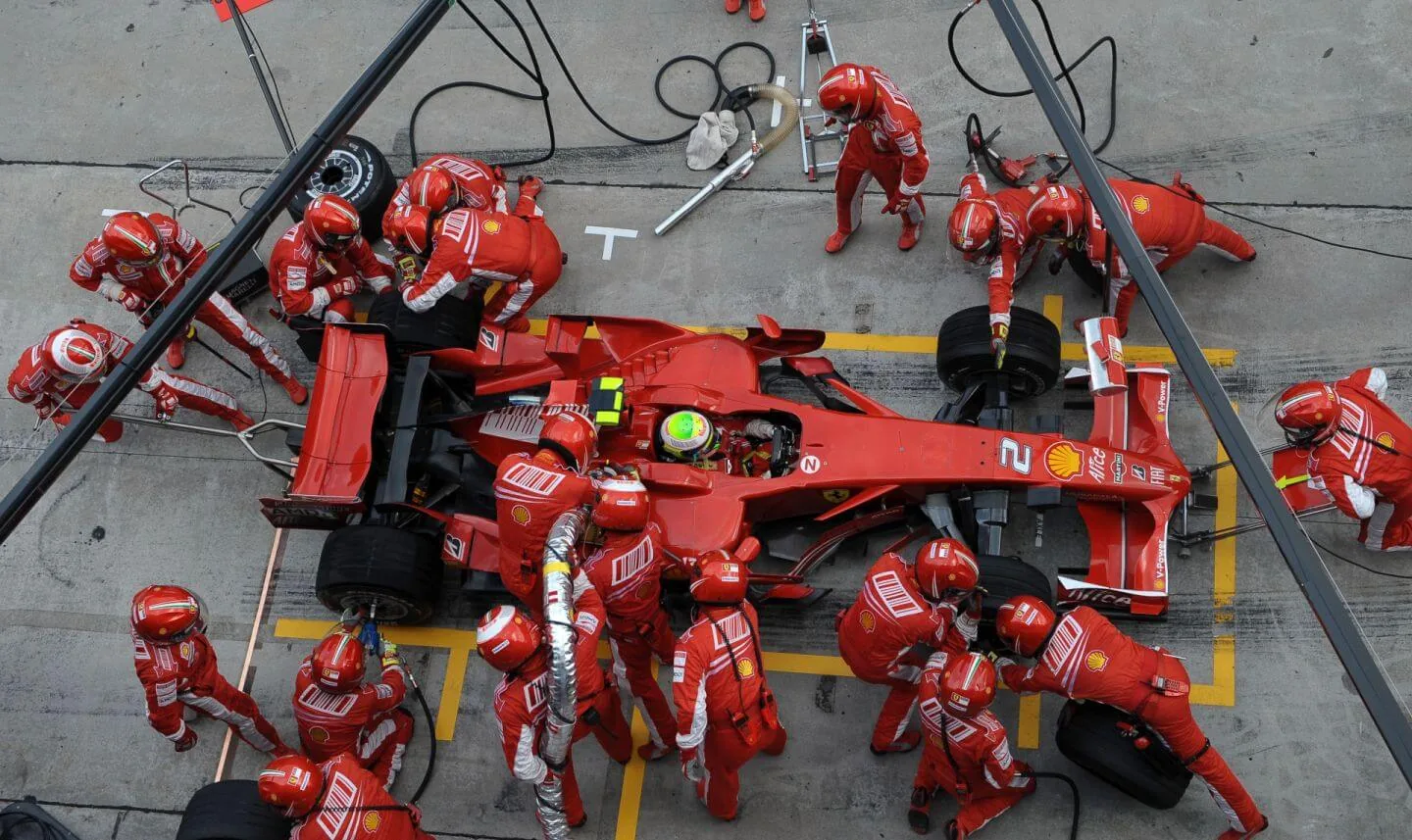
In the middle of the last century, car servicing took over a minute. The abolition of refueling forced engineers to focus solely on the speed of changing four wheels. Today, more than twenty specialists with clearly defined tasks work on one car, for example:
- Three mechanics at each wheel are responsible for removing the tire and operating the pneumatic wrench
- Two specialists control the front and rear jacks to immediately lift the car
- Team members take care of the visor’s cleanliness and adjust the rear wing setting
The division of roles in a modern team is strictly defined and brought to full automation. Each team member performs their task simultaneously with the others. One person’s mistake immediately causes a delay for the entire service group. Mechanics train daily at the team base and before subsequent races. The crew practices complex movements to develop muscle memory and good coordination. The practical benefit of such training is to limit the impact of high stress on precise hand movements.
Pneumatic wrenches with sensors and modern racing jacks
Technical equipment has developed significantly compared to old hand tools. Modern pneumatic wrenches are custom-made from lightweight and very durable aerospace materials. Built-in torque sensors prevent the wheel from being tightened too loosely. The tool sends a signal when the correct tightening force is reached. The jack system has also been improved to save precious fractions of a second. The front jack is equipped with a quick-release pressure mechanism that allows the car to be lowered immediately. The mechanic no longer has to pull away the heavy metal structure manually.
Innovations have covered practically every piece of equipment used during a pit stop. Designers try to improve every physical process. In professional motorsport, there are no small details.
- The rotating handle of the front jack allows for a quick clearing of the path for the starting car
- Built-in LEDs visually inform about the readiness of individual elements
- Special supports provide stable support for the jack on the pit surface
Data collected by the tools goes to an electronic signal indicator above the driver’s head. When all wheels are correctly attached, the program automatically turns on the green light. Reducing human involvement in giving the signal has significantly shortened the driver’s reaction time.
Read more Russell won an interesting sprint ahead of the 2026 Chinese GP
The price of one-tenth of a second and historical defeats due to delays
The history of motorsport knows many cases of losing a well-deserved victory. Dramatic moments often happen on narrow street circuits where overtaking is practically impossible. Losing a few seconds in the pits pushes the driver back in the standings and destroys the strategy. Fans well remember Ricciardo’s drama in Monaco when the mechanics forgot to prepare the tires.
Another well-known example was the situation with Bottas on the same track. The wheel nut got stuck on the hub and the mechanics completely destroyed the thread with a pneumatic wrench. The Finnish driver retired from the race while in second position because of the unremoved wheel. The car returned to the base, where the element was only removed using specialized equipment.
Such events force teams to change the design of parts to prevent dangerous blockages. Engineers must find a balance between tightening speed and overall connection reliability. A practical conclusion for designers is the need to create maximally resistant fastening systems.
Will modern teams set a new world record
The limit of human capabilities in car servicing is shifting thanks to continuous training. McLaren’s current record is one and eight-tenths of a second. Experts regularly discuss whether there is a real physical limit to the speed of performing such operations. Increasing the diameter of modern rims has made the mechanics’ work much more difficult. Improving the time will require new materials and changes in technical regulations. The international automobile federation is trying to slow down the process slightly for safety reasons. Mandatory sensor reaction delays have been introduced to prevent dangerous situations.
Despite this, leading teams still see opportunities for further development of technology and work organization:
- Improving the ergonomics of the workstation can bring further valuable hundredths of a second
- Developing very durable alloys for nuts will reduce the risk of thread jamming
- Analyzing team movements using artificial intelligence will help improve coordination of actions
Records will remain a matter of prestige rather than a daily racing necessity. Stability and the absence of risk of serious penalties remain the most important. The reliability of mechanisms combined with the speed of work makes a well-coordinated team of mechanics one of the keys to the championship.
Partner material.
GAMBLING INVOLVES RISK, AND PARTICIPATION IN ILLEGAL GAMES IS PUNISHABLE. ALLOWED FOR PERSONS OVER 18 YEARS OF AGE.