

Direct technological partnerships and close synergy with the entertainment industry today form the foundation of the global financial ecosystem of professional sports disciplines. Sports sponsorship has undergone a long evolution from simple forms of logo exposure to advanced marketing agreements. A key turning point in the history of this business branch occurred at the end of the 1960s in Formula 1.
Read more Approved evolution of power units in F1 in 2027 and 2028
In this article, you will learn the detailed history of breaking traditional color barriers on race tracks. Teams then abandoned national colors in favor of commercial brands. You will see how these pioneering decisions shaped today’s market.
- The lifting of restrictions on national colors in 1968 initiated the era of commercial sponsorship in Formula 1.
- Tobacco companies financed team budgets for decades, and after advertising bans were introduced, they used subliminal sponsorship.
- Polish brands also made their mark in motorsport history through advertisements in Monaco and modern oil partnerships.
- The contemporary sports ecosystem is shaped by legal operators such as the Fuksiarz brand, offering innovative digital betting.
How did the commercial revolution in the racing world happen? The birth of a new era
The history of the first sponsors in Formula 1 includes the FIA lifting restrictions on traditional national colors at the beginning of 1968. This change allowed racing teams to acquire external commercial capital. As a result, the first tobacco brands appeared on the car bodies, permanently transforming the financial structure of motorsport.
The pioneering step of Gunston Racing
The first commercial sponsor whose colors appeared on a Formula 1 car is considered to be the South African cigarette brand Gunston. During the South African Grand Prix, held on January 1, 1968, the private Gunston Racing team entered a Brabham car.
The car received a unique sponsor livery consisting of the orange, brown, and gold corporate colors of this tobacco manufacturer. Driver John Love finished second in this race. This event marked the departure from previous visual rules in motorsport.
The factory breakthrough and Team Lotus
A few months after the race in South Africa, a key breakthrough occurred involving a factory team. During the 1968 Monaco Grand Prix, the Imperial Tobacco company introduced the Gold Leaf brand as a sponsor of the Team Lotus squad. Team boss Colin Chapman thus implemented a purely commercial approach to sports financing.
The British stable’s cars abandoned the traditional national green known as British Racing Green. The vehicles received new red-white-gold graphic schemes. This moment officially began the era of full sponsor livery, which dominated the market standards of Formula 1.
Contemporary market analogies
The evolution of sports financing has led to the creation of advanced marketing structures in many entertainment sectors. Currently, the dynamic development of partnerships is clearly visible in entities offering mutual betting in Poland.
The contemporary market engages fans through advanced technological and digital tools. Entities such as the legal Fuksiarz bookmakers build their position in the sports ecosystem by providing innovative products for adult audiences. The history initiated by Team Lotus shaped the mechanisms that today’s market operators use.
How did the tobacco and alcohol era shape global motorsport?
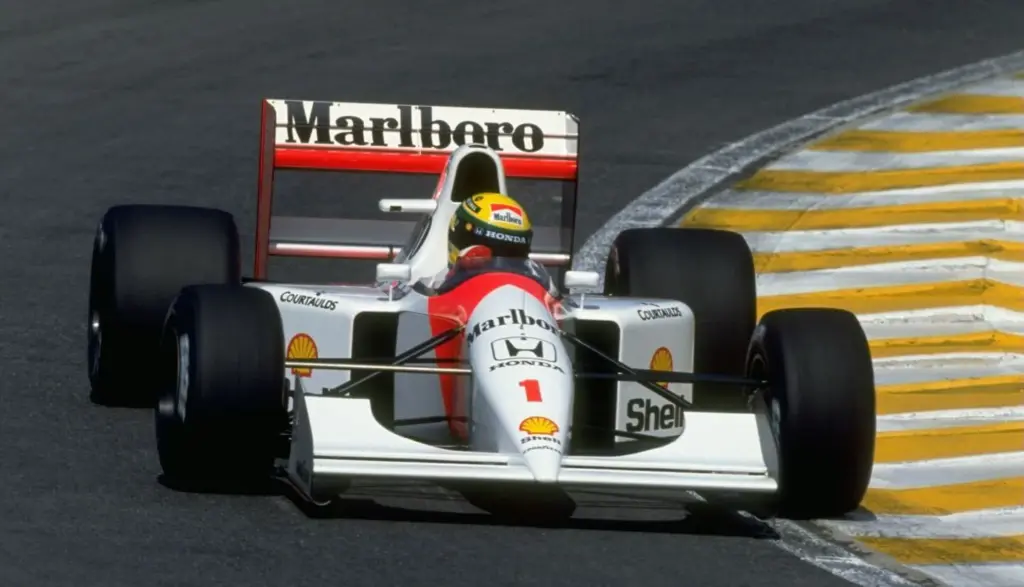
Tobacco and alcohol companies were the main driving force behind budgets in Formula 1 for decades. Commercial partnerships created iconic color schemes on vehicle bodies. Sponsorship survived the introduction of strict legal bans, forcing racing teams to implement innovative visual strategies and seek new sources of capital.
The power of Philip Morris and iconic liveries
The Marlboro brand, owned by Philip Morris, began sponsorship cooperation by supporting the BRM team. From 1974, this tobacco manufacturer’s logos appeared on McLaren cars. This partnership became permanently embedded in the history of graphic design in motorsport.
However, the longest-lasting and most recognizable cooperation in F1 history was the relationship with Ferrari. This cooperation lasted uninterrupted for over four decades. Financing from the tobacco giant allowed the Italian stable to build technological dominance.
Subliminal sponsorship and circumventing bans
The European Union introduced a total ban on tobacco advertising in sports in 2005. These regulations forced teams to abandon traditional sponsorship agreements on European tracks. However, cigarette manufacturers did not completely withdraw from financing racing stables.
Philip Morris remained a hidden sponsor of the Maranello stable. Teams began using so-called subliminal sponsorship on vehicle bodies. This practice involved placing barcodes or similar shapes that consumers clearly associated with the cigarette brand.
From tobacco to modern technologies
The contemporary financial landscape of Formula 1 is based on completely different sectors of the economy. The gap left by tobacco companies has been filled by global enterprises from new industries. Teams sign agreements with title partners from the technology, financial, and petrochemical sectors.
The value of modern sponsorship contracts with key partners now exceeds 100 million dollars annually. These huge marketing budgets cover the costs of advanced engineering research. Motorsport has undergone a complete transformation from promoting intoxicants to global technological alliances.
Polish traces in the history of Formula 1 sponsorship
Polish enterprises have made their mark in the history of Formula 1 through various promotional ventures over recent decades. Domestic capital appeared on tracks in the form of airline betting advertisements, promotion of alcohol brands, and modern strategic sponsorship. This presence evolved from incidental exposures to permanent partnerships.
Read more Williams and Aston Martin’s months-long problems in 2026
PZL-Świdnik and alcohol accents in Monaco
The first Polish enterprise in the context of Formula 1 was the PZL-Świdnik aviation plant. This company promoted its helicopters through logo exposure. It was a pioneering action of the Polish industry on the international car racing arena.
Polish alcohol brands made their mark in the history of competition on the Monaco track. In 1978, an advertisement for Polish vodka appeared at this street circuit. In 1996, the company Kremlyovskaya Export, associated with Polish managers, became the official sponsor of the rainy Monaco Grand Prix.
Modern oil patronage
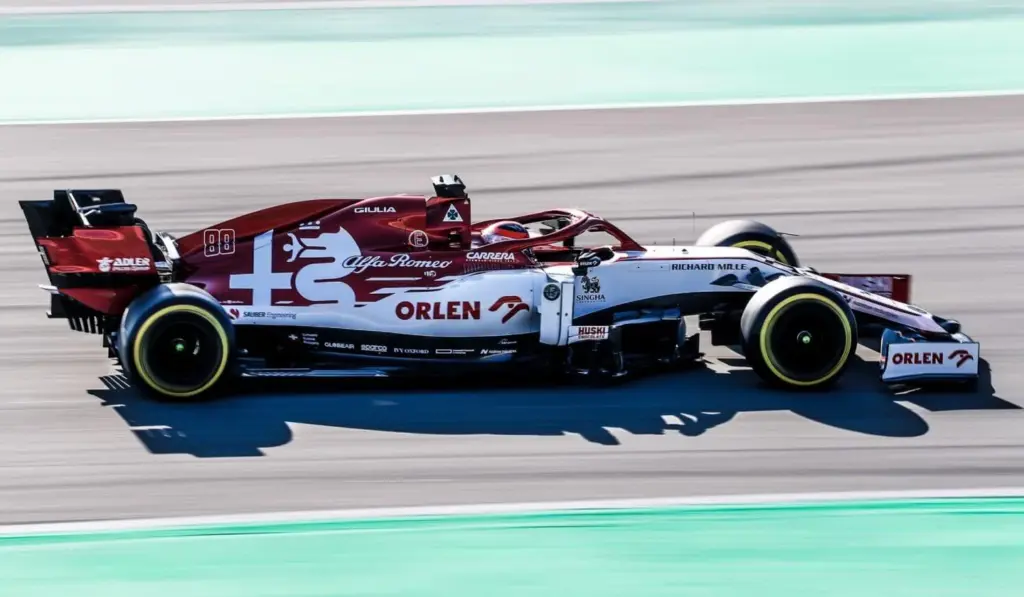
The largest and most stable Polish entity in the history of modern Formula 1 became the oil company PKN Orlen. The Polish multi-energy giant secured the presence of its brand on the international stage for many seasons. This financing was directly linked to Robert Kubica’s presence in the field.
The company pursued marketing goals through agreements with several racing teams. The Polish company’s logo appeared on the vehicles of the Williams and Alfa Romeo Racing teams. In subsequent years, the brand continued cooperation with the AlphaTauri and Racing Bulls teams.
The contemporary sponsorship landscape and regulated market in Poland
Today’s sports sponsorship is based on strict legal regulations and advanced product technology. This sector is closely linked to the dynamically developing market of legal bookmakers. In Poland, this industry generates huge marketing budgets that support domestic clubs and sports associations.
Legal requirements and state licenses
Every entity offering betting in Poland must have an official license. These permits are issued by the Ministry of Finance of the Republic of Poland after meeting strict technical and financial criteria. Operating without such a document is illegal and subject to criminal and fiscal penalties.
The applicant must provide bank guarantees to secure payouts for players and pay a 12% tax on turnover. Operators’ IT systems guarantee verification of participants’ age and implement Responsible Gaming policies. All legal platforms in the country must operate exclusively on domains ending with .pl.
Product innovations of contemporary operators
The mutual betting market is characterized by strong technological competition among legal operators. Bookmakers offer players traditional prematch bets and live (in-play) bets placed in real time. Advanced digital tools have also become standard.
Main operators implement features such as Betbuilder, which allows combining several markets within one event. New players introduce solutions like Early Payout, which automatically settles a coupon as a win when a specified goal advantage is reached. These product innovations shape contemporary fan engagement in the sports ecosystem.
FAQ
The first commercial sponsor was the Gunston brand, which placed its corporate colors on a private Brabham car on January 1, 1968, during the South African Grand Prix. A few months later, Team Lotus was the first factory team to introduce full commercial livery during the Monaco Grand Prix.
A legal operator must have an active license from the Ministry of Finance of the Republic of Poland to accept mutual bets. The full list of licensed entities is available on the official government website, and safe platforms operate exclusively on domains ending with .pl.
The total ban on tobacco advertising from 2005 forced racing stables to abandon traditional promotional agreements on European tracks. Teams adapted through subliminal sponsorship, and over time the financial gap was filled by global technology, financial, and petrochemical corporations.
Participation in foreign gambling without the required permit constitutes a fiscal crime under Polish law. The national fiscal penal code provides for financial penalties and the obligation to return the entire winning amount for this act.
This feature involves automatically settling a bet as a win when the selected team achieves a specified goal or point advantage. The mechanism works regardless of the final match result and is most often used when leading by two goals in football.
Sponsored content.
GAMBLING INVOLVES RISK, AND PARTICIPATION IN ILLEGAL GAMES IS PUNISHABLE. ALLOWED FOR PERSONS OVER 18 YEARS OF AGE.
Read more GP Great Britain 2026 with the highest attendance in F1 history