
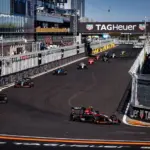
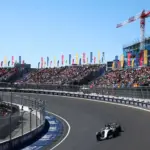
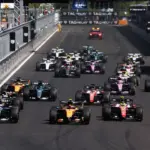
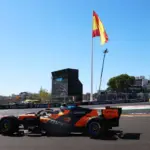


The year 2026 began with the dominance of the Mercedes team, which remains the leader of the entire field halfway through the season but faces three very strong rivals. The balance of power at the top of Formula 1 has become very even, with the four competing teams having different strengths and different plans for the second half of 2026.
Read more New Mercedes safety car in F1 from the 2026 Hungarian GP
The Mercedes, Ferrari, McLaren, and Red Bull teams are at the forefront of Formula 1 in 2026. Each of these teams has different advantages and disadvantages, and overall they provide us with surprisingly balanced competition. With such a significant change in technical regulations, many expected the dominance of one or two teams, but none of the frontrunners is perfect, so the balance of power is more even. This is largely due to the budget cap and limits on aerodynamic development, as no one can pull away. The balance of power among power units is also more even than expected before the season. In this text, I will discuss the situation of the teams and their engines in the first half of the season and give my forecasts for the rest of the competition. I am omitting opinions about the drivers in this article, as I will write a separate article on that topic in a few days.
Mercedes – from dominance to fighting to maintain the lead
Mercedes fully dominated the start of the 2026 season, i.e., the three March races. They had three doubles in qualifying and two doubles in the race (in Japan, they lost the double due to the start and bad luck with the SC deployment). The time advantage was not huge but sufficient to win without seriously looking back at rivals. Mercedes was best prepared for the start of the season, as was evident already in the February tests. They started the season with the best car, which was versatile, and they also had very well-mastered use of the power unit (the strongest in the field). After the April break, F1 returned to competition with slightly changed rules. The decision to modify the use of electric energy in qualifying was rightly made. Mercedes lost out on these changes because their power unit is best at energy recovery, so when limits were reduced, the balance of power became more even. In June, a new method of geometric measurement of the compression ratio in engines, approved before the season, was introduced, which did not affect their performance in any way. Before the season, this was a loud topic expected to hit Mercedes, but it did not happen. At one point, Mercedes also had to simplify their diffuser when the FIA intervened following a Ferrari complaint.
The team from Brackley focused this year on gradual development of their package and optimization for specific tracks. They introduced only one major aerodynamic upgrade package at the Canadian GP, which brought noticeable benefits then. During the rest of the weekends, they had minor aerodynamic improvements, also modified engine software (improving starts) and introduced reliability improvements to the power unit at the Austrian GP. The development of this team this year is textbook but also very safe. Compared to their direct rivals, Mercedes introduced the fewest major changes to the car this year. If they saved budget and catch up after the summer break, they will easily win both championship titles. However, if they planned a smaller budget for changes during the season from the start, there is a risk that someone will catch up with them in the second half of the season.
Mercedes’s main problem this year is reliability. Both cars had several very costly failures, and there were also some problems not caused by the drivers. They lost a lot of points because of this, which is hope for rivals for the second half of the season, as Mercedes’s points lead in both classifications is not large. Antonelli and Russell also face penalties for extra power unit components.
Mercedes announced they will have an important upgrade package after the summer break, probably at the Dutch GP, and this will be a crucial moment for them. If they gain a few tenths of a second then and regain a safe lead, rivals will lose hope of catching them in the standings. There is a chance they will introduce an improved power unit thanks to the ADUO system, but nothing is certain here. They previously announced there would be no such upgrades this year, but the situation may force them to do so. They remain the main favorites for both championship titles.
Ferrari hopes to join the fight for the championship title
Ferrari started the 2026 season very well. I am not afraid to say that in the first half of the competition, they had the best car in the entire field, but its potential was limited by a weaker power unit. It is clearly visible in all data that Ferrari drivers lose to their direct rivals on straights. Their internal combustion engine (confirmed by FIA in its measurement) lags by over 4%, but hybrid components are also worse, as telemetry charts from almost all qualifying sessions show they have less electric energy. Because of this, the results Ferrari achieved in the first half of the 2026 season are very good. The Italian team should also be praised for high reliability; their cars and engines rarely broke down this year. This will pay off after the summer break, as rivals should be forced to accept more grid penalties.
Scuderia engineers introduced several visible innovations in this year’s SF-26 car. They were the first to use a rotating rear wing, which has already received two upgrades since pre-season testing. They are leaders in this area in the field. They were the only ones to design the car around a “shrouded” exhaust, which provides more downforce on the rear axle. Almost the entire field copied this solution, but no car will be as efficient as Ferrari’s. The Italian team introduced two major aerodynamic upgrade packages during the season in Miami and Barcelona. Both packages brought noticeable improvements. Besides that, they regularly had minor changes to the car. Ferrari introduced a small upgrade to the power unit in Austria as part of ADUO, but this did not make a significant difference.
At the start of the season, Ferrari was the leader of the entire field at race starts. Thanks to a smaller turbocharger, their drivers gained a lot before braking for the first corner. The further into the season, the more this advantage disappeared, as rivals improved their power unit software. Ferrari has not had so many interesting innovations in their car for many years; a change in concept is visible at the factory, and they are not afraid to take risks. A change in approach is also visible in race management, with riskier strategies used more often, which do not always succeed, but Ferrari has repeatedly dictated the course of races to rivals.
Reliable Italian media announce that after the summer break, Ferrari will introduce significant aerodynamic upgrades, which will be their third major package. During the Italian GP, an improved power unit is planned as part of ADUO. This will involve important engine changes that will provide more power. This will definitely be a key moment for Ferrari this season, i.e., how much they manage to increase engine power. In an optimistic scenario, Ferrari may join the regular fight for wins in the second half of the year, especially on tracks that suit them more, i.e., those requiring high downforce. This will also be extremely important in the context of 2027, as without a competitive engine, they will not win the championship title.
Read more A handful of F1 Circus statistics after the 2026 Hungarian GP
McLaren – the awakening giant
The defending champions had a completely different approach to the start of the 2026 season than their rivals. Already at the start of testing, they presented a refined car with which they began the season in March. The rest of the frontrunners had preliminary versions at the start of testing, which they significantly improved during the next two test sessions. The team did not hide that due to the fight for the championship last year, they were behind in preparations for this season. McLaren had the smallest aerodynamic work time limits over the last two years, which also had an impact. They use the best Mercedes power unit but are still at least one step behind the factory team in understanding it; they have to refine the software themselves and then receive updates. Both McLaren cars had many different types of failures in the first half of this year: more than in two championship seasons combined.
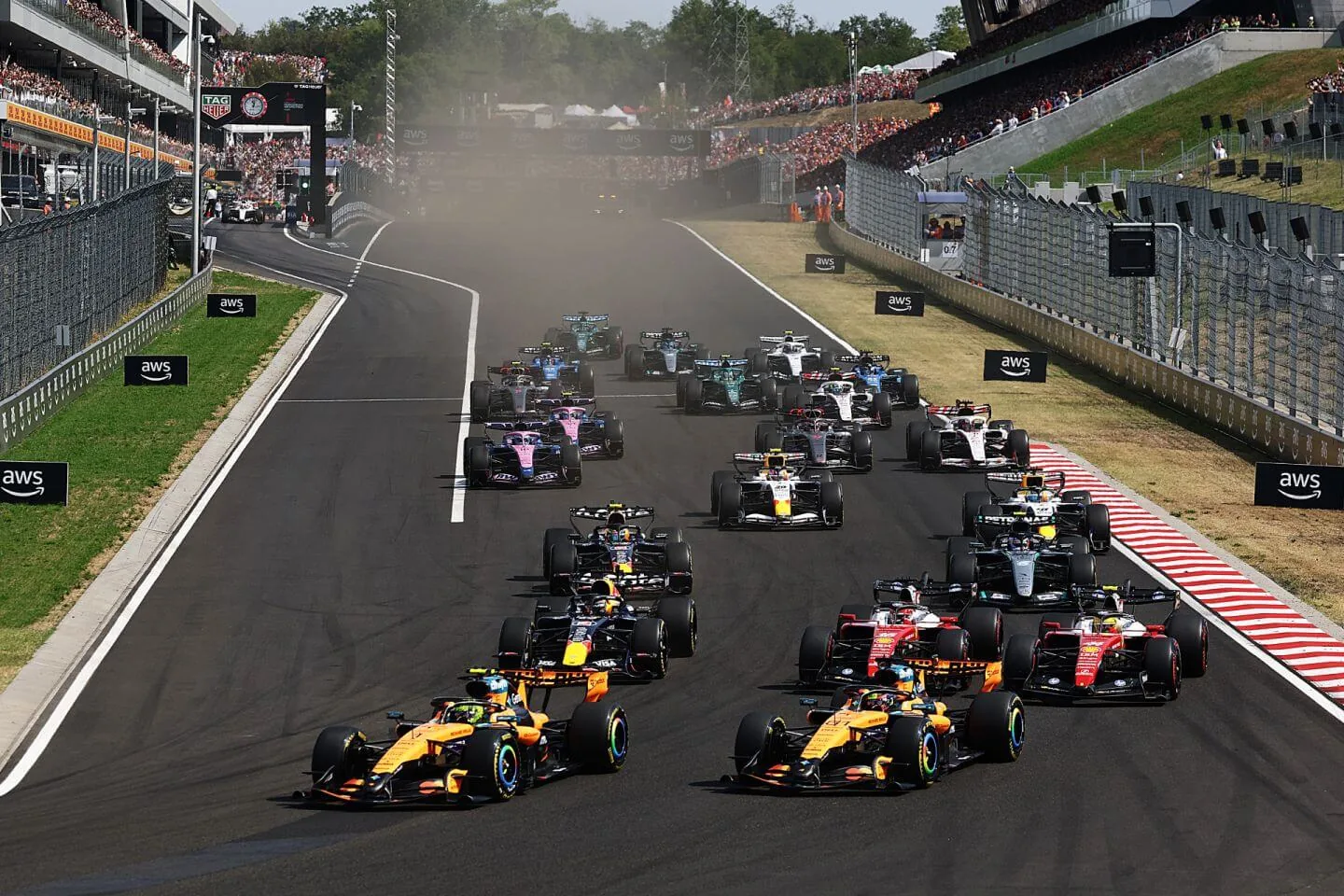
The team from Woking started the season with a car they called universal, which they later planned to develop in the direction they considered best. McLaren introduced a very large upgrade package spread over the May races in Miami and Canada, which brought significant improvement, and Norris was very close to winning the Miami GP. They began introducing a second major upgrade package in Hungary, with its continuation planned after the summer break. The changes in Hungary turned out to be perfect; the car had a lot of downforce, allowing them to win both qualifying and the race there. In Hungary, they also tested their own rotating rear wing, which is likely to be used from the Monza race. Counting tests, the team introduced the fewest major upgrades among the frontrunners. According to Andrea Stella’s announcements, they plan to catch up after the summer break and introduce more upgrades. If McLaren keeps their promise, a regular fight for wins is ahead, as Ferrari and Red Bull used more budget in the first half of the season and will not be able to respond.
The MCL40 car showed very well during the hot Hungarian GP. It had a lot of aerodynamic downforce, was very gentle on tires, and there were no significant problems with power unit usage. This track suited them better, and they should be strong on other similar circuits. The real test will come at Monza, where the demands are completely different. The form at the Italian GP will show us whether they will be equally good on all tracks or only on selected ones.
Red Bull – from big problems to regular podium fights
Red Bull started the season with a too heavy car that had an unsuccessful aerodynamic package. During the first three races in March, Red Bull drivers competed with Alpine and Haas teams, being in the middle of the field; it was a really terrible start to the competition. The only plus was the power unit, as it was clear from the Bahrain tests that it is very efficient. Red Bull developed the RB22 very intensively this year. The first major aerodynamic upgrade package was in March at the Japanese GP. The next was at the Miami GP (with a macarena-type wing), then a slightly smaller one in Canada. The key package was introduced at the Austrian GP, where besides major aerodynamic changes, they managed to “shed” the last kilograms and reached the minimum weight level. The changes introduced in Austria were truly groundbreaking, as Verstappen has fought for the podium in every race since then. Hadjar regularly finishes just behind the podium. They have made up most of the losses but remain the only team in the top group without a win, as they still lack that.
The team from Milton Keynes used more resources for development in the first half of the season than rivals. This team has shown in previous years that it can develop until the end of the year, allocating more funds for such development than direct rivals (perfect examples were in the 2021 and 2025 seasons). Therefore, I do not expect them to stop developing, and rivals pushing them permanently to fourth place in the balance of power. Knowing Red Bull, I expect one more important upgrade package in the post-summer period. I do not expect them to become a team regularly fighting for race wins, but the development during the 2026 season will be a very good foundation for a better 2027 season.
According to FIA measurements, Red Bull’s internal combustion engine is the strongest in the field, which is a huge achievement for this manufacturer. On the other hand, because of this, they were not allowed to develop under ADUO. If no one overtakes them during this season, it will affect work for the 2027 season, as other manufacturers received additional development opportunities. In terms of the power unit as a whole, they are not the best; Mercedes wins thanks to a better hybrid system.
Summary, forecast for the second half of the 2026 season, and important issues for next year
Four teams are fighting closely at the top, and there is no total dominance, which is a very good situation for all of F1 halfway through the 2026 season. On the other hand, the four leading teams have pulled away from the rest of the field, so we have a division into two groups. Since all frontrunners plan major changes right after the summer break, we will then see how the competition will proceed. Will someone manage to pull away, will there be a change in order, or further equalization? In my opinion, Mercedes remains the solid favorite for both championship titles. I expect the delayed upgrade package to improve the car enough to maintain their advantage. If Mercedes lets someone overtake them, it would be a huge surprise considering the start of the season. I also expect other teams to win a few races after the summer break.
In the 2027 season, two significant changes will occur. Engine regulations have been modified, with internal combustion engines gaining more importance. I expect intensive engine development between seasons, power will increase, and there may be a change in the balance of power. The FIA also approved several minor changes limiting aerodynamic downforce, banning additional elements introduced this year on the rear wing, diffuser, and exhaust. There will be imitation among teams, and next year’s cars should be based on more convergent concepts. Therefore, in my opinion, engine potential will be more important next season, and that will make a difference.
Read more Norris with a sure victory in the 2026 Hungarian GP