
In 2027, Formula 1 races will be shorter. Teams voted to shorten the distances by about 15 kilometers, which is related to previously approved modifications to engine regulations that will increase fuel consumption.
Read more Lando Norris launches LN4 Fusion team for junior series
After several weeks of discussions, in June the modifications to the F1 engine regulations for the 2027 and 2028 seasons were formally approved – Details. Full details and all calculations can be found at the link I provided. Overall, it concerns increasing the role of the combustion engine at the expense of the electric one. The power ratios will change in 2027 to 58/42, and in 2028 to 60/40. Increasing the power of combustion engines means that fuel consumption will increase by 5% in 2027 and by 13% in the 2028 season (compared to the 2026 values).
There are several teams in the field (according to the media, half) that have already planned to use the same monocoque (the chassis of the car, its most expensive element) in the 2026 and 2027 seasons for budget reasons. The fuel tank is located within this element. Fuel consumption varies depending on the track, and each team designed the tank to be full on the most fuel-consuming tracks. Increasing fuel flow by 5% means burning 3-4 kg more over the race distance. For tracks that are less fuel-consuming, it would be possible to complete the full distance, but on those where consumption is higher, the cars would have insufficient fuel for more than 305 km of competition.
Shorter Formula 1 races in 2027
Initially, it was planned to limit the number of formation laps and shorten the distances of those races in 2027 where the most fuel is consumed. However, this would mean that race distances would differ from each other and it would not be transparent. Therefore, the option of setting one value prevailed. According to Motorsport / Autosport, teams unanimously approved a regulatory change regarding shorter race distances in 2027 during an electronic vote last week. Now it still needs to be formally approved by the FIA and entered into the regulations. The new distance will be 290 km, which is 15 km less than in recent years. In practice, this means shortening races by 2-3 laps.
For many years, the Formula 1 regulations have stated that the F1 race distance is the smallest number of laps of a given track whose total distance exceeds 305 km. This means that the distances of all races range from 305 to 310 km. The only exception is Monaco, where the length is 260 km (due to the very low average speed, so that the race does not last longer than two hours). We have to wait for the FIA to update the regulations to know the exact wording, but it will probably look the same, only with the value 290 km.
Comparison of the number of laps in F1 races in 2026 and 2027
Assuming the regulation will state that races will have as many laps as needed to exceed 290 km, this is how it will affect individual events.
Read more Lando Norris launches LN4 Fusion team for junior series
Australia 58 -> 55 laps
China 56 -> 54 laps
Japan 53 -> 50 laps
Bahrain 57 -> 54 laps
Saudi Arabia 50 -> 48 laps
Miami 57 -> 54 laps
Canada 70 -> 67 laps
Monaco 78 -> 78 laps – no change
Austria 71 -> 68 laps
Great Britain 52 -> 50 laps
Belgium 44 -> 42 laps
Hungary 70 -> 67 laps
Italy 53 -> 51 laps
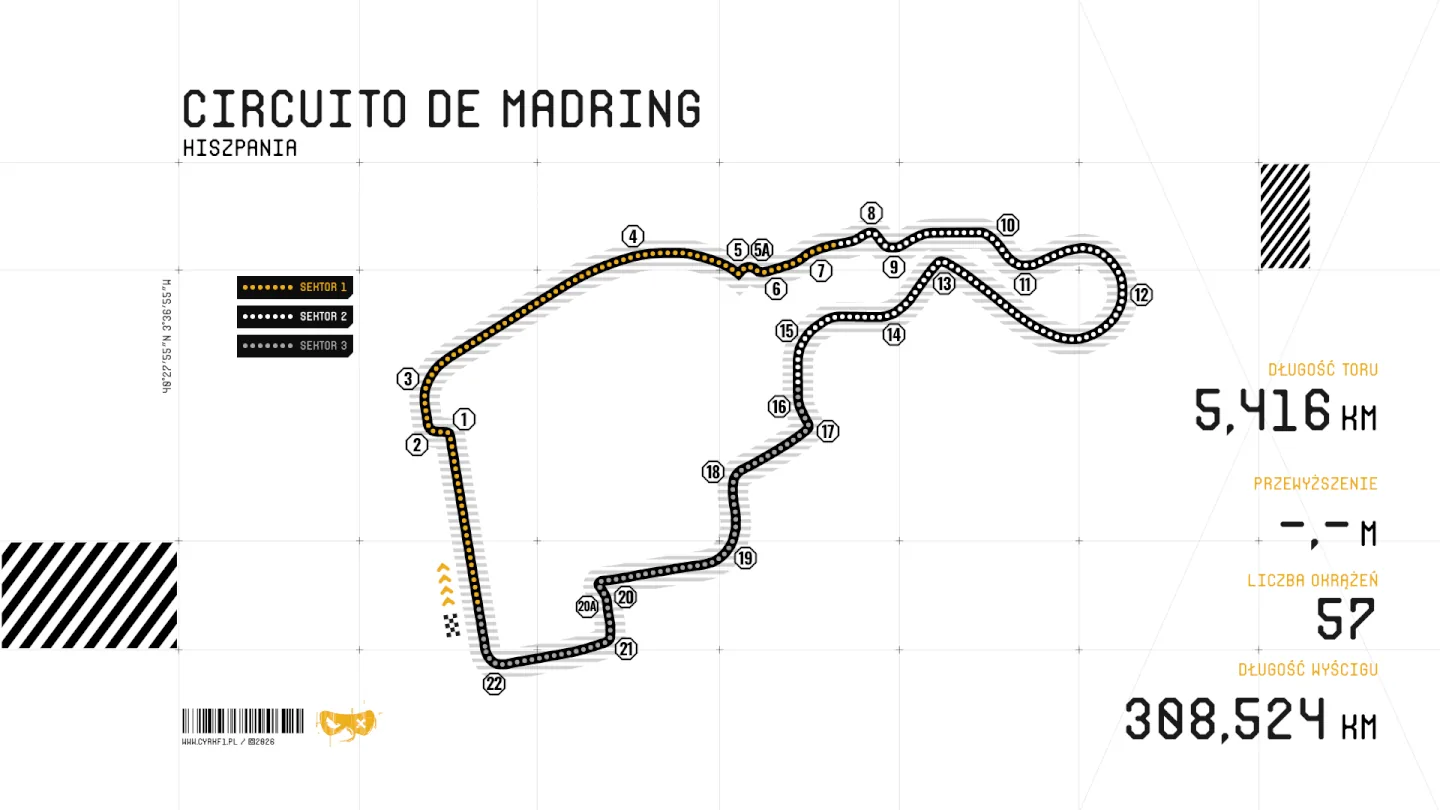
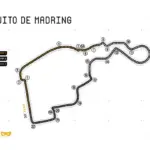
Spain (Madrid) 57 -> 54 laps
Azerbaijan 51 -> 49 laps
Singapore 62 -> 59 laps
USA 56 -> 53 laps
Mexico 71 -> 68 laps
Brazil 71 -> 68 laps
Las Vegas 50 -> 47 laps
Qatar 57 -> 54 laps
Abu Dhabi 58 -> 55 laps
As you can see, race distances will be shortened by 2-3 laps, which means the actual race duration will be shorter by 4-5 minutes.
Change for one year or longer?
At this moment, shorter races are a change introduced for the 2027 season. In 2028, due to further increased fuel consumption, they would have to shorten them again if they wanted to keep fuel tank sizes at the same level. For the 2028 season, everyone will prepare new monocoques and will be able to increase the size of fuel tanks (currently they hold about 30 kg less fuel than in previous regulations) and this would not be a problem.
Stefano Domenicali has been talking in various interviews for several years about the desire to shorten F1 races because, in his opinion, younger fans want this, for whom sitting two hours in front of the TV is too long. For this reason, sprints were introduced. In my opinion, Domenicali is wrong here, but indirectly he managed to introduce such a regulatory change. However, shortening race time by 5 minutes will not make any real difference for fans. I really hope this is a one-year change only and that in 2028 we will return to the default race lengths. If the shorter distance is maintained longer, I will be very disappointed and will regularly criticize it.
Shorter races mean more one-stop strategies
Shorter races will have one serious and negative impact on strategies in the 2027 season. There are F1 races where simulations show that driving with one or two pit stops gives similar results. When races are 2-3 laps shorter, in such situations the chances for two-stop strategies will significantly decrease. Pirelli is preparing similar tires for the 2027 season as this year. This season, most races are run with a one-stop strategy. Therefore, in the 2027 season, on shorter distances, one-stop driving will be the default on the vast majority of tracks. In my opinion, this is an issue that may prevail in discussions if F1 wants to maintain short race distances for the coming years. The argument will be raised that then strategies are more predictable and this negatively affects the attractiveness of the competition.
P.S. I do not plan to modify all my blog race track diagrams with the new race distance because I hope this is a change for only one season.
Read more Exceptional tribute from Ferrari to Schumacher. New colors at the Italian GP