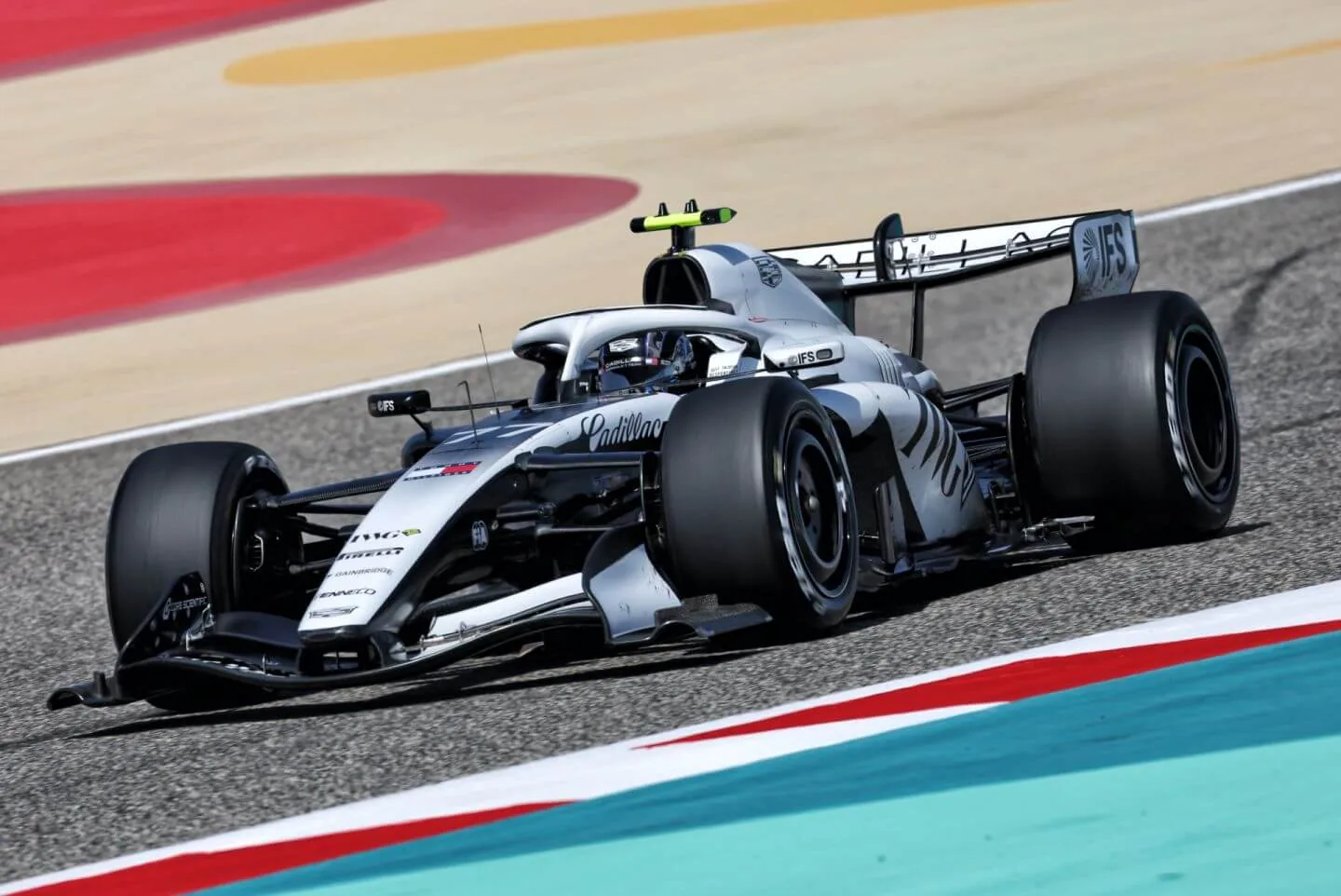










Formula 1 likes to present itself as a world of pure engineering: wind tunnels, telemetry data, and the fight for thousandths of a second. In practice, however, the F1 business model has always relied on sponsors from industries that attract attention – and on regulations.
Read more Very good results for Jan Przyrowski in the FRMET series in 2026
If today’s cars seem “covered” in logos of betting companies or online casinos, it is not a sudden moral decline of the sport. It is another stage of a long history:
- First tobacco
- Then alcohol
- Today betting and increasingly cryptocurrencies
Logos change, but the mechanism remains the same. F1 goes where the global marketing budgets are, while simultaneously adapting to the regulations in force in every country where it races.
It’s not a new romance: F1 has always collaborated with “controversial” industries
Money from the tobacco industry shaped the image of Formula 1 for decades. When regulations were tightened in Europe, the sport did not pretend the problem didn’t exist – it simply adapted. The scientific journal Tobacco Control described how tobacco advertising and sponsorship in F1 were banned in the EU under Directive 2003/33/WE, which came into force in 2005 and restricted the promotion of tobacco products in the media and during cross-border events.
When tobacco sponsors disappeared from the cars, some of their place was taken by alcohol brands. In 2016, the official Formula1.com website reported that Heineken became a global partner of F1 as part of a multi-year deal. It’s not about comparing gambling with tobacco or alcohol. It’s about continuity – Formula 1 regularly collaborates with industries that operate legally but spark public discussion and invest huge resources in international marketing.
The current dominance of betting brands and online casinos fits exactly into this pattern. With the development of the regulated online gambling market, an entire information infrastructure has also developed: rankings, reviews, comparisons of welcome bonuses, analyses of payment methods, or game safety.
Motorsport fans, who are increasingly digital users, look for specific and neutral information – for example, lists such as casinos with paysafecard, which describe how prepaid payments work in licensed services. It is a natural combination of sponsor visibility, regulation, and player education. Just as clear rules regarding tobacco or alcohol advertising were once needed, today the online gambling market operates based on licenses, control, and transparent payment methods – rather than in a legal vacuum.
“Stake – Kick Sauber”: how teams circumvent bans without breaking the law
It is often alleged that F1 teams “ignore” restrictions on gambling advertising. In practice, it is the opposite – they adapt branding to local regulations.
A good example is the situation of the Sauber and sponsor Stake team. In the context of the 2025 Dutch Grand Prix, after the tightening of national regulations regarding gambling advertising from 1 January 2025, the team had to give up promoting the betting brand and appeared under the name “Kick Sauber”. This shows that teams react to regulations and change communication depending on the market. This operating model is not new. F1 has used similar solutions before:
- Changing the team name at selected races;
- Modification of the car livery – removing or replacing logos;
- Promotion of an associated brand that can be legally advertised in a given country.
This is not a world without control. Regulatory bodies closely monitor the market. The visible pattern is rather adaptation to the law than bypassing it.
Read more Selection of the most beautiful and interesting F1 car in 2026
Why this money is so important: budget caps, inflation, and development costs
It’s easy to reduce the topic of sponsorship to a simple slogan: greed. However, the financial reality of F1 is more complex, especially since the introduction of budget caps.
The regulations set a so-called Budget Cap at 135 000 000$ (for a season of 21 races, before adjustments). The goal was to level the playing field and increase the financial stability of the teams. At the same time, however, teams must finance car development within a strictly defined budget, while some costs – marketing, infrastructure, rising energy and logistics prices – remain outside the cap.
The FIA also reported that after analyzing the financial documentation for 2023, all teams stayed within the budget cap, although procedural violations were noted in the cases of Alpine Racing SAS and Honda Racing Corporation. This shows how rigorously the system is controlled and why stable sponsorship revenues are so important.
| Pressure on teams | What it means in practice | Why sponsors are key |
|---|---|---|
| Budget cap | Every update has its price | Steady revenues reduce risk |
| Inflation and more expensive supply chain | Parts and specialized labor cost more | Large partners stabilize the budget |
| Constant car development | Continuous work on aerodynamics and simulation | Sponsorship ensures project continuity |
Why do gambling and crypto fit the F1 audience model?
The Formula 1 audience is huge and global – exactly what regulated online industries are looking for. In 2023, RaceFans, quoting F1 CEO Stefano Domenicali, stated that the total television audience for the 2022 season was 1,54 billion, and the average viewership of a single race was 70 million viewers. This is a scale that explains the interest of betting companies and online casino operators.
It was similar with cryptocurrencies. In 2021, it was announced that Crypto.com became the first global partner of the F1 Sprint series. The pattern repeats – industries with large marketing budgets and operating within specific regulations follow a large audience.
At the same time, regulators do not remain passive. The British Gambling Commission clearly emphasizes that sports organizations must ensure that sponsorship agreements and related advertising activities are legal and preceded by appropriate due diligence. This is the environment in which F1 teams operate today: development and expansion, but within the limits of clearly defined rules.
Partner material.
GAMBLING INVOLVES RISK, AND PARTICIPATION IN ILLEGAL GAMES IS PUNISHABLE. ALLOWED FOR PERSONS OVER 18 YEARS OF AGE.
Read more Version B of the Audi R26 car with unique sidepods