
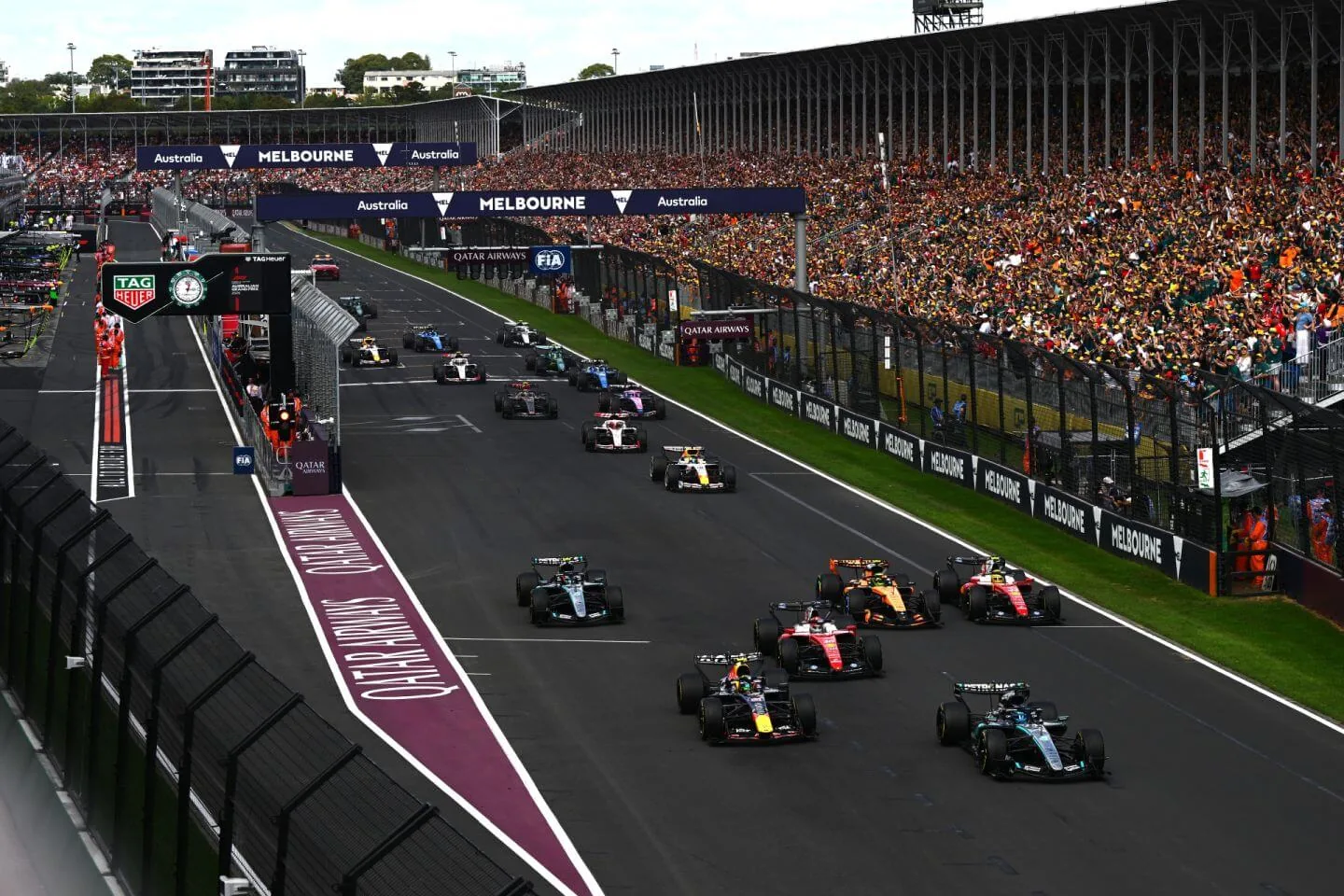
George Russell and Kimi Antonelli secured a Mercedes 1-2 for the 2026 season opener at the Australian GP. In the first phase of the race, Ferrari drivers even competed for the win, but fell out of contention due to a flawed strategy. The race provided several surprises, failures, many overtaking maneuvers, and chaos.
Read more Qualifying analysis before the 2026 Australian GP
The race at the Albert Park circuit was held in ideal weather conditions, with the track temperature around 34-36 degrees Celsius. During the race, there were three virtual safety car periods. 20 drivers started the race, as Hulkenberg had a failure on the way to the starting grid, and Piastri crashed on the formation lap.
Results of the 2026 Australian GP
| Pos. | Driver | Team | Time | Points |
| 1. | George Russell | Mercedes | 1:23:06.801 | 25 |
| 2. | Kimi Antonelli | Mercedes | +2.974s | 18 |
| 3. | Charles Leclerc | Ferrari | +15.519s | 15 |
| 4. | Lewis Hamilton | Ferrari | +16.144s | 12 |
| 5. | Lando Norris | McLaren | +51.741s | 10 |
| 6. | Max Verstappen | Red Bull | +54.617s | 8 |
| 7. | Oliver Bearman | Haas | +1 lap | 6 |
| 8. | Arvid Lindblad | Racing Bulls | +1 lap | 4 |
| 9. | Gabriel Bortoleto | Audi | +1 lap | 2 |
| 10. | Pierre Gasly | Alpine | +1 lap | 1 |
| 11. | Esteban Ocon | Haas | +1 lap | 0 |
| 12. | Alexander Albon | Williams | +1 lap | 0 |
| 13. | Liam Lawson | Racing Bulls | +1 lap | 0 |
| 14. | Franco Colapinto | Alpine | +2 laps | 0 |
| 15. | Carlos Sainz | Williams | +2 laps | 0 |
| 16. | Sergio Perez | Cadillac | +3 laps | 0 |
| NK | Lance Stroll | Aston Martin | +15 laps | 0 |
| NK | Fernando Alonso | Aston Martin | DNF | 0 |
| NK | Valtteri Bottas | Cadillac | DNF | 0 |
| NK | Isack Hadjar | Red Bull | DNF | 0 |
| NK | Oscar Piastri | McLaren | DNS | 0 |
| NK | Nico Hulkenberg | Audi | DNS | 0 |
Oscar Piastri and Nico Hulkenberg did not start the race at all; it will not count towards their statistics.
A few general conclusions about Formula 1 after the first race in 2026
The first race of the 2026 season showed us a few things that we will have to get used to this year.
The tire specification for this season has not changed significantly. Of course, the tires are smaller and provide less grip, but after the first weekend, it can be said that their degradation is similar to the previous season. This means that most races will be a one-stop – a situation similar to 2025. Pirelli announced that there would be no significant changes, and that is exactly the case. Tires will take a back seat this year.
In 2026, the gaps in the field between teams are larger. Get used to the fact that in races, most of the field will be lapped, and the leaders will pull away significantly from everyone. This is always the case with new regulations, especially since the engines were also replaced. This also means that qualifying will not be as close as in previous years.
The reliability of the new cars and engines is low. There should be more DNFs, affecting all drivers, including those at the front. These will not be the bulletproof cars of previous years. Because of this, there will be more unpredictable results.
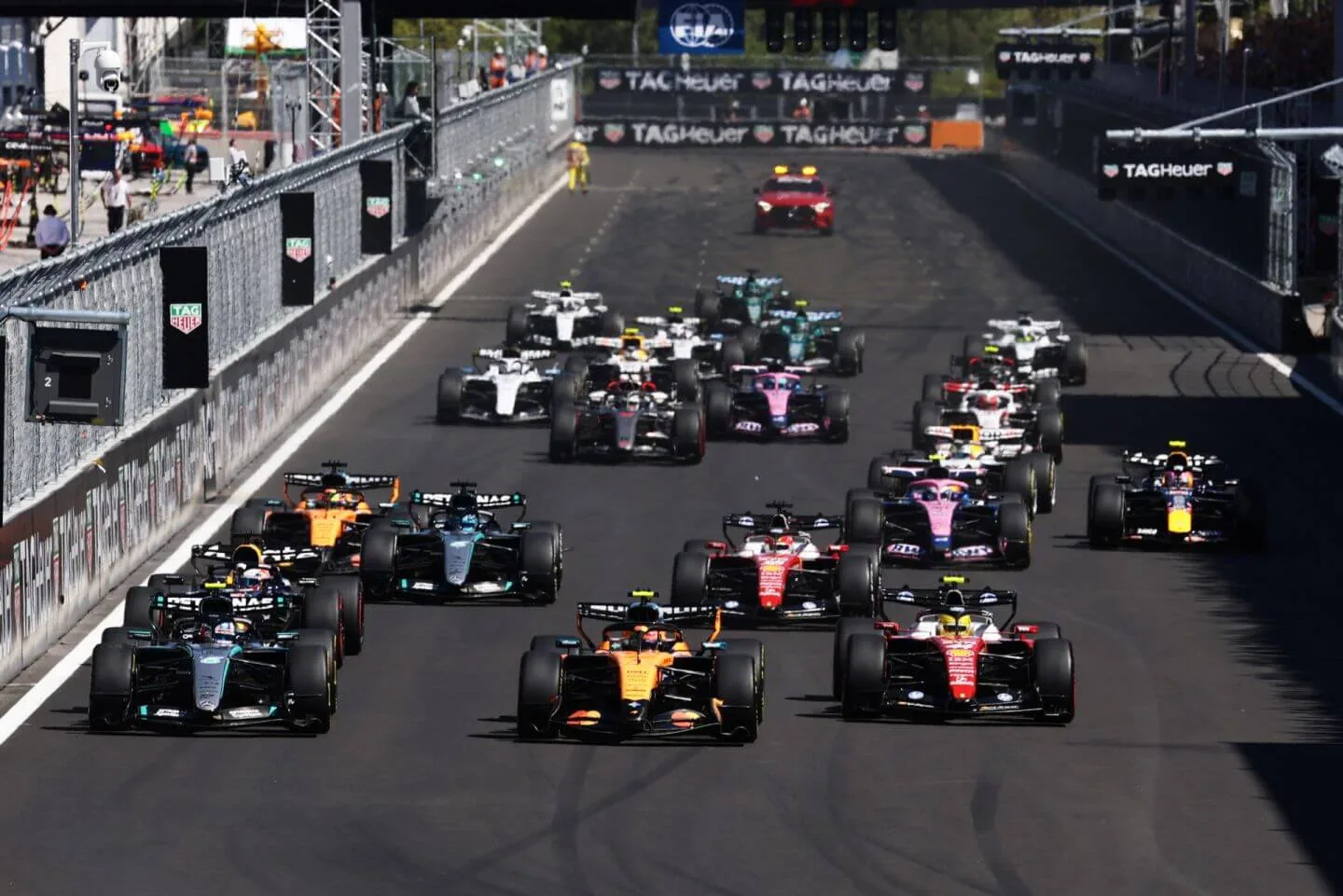
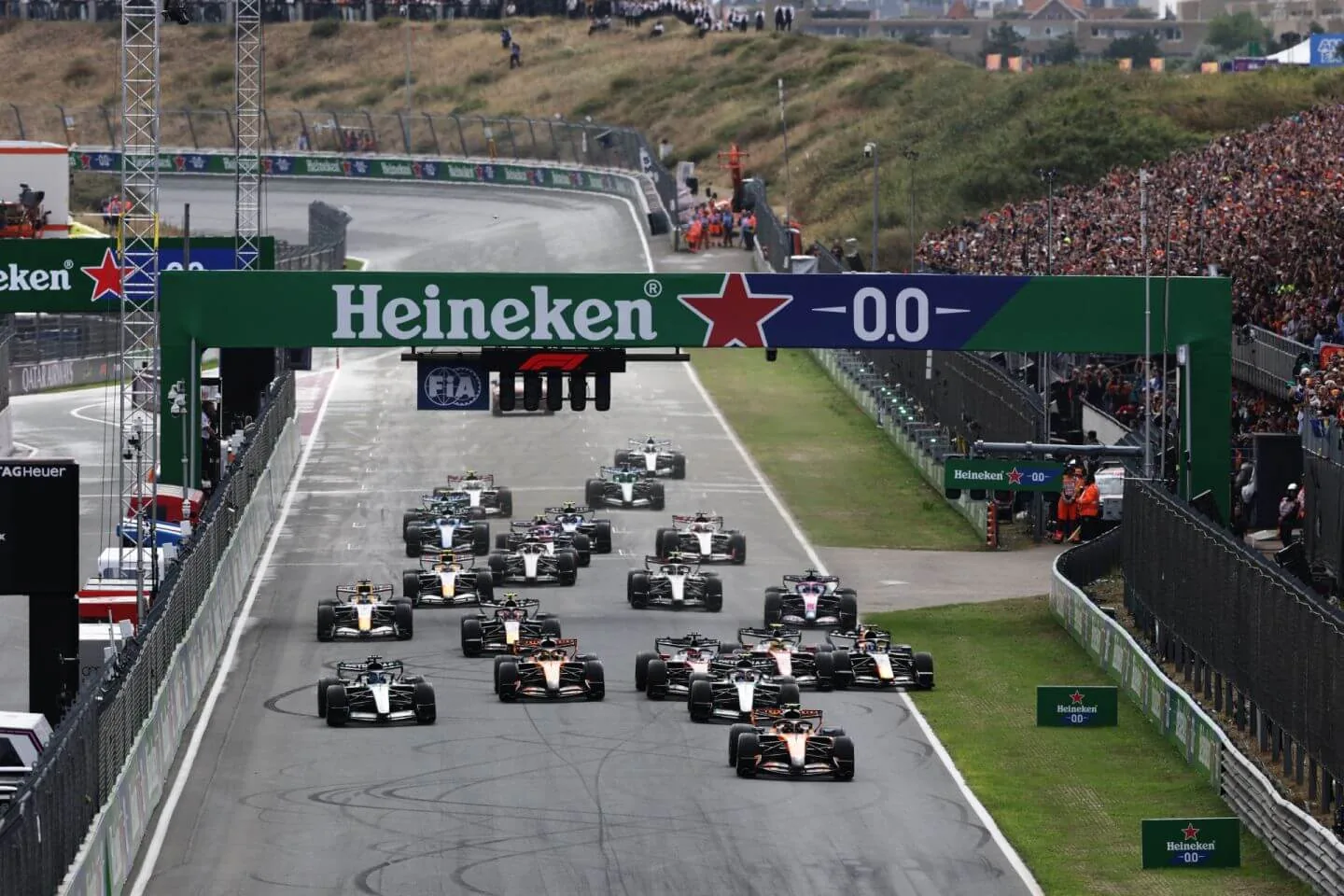
Race starts are more unpredictable, and Ferrari has an advantage over rivals in this area. There will be more position changes on the first lap. This increases the risk of crashes on the first lap. In Australia, rivals luckily managed to avoid Lawson’s car, which had problems at the start.
We didn’t have this in Australia, but it seems to me that this year there will be more overtaking after the end of neutralizations. When the whole field is close together, there will be many overtakes, and then counter-attacks due to different approaches to using electrical power from the engine.
Driving in clean air will be even more important this year, as drivers will then optimally use electrical energy, recording competitive lap times. Fighting someone will force the use of energy for attack/defense, and therefore not in optimal places, so race pace will drop.
The number of successful overtaking maneuvers will be significantly higher than in previous years, but these maneuvers will also not be as important and decisive. There will be many situations where driver A overtakes driver B while using more energy, so driver B will counter-attack at the next opportunity. This will also affect their race pace, which will then drop.
Mercedes vs. Ferrari duel for top positions
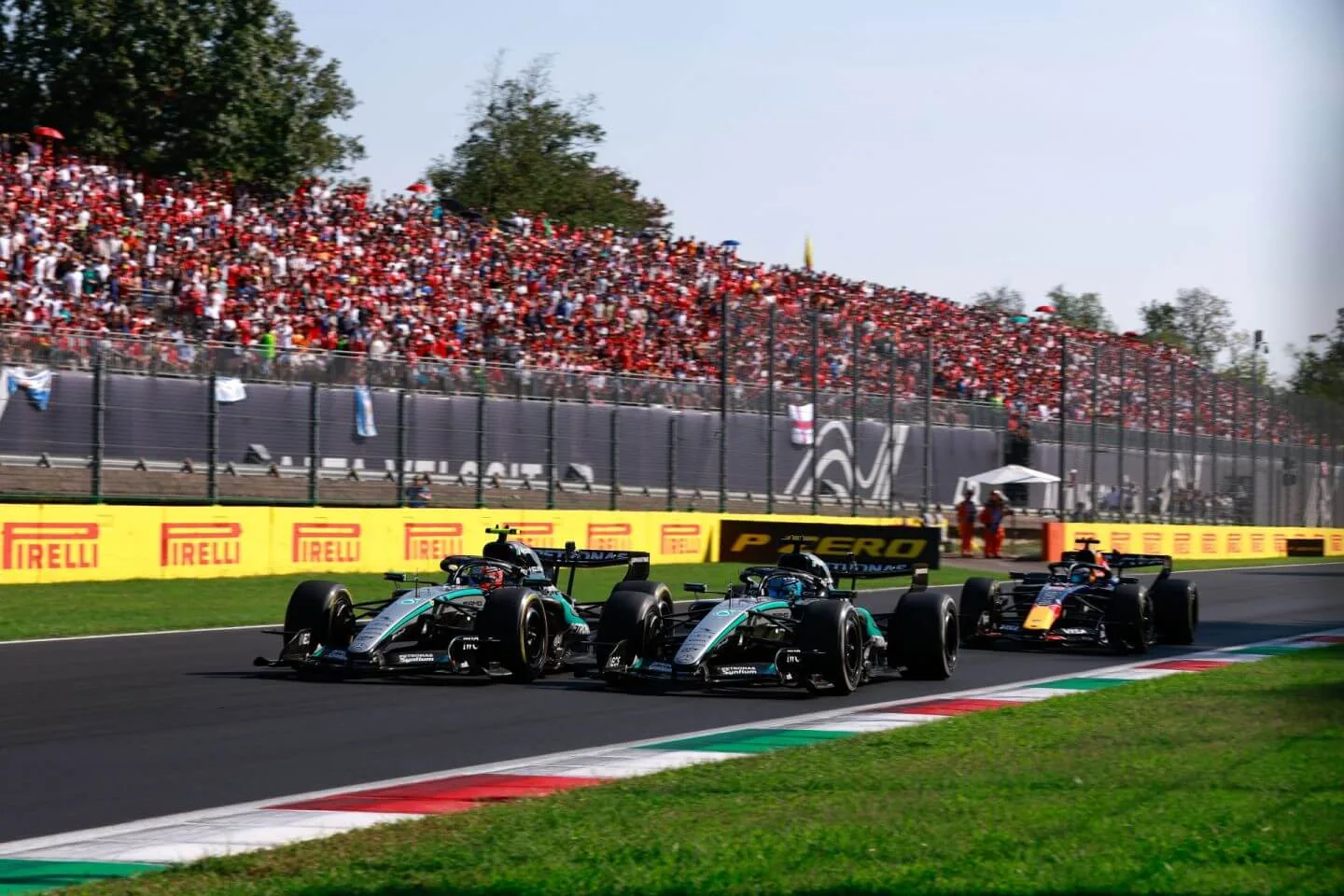
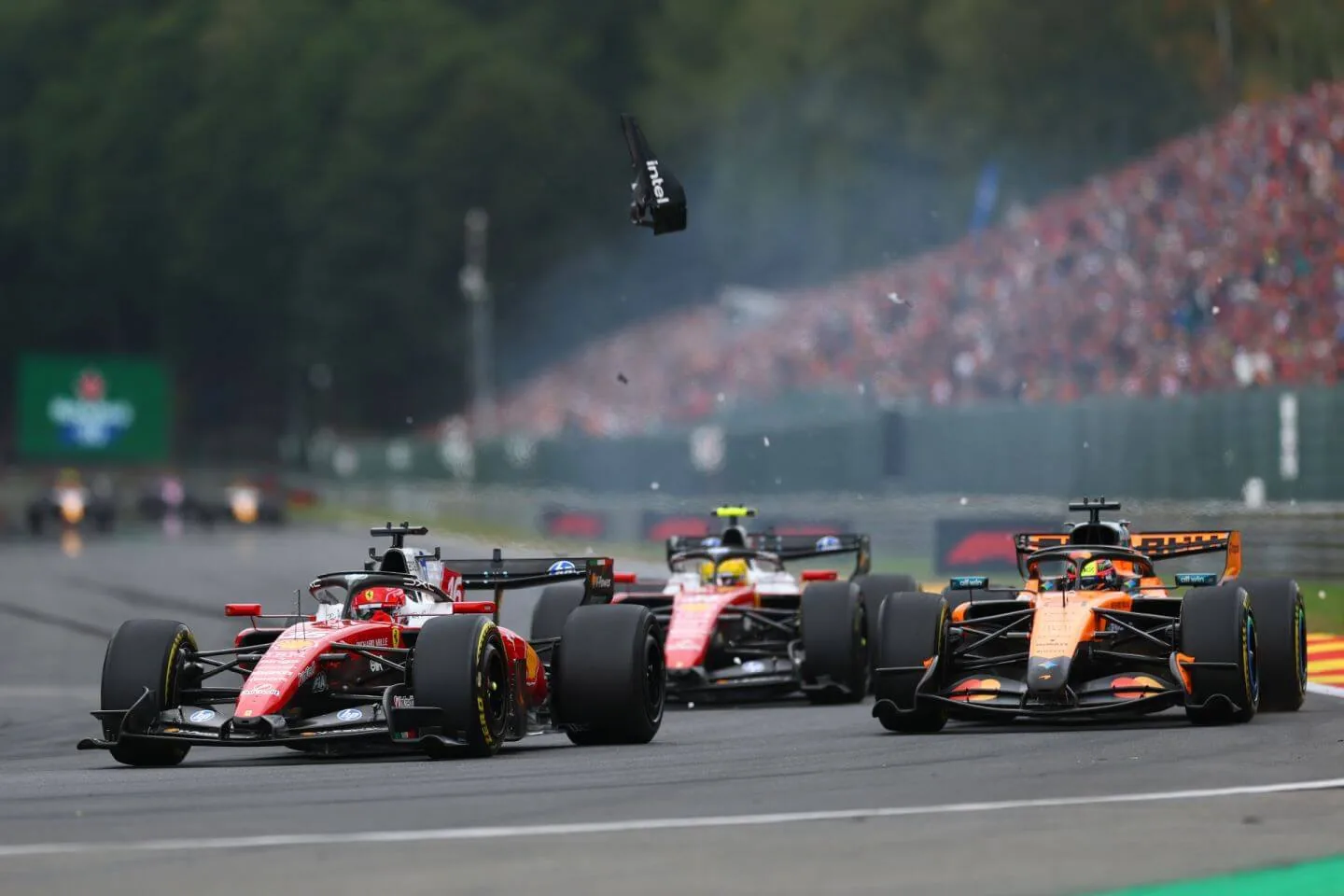
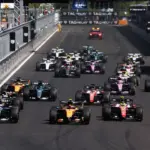
The race start provided many emotions, and there was also a lot of chaos, as the number of position changes was very high. At the front, we had confirmation of Ferrari’s strength. Leclerc took the lead after starting from fourth, and Hamilton was fourth after starting from seventh (later losing one place due to going wide). Russell dropped to second, and Antonelli to seventh. Mercedes drivers botched their starts. In the following laps, the duel between these drivers continued. Leclerc and Russell overtook each other several times; neither could pull away when in the lead. Eventually, Leclerc remained in the lead for longer, with Russell right behind him. Hamilton quickly dealt with Lindblad and Hadjar, and spent the next ten laps in third place, driving very close to Russell and waiting for his chance. Antonelli, after problems at the start, fought his way to fourth place by the sixth lap and then caught up with the top three. Just as a very interesting four-way fight was brewing, Isack Hadjar stopped on the side of the track, probably due to an engine failure.
Read more F1 2026 Fan Guide – download for free
Mercedes drivers took advantage of the virtual safety car and pitted for their only stop on lap 12. The mechanics had to service both drivers, so Antonelli fell behind Lindblad after exiting, losing a few seconds. Ferrari, for an incomprehensible reason, left both drivers on track. In the following laps, the Mercedes drivers on fresh tires gradually made up time on the Ferrari drivers, but the difference in pace was not very large. Leclerc made his pit stop on lap 25, and Hamilton on lap 28. The Mercedes drivers then took the lead. At that point, Russell had over a 7-second lead over Antonelli, Leclerc lost over 14 seconds to Russell, and Hamilton over 20 (losing time due to the later pit stop). At this point, the excitement ended. The Mercedes drivers easily reached the finish line without needing a second pit stop; tire wear was very low. They maintained a very good pace until the very end. Antonelli reduced his gap at the end because Russell was no longer pushing. Leclerc, despite fresher tires, slightly lost time to both Mercedes drivers over the final 30 laps. Hamilton, on the other hand, drove a bit faster than him and gradually caught up, finishing only 0.6 seconds behind. It’s worth highlighting Hamilton, as he hasn’t had a race in a long time where he recorded such competitive race pace compared to Leclerc.
Mercedes did everything optimally except for the start, where they made the task harder for themselves, but over the distance, the drivers drove well and the strategy was perfect. Mercedes’ race pace is very good, but not dominant. Ferrari was very close in race pace. Leclerc and Hamilton lost about 16 seconds to Russell at the finish, but more than half of that was a matter of performing the pit stop under green flag conditions. Much indicates that the Ferrari engine in race mode performs much better against Mercedes than in qualifying. This bodes well for future races, because even if Ferrari is weaker in qualifying, they will make up for it at the start. They just need to improve their approach to strategy.
Discussion of other significant driver and team results in the 2026 Australian GP
The advantage of the two top teams over the rest of the field is very large. Similarly, the difference in pace between the fourth and fifth teams.
Lando Norris took fifth place, realistically losing about 40 seconds (I subtracted part of the time related to the second pit stop) to the winner. Norris handled the other drivers but had no chance of fighting the top four. In the end, he changed strategy to two pit stops to protect himself from Verstappen. Piastri crashed the car on the way to the starting grid. He was surprised by the extra power while on the curb.
Max Verstappen, after starting from 20th, systematically moved up without any problems and eventually took sixth place. The Dutchman started on hard tires, so he had a slightly different strategy. Due to graining on the tires, he made a second pit stop at the end, countering Norris’s move. Verstappen failed to overtake the Briton, even though he was driving very close. Isack Hadjar drove very well but retired early due to a failure. In my opinion, Red Bull had better race pace than McLaren. In the first phase of the race, Hadjar was ahead of Norris, and Verstappen, despite starting from the back of the grid, finished right behind the Briton. McLaren starts as the fourth force in race pace.
The Haas team performed very well, splitting strategies between their drivers. Bearman changed tires during the second VSC, and Ocon during the first. Bearman’s strategy proved better, securing him a good amount of points. Ocon also aimed for points but was overtaken and was no longer able to overtake Gasly.
Arvid Lindblad deserves high praise, as he secured solid points in his debut, fighting with Hamilton and Verstappen without letting them pass without a fight. It was an almost perfect Formula 1 debut. Racing Bulls should have had double points, but Lawson was left at the start and lost his chances.
The Audi team scored two points in their F1 debut. Gabriel Bortoleto had an interesting strategy, performing both pit stops during separate virtual safety car periods. He drove very well and caught up with Lindblad at the end, but fell slightly short of a successful overtake. Hulkenberg did not start due to a failure on the way to the starting grid.
Similar to qualifying, Williams and Alpine drivers had very poor pace. I am very disappointed; both teams worked on the 2026 cars the longest. Having a top Mercedes engine, the car designs must be unsuccessful. Gasly scored one point using a good strategy. Of course, he would have had no chance for points if not for the failures of the top drivers. Colapinto showed great reflexes at the start, avoiding Lawson’s car. The Argentine’s race was ruined by a mechanic who touched his car on the starting grid after the time limit, and for something like that, there are extremely severe stop&go penalties. Sainz lost a lot of time due to a front wing failure; he had to replace it at an unplanned pit stop.
Cadillac confirmed they are the weakest in terms of pure pace. Sergio Perez lost 45 seconds to the preceding Sainz. Aston Martin took part in the race, and that was a success. Alonso had a great start and quite decent pace. Later, the drivers retired and returned. Stroll eventually reached the finish line, but was 15 laps down.
Current general classifications after the 2026 Australian GP can be found here.
Summary
Season openers in Australia are often surprising and chaotic, and that was also the case in 2026. There were many overtaking maneuvers, several unexpected failures, and in the first phase, a very interesting fight for the lead. It’s a pity that Ferrari didn’t use the VSC to change tires, as they made the task easier for Mercedes. The 1-2 for the favored Mercedes is not a surprise, but they had to work for it; they don’t have a large advantage in race pace. This bodes well for future weekends. Of course, many people will not like the too frequent overtakes, which often look artificial. You have to get used to it, but as cars and engines improve, there will be less and less “artificiality”. The new regulations were supposed to prove themselves with interesting races, and after the Australian GP, they do. There was plenty of fighting at the front, as well as further down the field.
Read more Reasons for Honda engine problems before the 2026 season