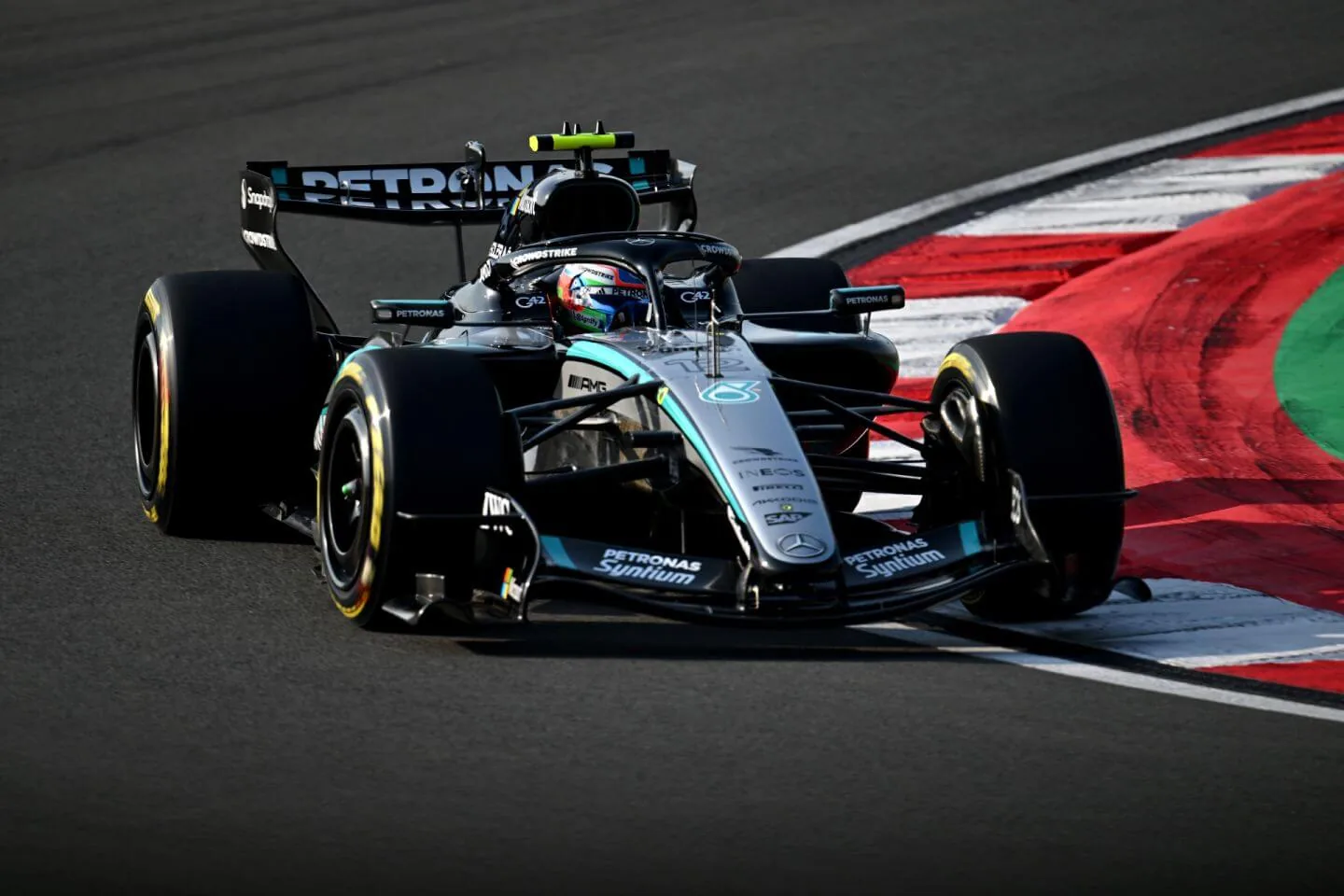

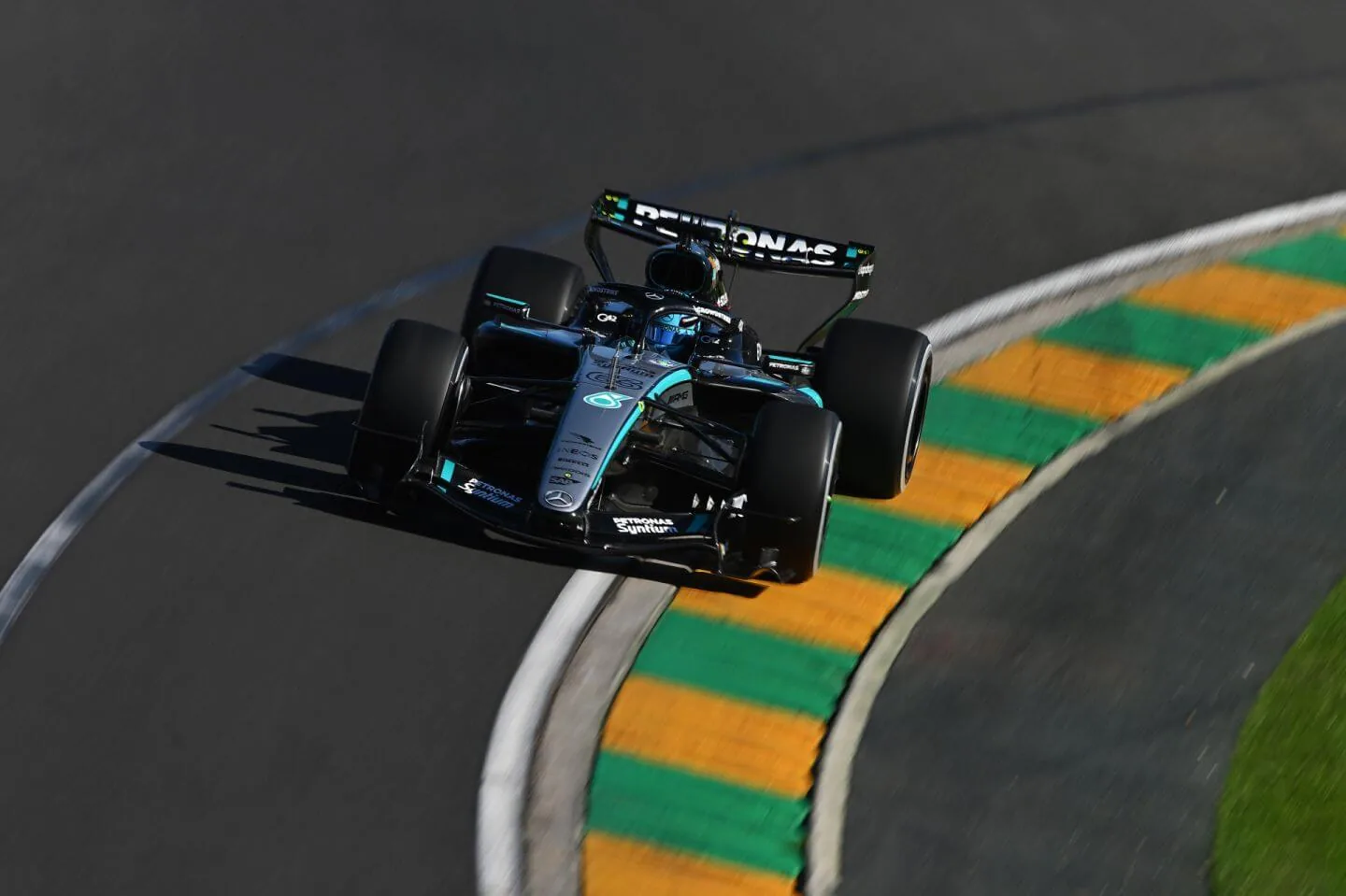
Mercedes drivers won the first qualifying of the 2026 season with a large advantage. Russell will line up on the grid ahead of Antonelli, and third place will be taken by Hadjar in the Red Bull. The competition brought several surprises, there were also interruptions, so the results are not fully objective. I invite you to the qualifying analysis before the 2026 Australian GP.
Read more F1 2026 Fan Guide – download for free
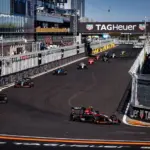
Qualifying at the Albert Park circuit took place in stable weather conditions, the track temperature was around 35 degrees Celsius. 20 drivers took part in the session. Verstappen crashed in Q1, causing a red flag. The start of Q3 was delayed due to problems with Bortoleto’s car. A second red flag appeared in Q3 when Norris ran over a blower brought onto the track by Antonelli.
Let’s remember that the track in Australia is the second to last in this year’s calendar in terms of energy recovery potential from braking, i.e., there are very few places where drivers brake hard. Testing took place in Bahrain, a track with the opposite characteristics – many hard braking zones. This significantly affects the hierarchy. If a power unit recovers electrical energy better, it makes a difference in Australia, whereas in Bahrain it wasn’t as noticeable.
Qualifying results for the 2026 Australian GP
| Pos. | Driver | Team | Q1 | Q2 | Q3 |
| 1. | George Russell | Mercedes | 1:19.507 | 1:18.934 | 1:18.518 |
| 2. | Kimi Antonelli | Mercedes | 1:20.120 | 1:19.435 | 1:18.811 |
| 3. | Isack Hadjar | Red Bull | 1:20.023 | 1:19.653 | 1:19.303 |
| 4. | Charles Leclerc | Ferrari | 1:20.226 | 1:19.357 | 1:19.327 |
| 5. | Oscar Piastri | McLaren | 1:19.664 | 1:19.525 | 1:19.380 |
| 6. | Lando Norris | McLaren | 1:20.010 | 1:19.882 | 1:19.475 |
| 7. | Lewis Hamilton | Ferrari | 1:19.811 | 1:19.921 | 1:19.478 |
| 8. | Liam Lawson | Racing Bulls | 1:20.491 | 1:20.144 | 1:19.994 |
| 9. | Arvid Lindblad | Racing Bulls | 1:20.409 | 1:19.971 | 1:21.247 |
| 10. | Gabriel Bortoleto | Audi | 1:20.495 | 1:20.221 | no time |
| 11. | Nico Hulkenberg | Audi | 1:21.024 | 1:20.303 | |
| 12. | Oliver Bearman | Haas | 1:21.247 | 1:20.311 | |
| 13. | Esteban Ocon | Haas | 1:20.759 | 1:20.491 | |
| 14. | Pierre Gasly | Alpine | 1:21.138 | 1:20.501 | |
| 15. | Alexander Albon | Williams | 1:21.051 | 1:20.941 | |
| 16. | Franco Colapinto | Alpine | 1:21.200 | 1:21.270 | |
| 17. | Fernando Alonso | Aston Martin | 1:21.969 | ||
| 18. | Sergio Perez | Cadillac | 1:22.605 | ||
| 19. | Valtteri Bottas | Cadillac | 1:23.244 | ||
| 20. | Max Verstappen | Red Bull | no time |
Carlos Sainz and Lance Stroll did not take part in qualifying at all due to earlier technical problems, so they are not in the table. Both will be allowed to participate in the race. Max Verstappen crashed at the start of his timed lap.
The fight for Pole Position and race forecast for the leaders
Mercedes showed true strength in qualifying. George Russell won convincingly with a 0.3-second lead over second-placed Antonelli and 0.8 seconds over third-placed Hadjar. Russell showed great pace already in the third practice, and in qualifying, he was the fastest in every segment and every sector. His advantage left no doubt. Antonelli heavily crashed his car in the third practice; the mechanics put it together for him at the last moment. The Italian did not have proper preparation or established car settings, but at the end of Q3, he drove a very good lap that secured him second place. Mercedes has great pace in all parts of the track; it’s not just thanks to the power unit, as seen by their customer teams. In long-run simulations, they looked excellent, so in a clean race, they will be aiming for a 1-2 finish.
For me, the biggest surprise is Isack Hadjar’s third place. The Frenchman performed brilliantly in his Red Bull debut. Max Verstappen crashed on the first lap in Q1 due to some technical problem. To me, it looked like a brake setting issue, not a driver error. I assume that Verstappen, being in Q3, would have been better than Hadjar, which means Red Bull is strong, better than it looked in testing. Telemetry charts show that Red Bull is doing very well on the straights (often at Mercedes’ level), so the Red Bull Ford power unit is at the right level. We’ll see how it goes in race pace.
Ferrari disappointed, with its drivers taking fourth and seventh places, losing 0.8 – 0.9 seconds. The potential was greater, but during qualifying, problems with the battery and overall engine power appeared. It was likely a software glitch. You can see, for example, with Bearman from Haas, that the pace on the straights and the amount of electrical energy delivered can be higher for this engine. For Ferrari, such a result is a failure, but I believe that due to technical troubles, they lost 0.2 maybe 0.3 seconds. Ferrari should realistically have been the second force in this session. On Sunday, I advise paying attention to them at the start, because they should gain positions then.
McLaren is at the level that could be expected, meaning with a significant gap to Pole Position, despite having the same engine. Norris had technical problems with the battery in this qualifying, and in Q3 he damaged his front wing on a blower that Antonelli brought onto the track. Piastri beat him, but he didn’t drive perfectly himself (he gained very little in Q3 compared to Q1). In my opinion, like Ferrari (but for slightly different reasons), McLaren had the potential to go faster.
Mercedes dominated in qualifying, but in my opinion, their advantage is exaggerated by the problems of their closest rivals. In subsequent sessions, I expect smaller gaps, but Mercedes will remain the favorite.
Overview of other drivers and teams
The Racing Bulls team deserves significant recognition, as both of its drivers advanced to Q3. Lindblad debuted in F1 straight into Q3. The form is better than expected; there is a chance for points on Sunday. This team’s performance confirms that the Red Bull Ford engine is at a high level.
The second team that deserves great praise is Audi. Bortoleto advanced to Q3 (he had a breakdown and didn’t run then), and Hulkenberg was 11th. Audi is the biggest positive surprise of this year. Since the start of testing, they have been systematically improving. Considering they have their first engine in F1, and the former Sauber factory is still being expanded, their performance is already very good.
Read more Reasons for Honda engine problems before the 2026 season
The Haas drivers performed correctly, taking positions in the middle of the pack. After testing, one could have expected a slightly better result, but the differences were very small; Bearman was 0.1 seconds away from advancing to Q3.
I was most disappointed by the Williams and Alpine drivers. Despite having Mercedes engines, they were slow and also have significant gaps to the leaders of the midfield. It looks very bad; they should be setting the tone for the competition in the midfield.
Fernando Alonso lost 3.4 seconds to the Pole Position winner’s time, but also “only” 0.7 seconds to advancing to Q2. Considering the massive problems with the car and the Honda engine, such a result is promising. Additionally, information appeared that Aston Martin cannot drive with an empty fuel tank (ballasting the car limits vibrations), so for that reason alone, they have a few tenths of a second in reserve. Aston Martin is starting the season poorly, but it seems to me there is great potential for improvement and development in the coming months. In 2015, at the beginning of Honda’s cooperation with McLaren, the losses were much larger, and the potential was not visible.
The slowest in the entire field was Cadillac, which is not a surprise. This team is debuting in F1; everything is new for them. In the race, the goal for them will be to reach the finish line. That will already be a success for Cadillac.
Preview of the 2026 Australian GP race
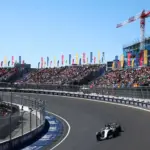
The Albert Park Circuit, running around a lake, after configuration changes introduced in 2022, is characterized by a very smooth flow, and drivers achieve very high average speeds. There are very few hard braking zones and slow corners. It used to be a venue where overtaking was difficult; changes to the track configuration increased overtaking opportunities, but not to a large extent. Due to the small number of hard braking zones, it is a venue where power units recover little electrical energy; this will have a major impact on competition and overtaking, but it’s hard to say whether positive or negative. Detailed characteristics of the Albert Park track along with a diagram can be found at this link.
The topic of tires has taken a back seat this year. Pirelli has again brought the three softest compounds, C3 – C5, to Australia. Tire wear on this track is low; the asphalt is very smooth and grippy. Surface evolution is always very high during the weekend because it is a track used once a year. The load the tires are subjected to over one lap is close to the full-season average. Graining often appears on tires at this venue, which is a significant problem for some cars. The main reason for tire degradation is simple tread wear. In 2026, we expect drivers to plan for a one-pit-stop race with a medium – hard strategy. One cannot even rule out using soft tires instead of mediums at the start. There will be more pit stops if neutralizations occur.
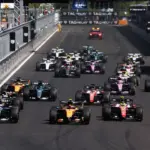
Similar weather conditions are forecast for Sunday, it should be around 25 degrees Celsius and with no chance of rain. Three of the five previous F1 races were interrupted by neutralizations. The Albert Park track is narrow in many places and tightly surrounded by barriers. At high speeds, crashes ending in safety car deployments or even a red flag are very likely. This year there should be more mechanical failures of the cars, which further increases the probability of full or virtual neutralizations. The Australian GP will be the 500th race for Bernd Mayländer as the SC driver; it would be fitting for him to take to the track. Large pile-ups at the start have happened in Australia.
Summary
The first race under the new technical regulations is a big unknown. There could be a lot of chaos, numerous breakdowns, crashes, and neutralizations. We’ll see how these cars perform in race mode, whether overtaking is easier or harder. We’ll also see if the Ferrari engine provides the best starts in the entire field. Mercedes remains the clear favorite for the win, but surprises are possible.
I encourage you to download, read, and use the F1 Fan Guide for the 2026 season prepared by the KONTRA service. The guide is free; you will find many interesting articles and interviews there. You can download it by clicking here.
Read more Run Flat tires – how to recognize them?