







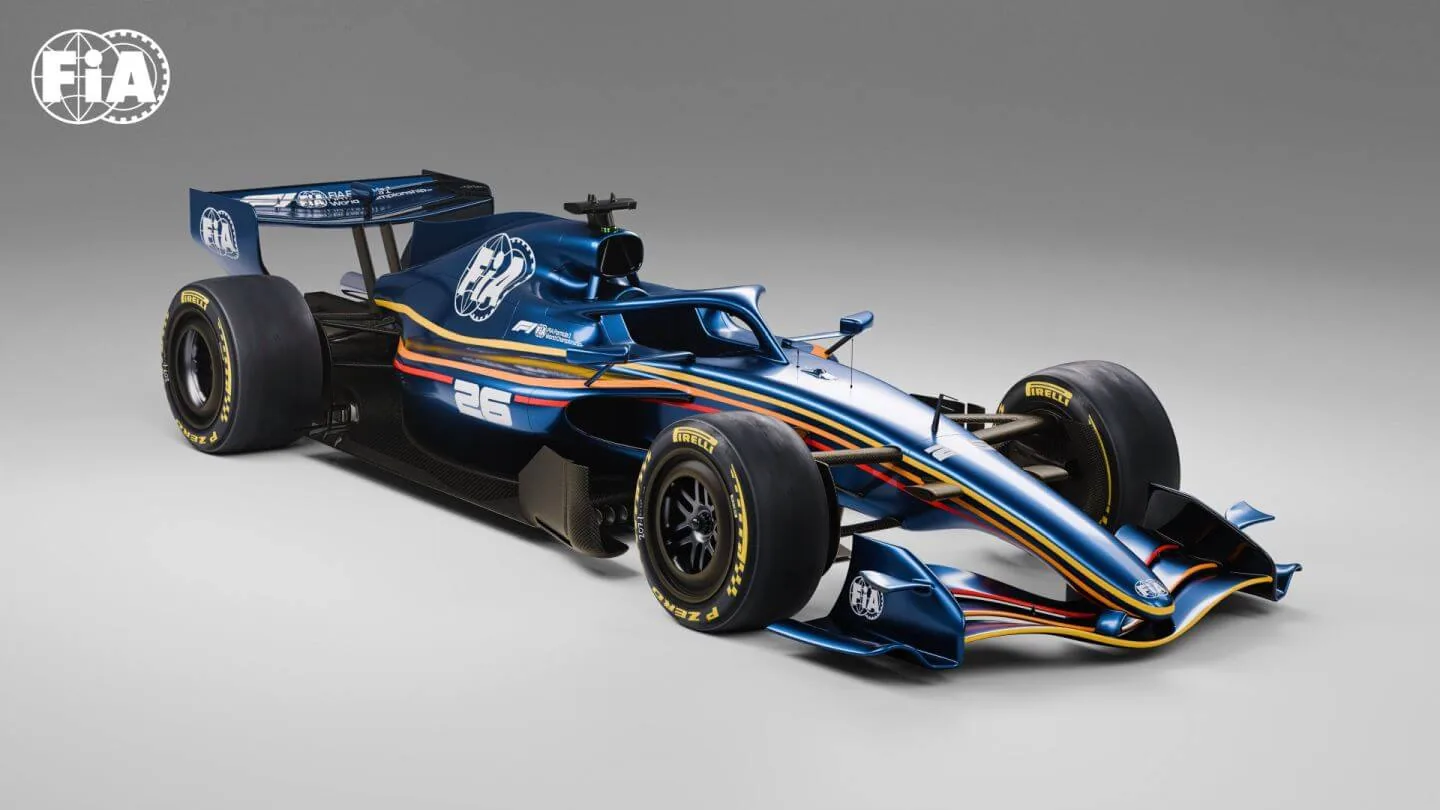
The technical revolution means the introduction of new cars in Formula 1 in 2026, which will be powered by new engines. The redesigned cars will be smaller and are intended to provide better racing. In this text, I will discuss the most important changes in the technical regulations and the appearance of the cars for the 2026 season.
Read more F1 drivers’ experience before the 2026 season
Formula 1 operates according to technical cycles. Every few years, major regulatory changes occur, which are maintained for 3-5 years. Later, a reset occurs and further regulations are introduced. In the years 2022 – 2025, Formula 1 used cars whose aerodynamics were based on the ground effect – most of the downforce came from the floor. Past technical regulations had their advantages and disadvantages. The facts are that with each subsequent year, the gaps in the field decreased, and qualifying became increasingly close. On the other hand, teams expanded aerodynamics more and more each year, which meant that in races from season to season there was less and less direct fighting and overtaking. A change in rules was highly anticipated.
Formal preparations for the 2026 season were very long. Technical regulations regarding engines were first published in August 2022, and regulations regarding cars in June 2024 – details. The first version of the car regulations caused some controversy; practically every team submitted their comments. This was due to the fact that the FIA was in a hurry to approve regulations that were not yet fully prepared. The general principles and assumptions remained unchanged, but since then, many updates have appeared in the regulations, and many issues have been clarified. In December 2025, the 15th version of the technical regulations for the 2026 season was published; it can be downloaded from the FIA website at this link. Most updates in recent years concerned the engine regulations, which in June 2024 were merged with the car regulations.
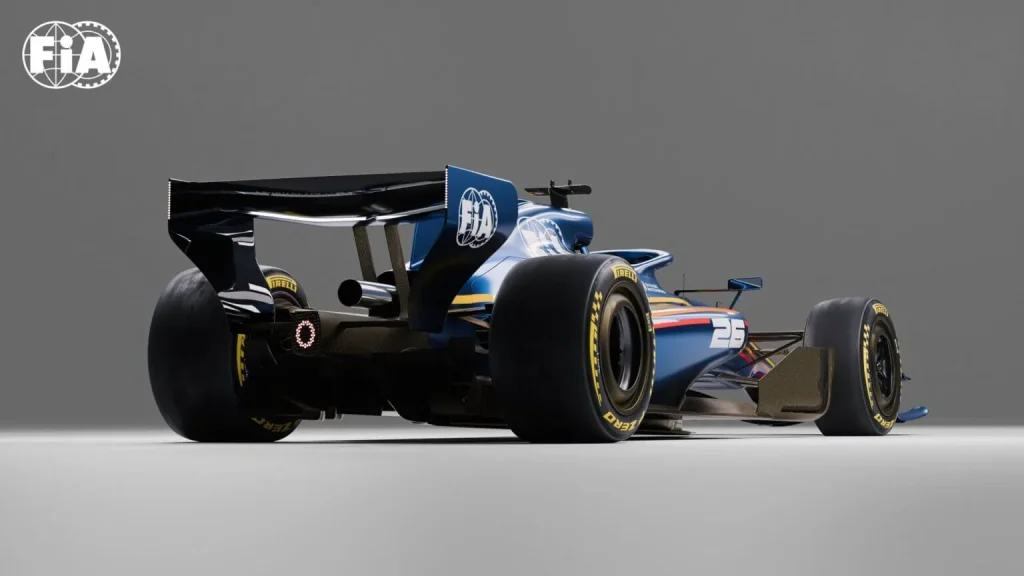
On the occasion of the December publication of the final version of the regulations, the FIA and F1 published their own visualizations of the cars for the 2026 season. They present the same car, but in different liveries. All the graphics you see in this text come from the FIA.
F1 cars in 2026 will be smaller with completely redesigned aerodynamics
One of the key assumptions in the new technical regulations was the desire to reduce the size of the cars. The FIA calls the final car concept for 2026 “agile”. The wheelbase will be reduced from 360 cm to 340 cm, meaning the cars will be 20 cm shorter. The width of the cars will decrease from 200 cm to 190 cm, i.e., by 10 cm, and the maximum width of the floor will decrease by 15 cm. The reduction in dimensions combined with lower weight is intended to make the cars more agile than in previous years.
The FIA assumes in its simulations that at the beginning of 2026, a typical F1 car will generate 30% less aerodynamic downforce than in 2025, and drag will also drop by 55%. The drop in drag is crucial because it means the cars will be significantly faster on the straights (top speed will be largely limited by engine power usage). Less downforce means that cornering speeds will drop.
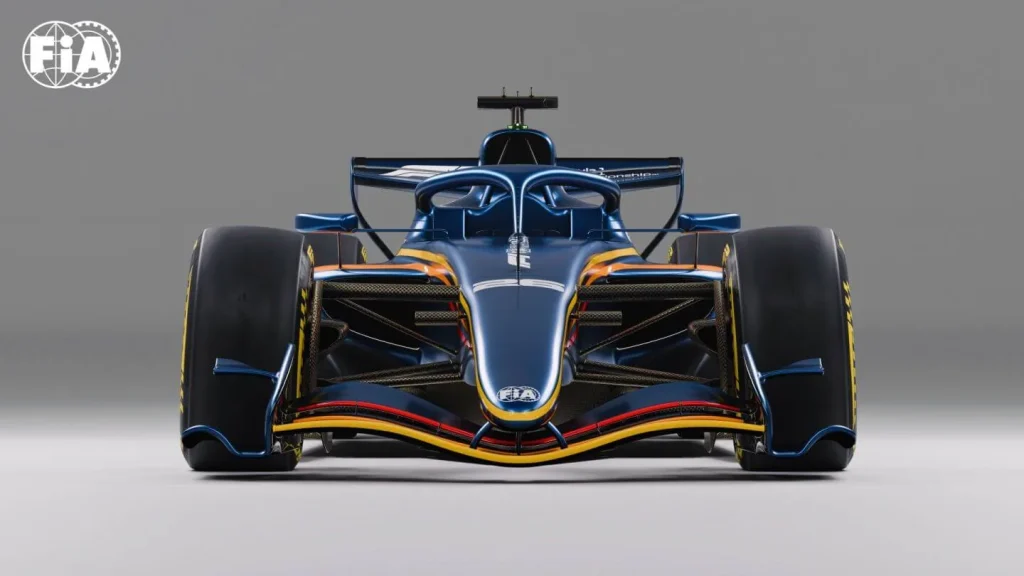
In 2026, the shape of the front wing changes completely, which will additionally be 10 cm narrower and will have large elements protruding at the height of the front wheels. A new feature will be movable upper flaps of the front wing, which will lower on the straights to reduce drag. In the front part of the car, the wheel fairings that were present in 2022 – 2025 will disappear. There will still be covers (hubcaps) on the wheels, but possibly different from previous seasons, as the regulatory provisions changed frequently.
The cars will have flat floors; the ground effect and tunnels under the car will disappear. In return, a larger diffuser will be introduced at the rear of the car. Changes to the floor will mean that the cars will no longer need such stiff suspension, will become more pleasant to drive, and it will be easier to set them up optimally every weekend. The assumptions regarding the floor to some extent return to the situation before 2022. Flat floors mean that in the new cars, there will be no tunnel inlets in front of them, which were at the height of the side engine radiator inlets. Instead, large fairings (I can’t find a good term for this) will appear in this place, which (as can be clearly seen in the top view photo) will protrude slightly outwards. This is about directing the air properly and limiting the generation of turbulence behind the car. We can expect interesting solutions in this area.
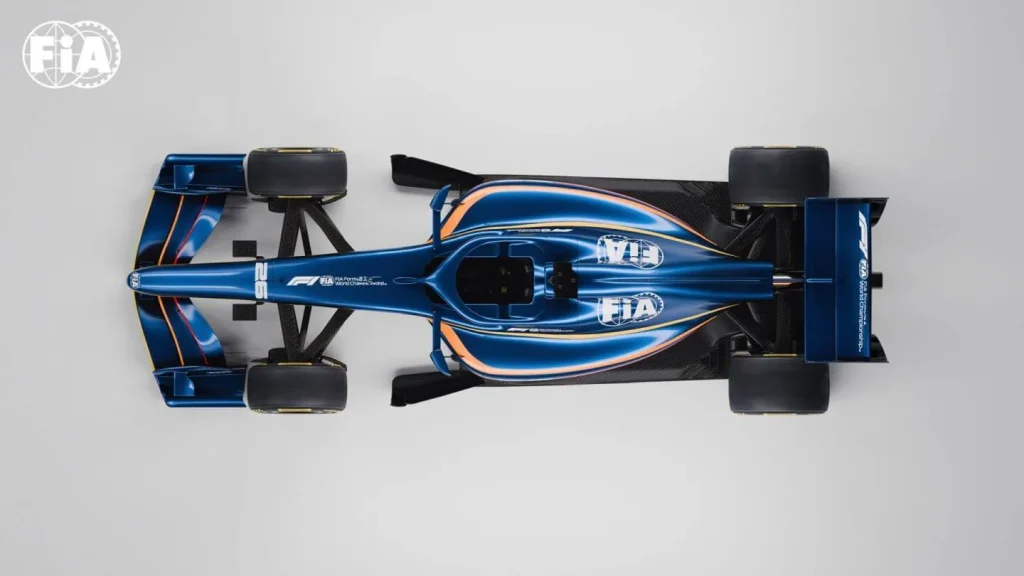
The rear wing will have three flaps, its endplates will be simplified, and the lower “beam wing” will be removed. The engine cover and side radiator inlets will be similar to previous years, but here teams have a lot of room to maneuver related to the new power units. We will see if it will be possible to use such small inlets and little cooling as in the 2025 season. Let’s expect various solutions in this area.
In 2026, active aerodynamics will be used in Formula 1, i.e., flaps on the front and rear wings will be lowered on many straight sections on every lap. How this will work exactly I described in another article available here. The DRS system disappears from Formula 1 after fifteen years; the movable rear wing will remain, but it will no longer serve to help with overtaking.
Lower mass of F1 cars from 2026 will be a challenge
In 2025, F1 cars had to weigh a minimum of 800 kg, which was the highest value in the history of the sport (details). If a driver cooling device was used, the minimum weight was as much as 805 kg. Everything except fuel is included in the minimum mass of an F1 car. In 2026, F1 cars will be lightened by about 30 kg, and the minimum mass will be determined in a different way. According to the regulations, from 2026, the minimum mass of an F1 car will be 724 kg plus tires, and during qualifying sessions 726 kg plus tires. Pirelli stated that their slick tires for the front axle will weigh 10.4 kg, and for the rear axle 12.8 kg. This means that the total mass of four slick tires is 46.4 kg, so realistically the minimum weight of the car will be 770.4 kg or 772.4 kg in qualifying sessions. This means a drop of 30 kg compared to 2025. Importantly, intermediate and wet tires are heavier than slick tires. For this reason, their mass is not included in the overall limit, and teams did not have to adjust it depending on the tires used.
Shortening and narrowing the cars will naturally lighten them, as less material will be needed for their construction, shorter cables, etc. However, for F1 teams, reaching the minimum mass at the beginning of the new regulations will be a very big challenge; many cars will certainly be too heavy. The minimum mass of the new power unit from 2026 will be 185 kg with batteries. For comparison, the power unit in 2025 weighed 151 kg, but it did not include batteries, which according to the regulations could weigh from 20 to 25 kg. This means that teams must lighten their cars realistically by 44 kg, not 30 kg. An F1 car excluding the power unit, driver, and tires will weigh about 457 kg in 2026.
Changed Pirelli tires
Pirelli will still supply tires to F1 in 2026. They will prepare five dry-weather compounds, intermediate, and wet tires. They have slightly changed their markings, but that’s just a visual matter. Wheels in 2026 will still have 18-inch rims, but their width will decrease slightly: by 25 mm on the front axle and by 30 mm on the rear axle. Tire grip will decrease because of this; Pirelli worked to make this drop as small as possible. Narrower tires and limited aerodynamics will cause a drop in cornering pace.
Tires of each type in 2026 will be 280 mm wide on the front axle and 375 mm wide on the rear axle. There are differences in their diameter and weight:
Read more Formula 1 broadcasts in 2026 in Poland
Slick tires: tire diameter on the front axle 705 mm, and on the rear axle 710 mm. Tire weight on the front axle 10.4 kg, tire weight on the rear axle 12.8 kg.
Intermediate tires: tire diameter on the front axle 710 mm, and on the rear axle 715 mm. Tire weight on the front axle 10.3 kg, tire weight on the rear axle 13.2 kg.
Wet tires: tire diameter on the front axle 715 mm, and on the rear axle 720 mm. Tire weight on the front axle 11.3 kg, tire weight on the rear axle 13.4 kg.
New power units
In 2026, new power units will