





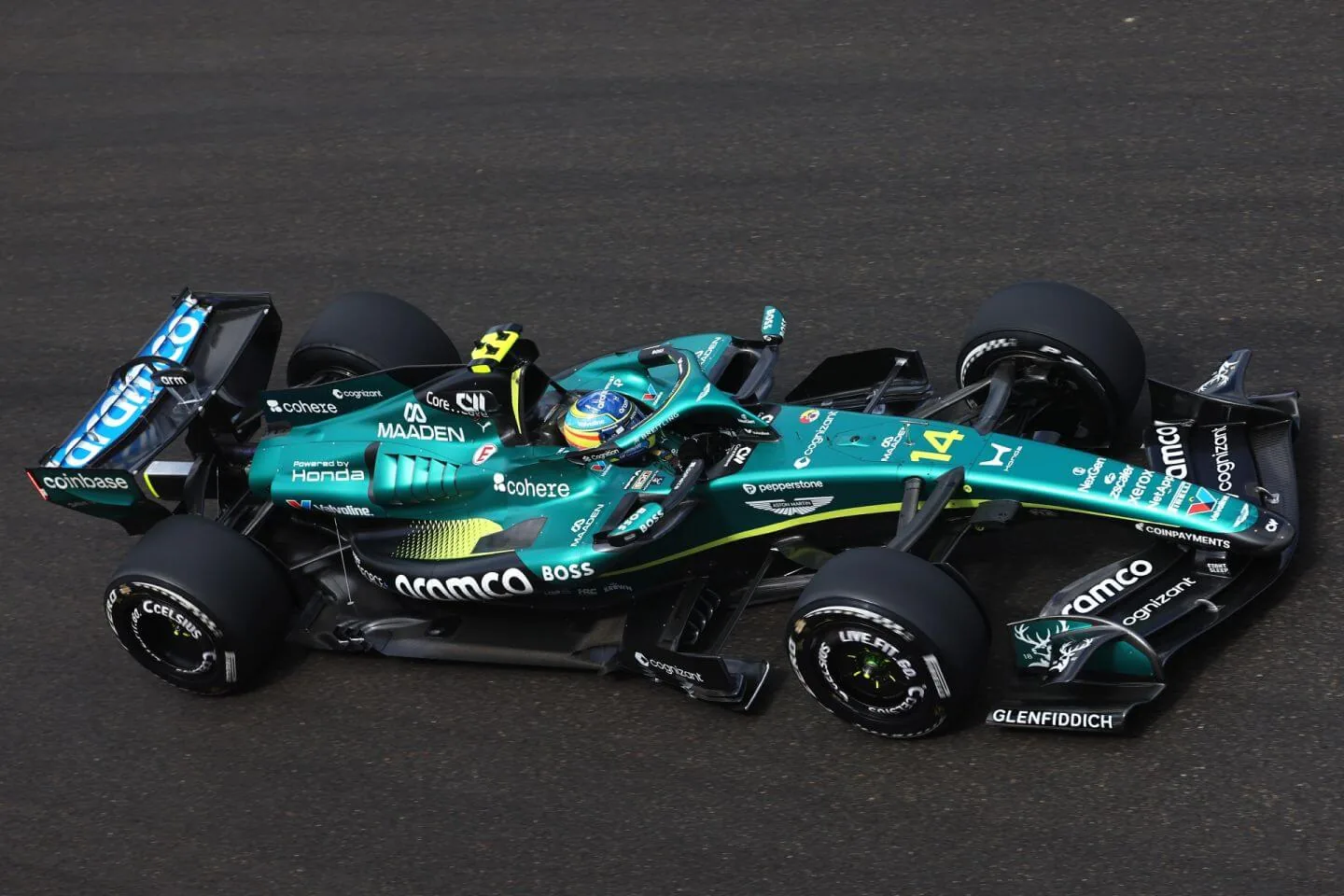
The scale of changes introduced by the Aston Martin team to the AMR26 car during the 2026 Hungarian GP is so large that from this moment on, one can speak of a B version of this design. The team changed practically all aerodynamics, and also made mechanical changes and those related to weight reduction.
Read more Jan Przyrowski after 3/4 of the FREC 2026 series season
I have written many times about the problems of the Aston Martin team in 2026. The team started this season with very big problems with the car and with the Honda engine. Their sporting form is terrible; during most of this year’s qualifying sessions, Fernando Alonso and Lance Stroll occupy the last positions. Their gap to rivals systematically grew because they decided not to introduce any minor upgrades during the first months of this season. They saved the budget for one very large package of improvements, which they introduced during the 2026 Hungarian GP at the Hungaroring track. The scale of the team’s problems this year was enormous. The AMR26 car, with which they started the season, was very overweight (estimated at about 30 kg), there were problems with the gearbox, which they produced themselves for the first time. The aerodynamic package looked impressive but turned out to be unsuccessful – the team prepared a flawed concept. In addition, there are serious problems with the Honda power unit, which is clearly the weakest in the entire field. Various estimates have been made in the media regarding what specifically accounts for the team’s poor form. Personally, observing various data, it seems to me that the losses on the power unit side and the car itself are quite similar; in my opinion, the bigger problem was with the car, but that can be improved faster. Improving all the imperfections of the power unit could be a perspective of several years.




Source: Aston Martin
Scale of improvements introduced by Aston Martin during the 2026 Hungarian GP
The team reported as many as 16 aerodynamic improvements to the FIA. The changes covered practically all aerodynamic surfaces. The team announced that the following were changed:
1. Front wing
2. Front wing endplates
3. Nose
4. Front brake ducts
5. Main floor section
6. Front floor section
7. Floor edges
8. Diffuser
9. Side air intakes for radiators
10. Engine cover
11. Cooling grilles on the engine cover
12. Rear suspension
13. Rear brake ducts
14. Rear wing
15. Beam wing – aerodynamic elements below the rear wing
16. Front wing endplates
Some of these elements were completely modified, others to a lesser extent. In combination, this is a completely new aerodynamic package that the team will now develop. It should also be the basis for the AMR27 car for the 2027 season. Observing the photos that have been published, the car looks very impressive. It is a developed design with interesting shapes. It was similar at the beginning of the season, and it didn’t work then. This time they had to refine everything better. In some areas, they drew inspiration from solutions from other designs. There are still certain areas that are much less developed compared to the top teams, mainly I mean the rear of the car, where the top teams are currently adding small aerodynamic elements, and the AMR26 does not yet have anything like that.
There are more changes to the car, as not all of them had to be reported to the FIA. We know that the team had to significantly reduce weight, but as Adrian Newey said a few weeks ago, they have not yet reached the minimum weight level. As announced, they were supposed to lighten the monocoque and gearbox, which required new crash tests. According to information from the track, the team has two copies of the new monocoque, so in the event of a serious crash, one of the drivers will have to revert to the old and heavy one. Monocoque production takes the most time, so this is not surprising. A spare will appear after the holidays.
Read more How much do F1 drivers earn? Salaries, bonuses and highest-paid drivers
When and how much will Honda improve the engine?
Honda will introduce an improved power unit just after the holidays during the Dutch GP. If the changes also concern electrical components, Aston Martin drivers will receive grid penalties because they have already exceeded the limits. Honda has been working for several months on improving its power unit, they will use the possibilities offered by the ADUO system. The team will test the improved engine a few days after the Hungarian GP during a filming day. It is unknown how much Honda will be able to increase the power of its engine; no reliable rumors have appeared on this topic. Currently, Honda has the worst power unit in the entire field; the loss on the internal combustion engine side alone reportedly exceeds 50 horsepower. Personally, I expect that a gain of 10-20 horsepower is achievable with good changes, no more.
Summary
According to rumors, the improvements introduced at the Hungaroring are supposed to improve the car by as much as 2 to 2.5 seconds. If this were successful, it would be a huge leap, but considering their previous time losses, they would still remain far from the front runners. Aston Martin’s real deficit to the leaders exceeded 4 seconds, and they were about 2 seconds off positions that would ensure a fight for Q2 advancement in qualifying. For the team, introducing changes on such a scale is a gigantic challenge, as well as a big test, because they do not yet know if the on-track performance will be the same as in factory simulations. This is a crucial matter for the team. If the data matches, there will be large gains, and they will be able to continue developing the car. If they don’t match, they will have further problems having to refine the tools in the factory.
The team is to introduce classic improvements to the car after the holidays; Adrian Newey announced changes for the Italian GP and the Azerbaijan GP.
Read more How Much Does an F1 Car Cost? The Price of a Formula 1 Car and Its Most Expensive Parts