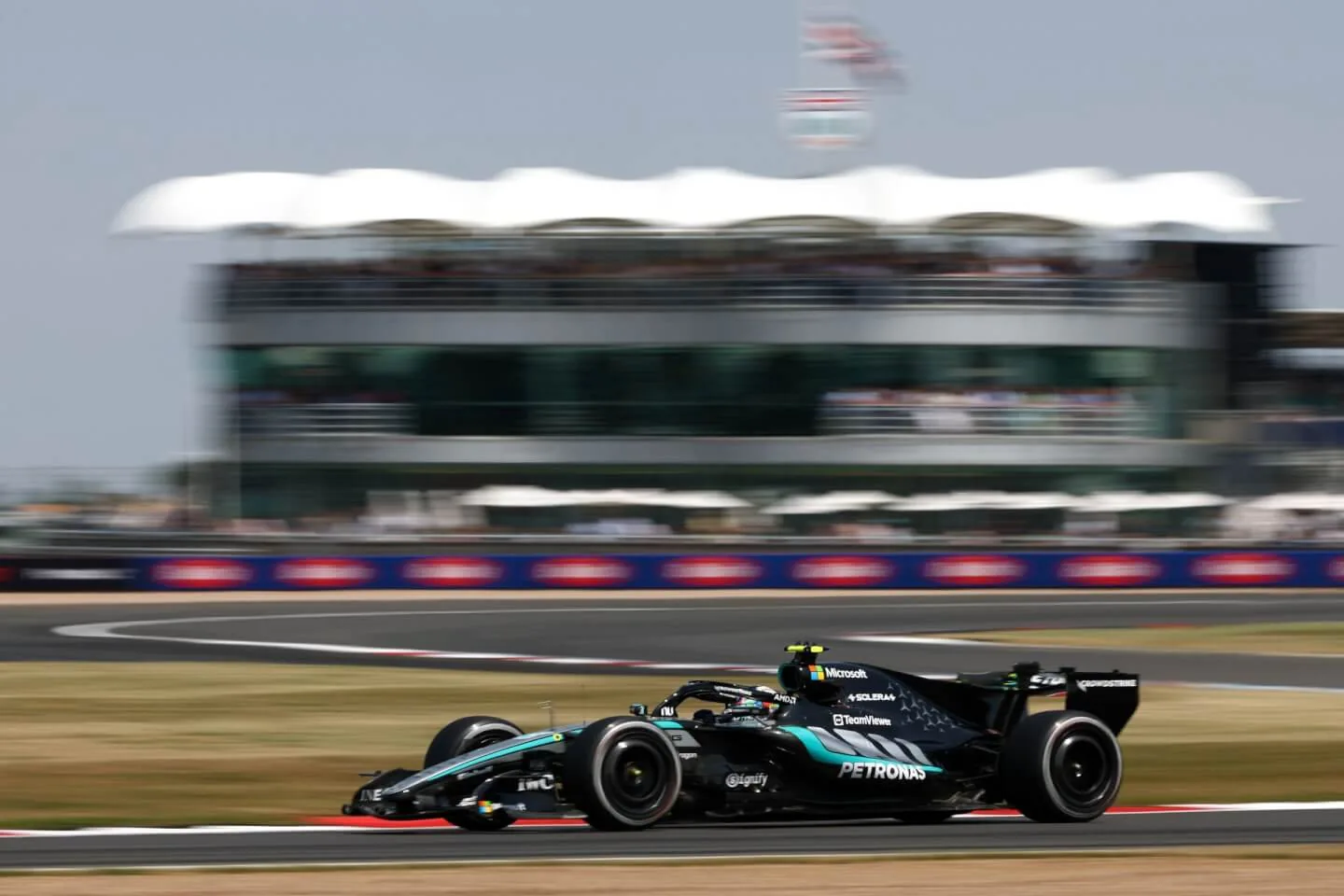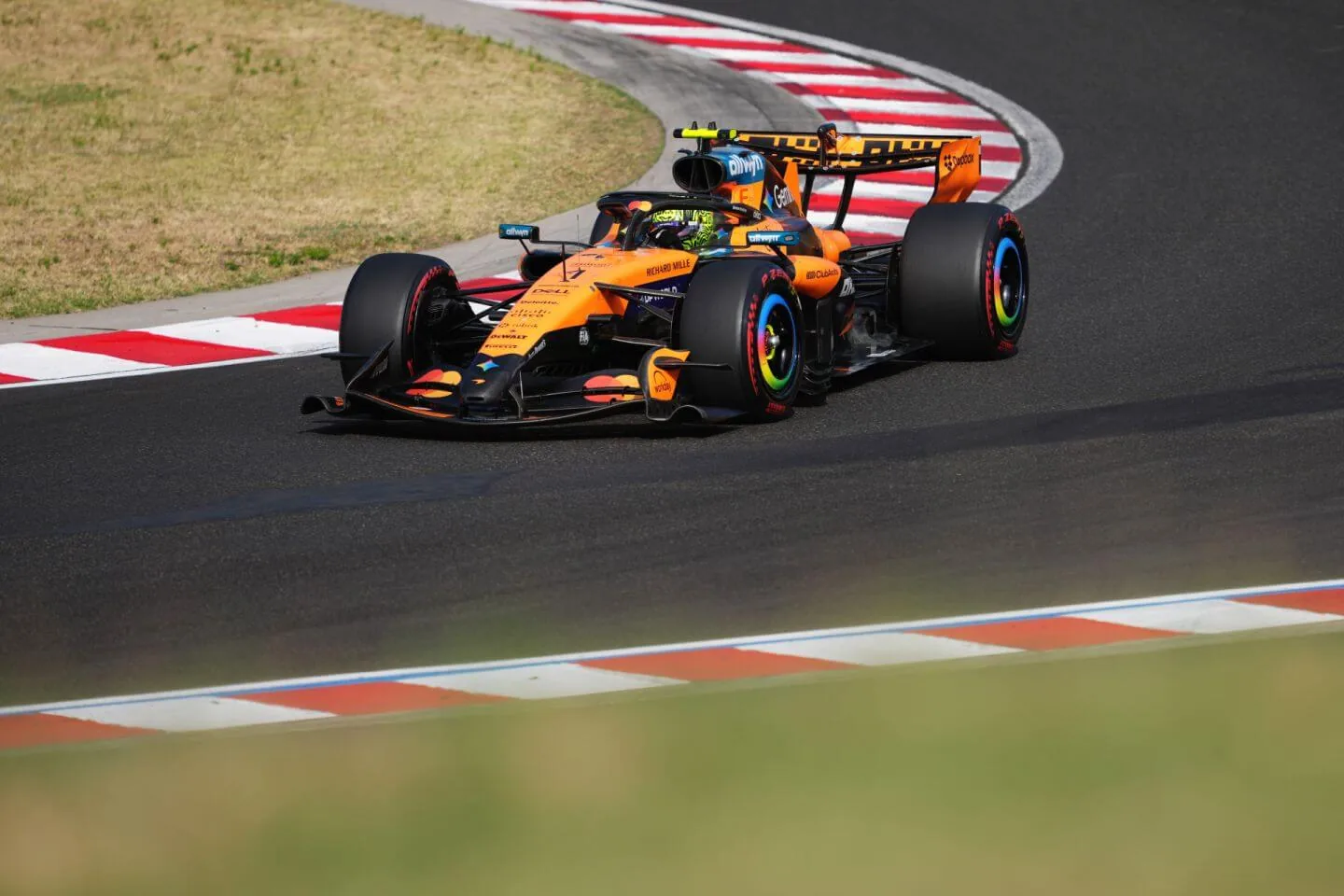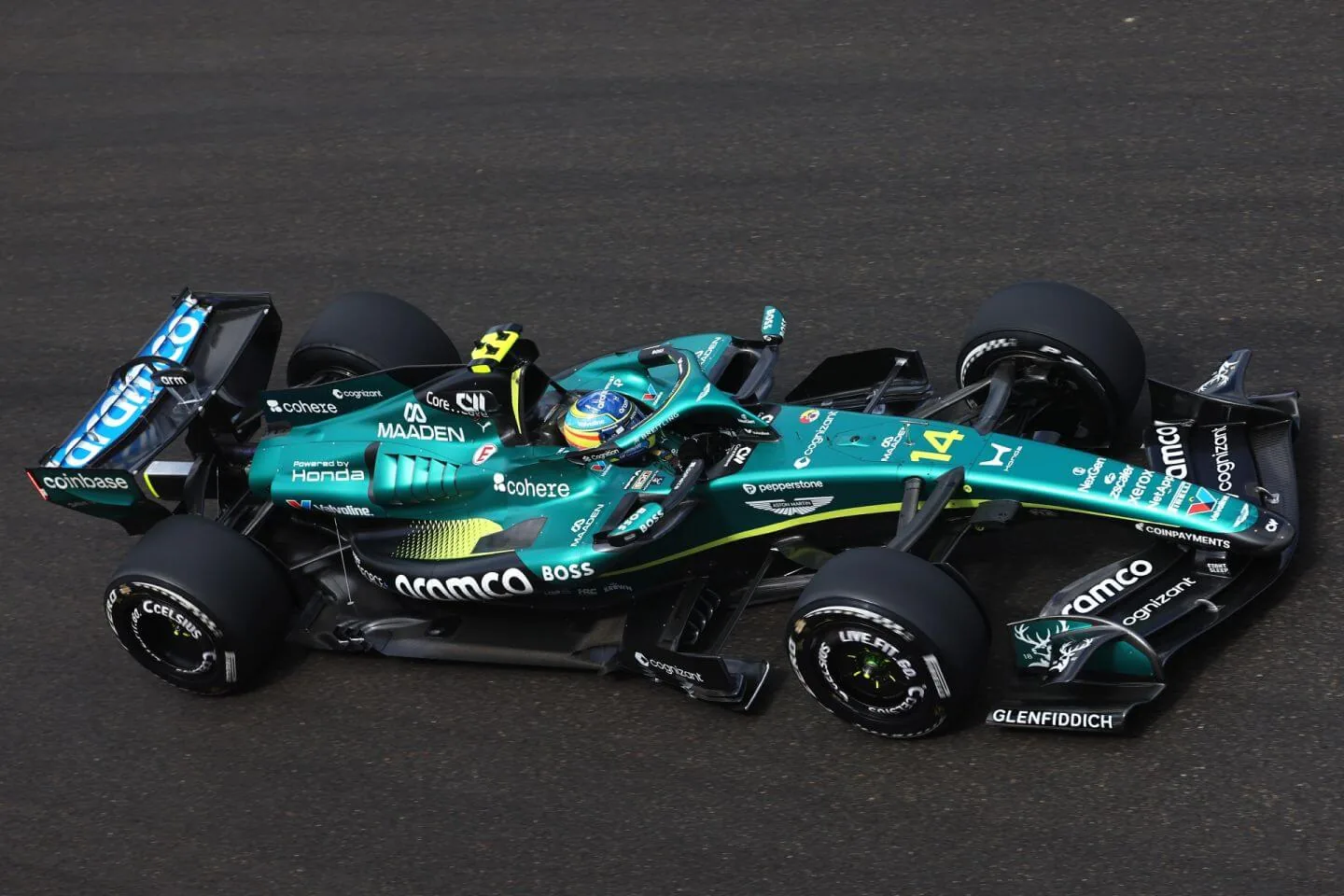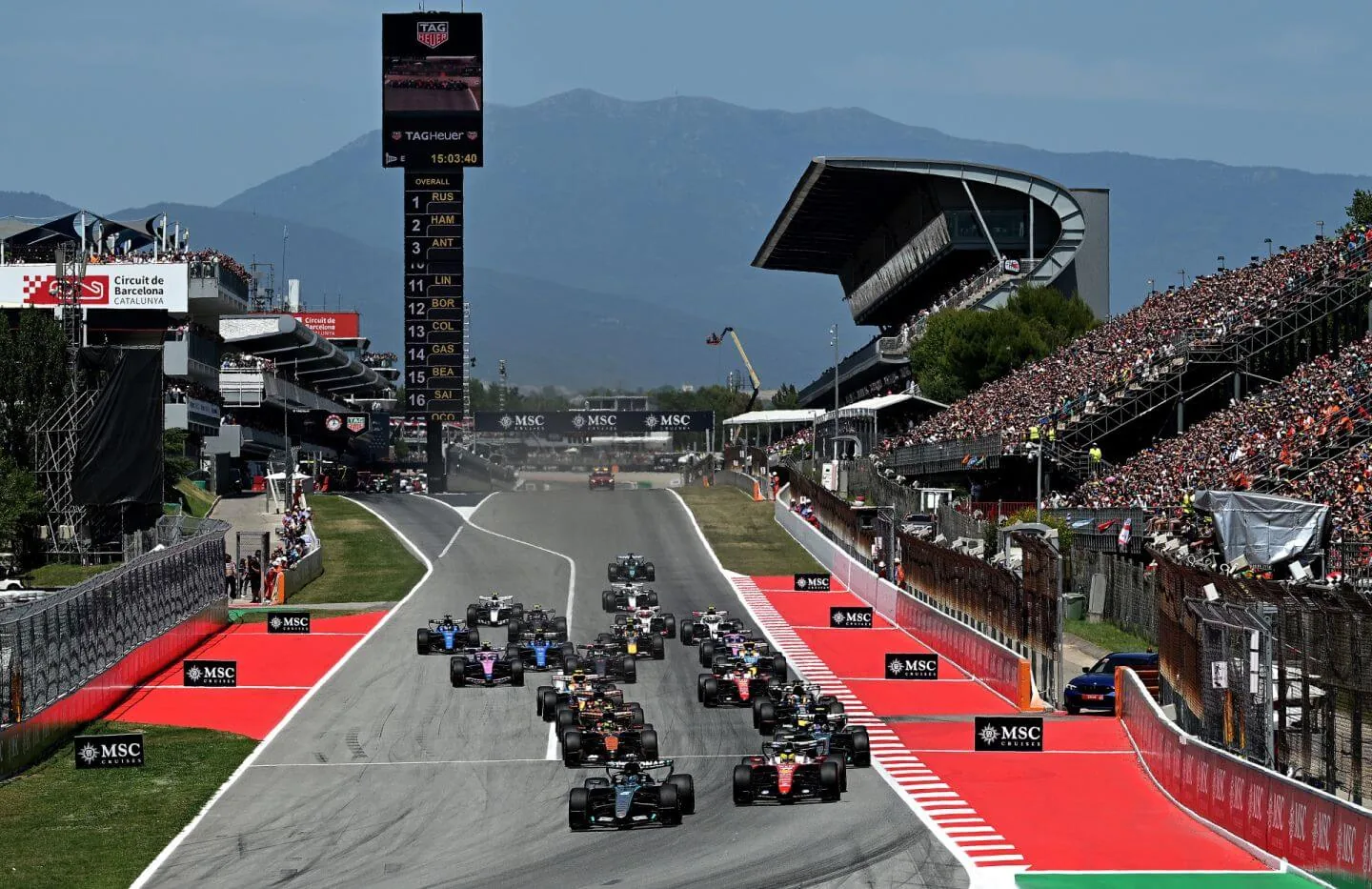








The development of power units in Formula 1 is limited in several ways. To help weaker manufacturers, the ADUO system was introduced for the 2026 season. What is the ADUO system, and what benefits will engine manufacturers gain from it? Under this system, manufacturers will gain greater development opportunities to catch up with the leader.
Read more A modern racetrack may be built in Denmark
There has been a lot of talk this year in the world of Formula 1 about ADUO (Additional Development and Upgrade Opportunities). It is a system detailed in the FIA regulations aimed at helping manufacturers whose engines are the weakest. Under this system, they receive additional development opportunities to level the playing field. It is a more complex solution than the aerodynamic development restrictions with the same goal, which apply to F1 teams based on their positions in the general classification. Power unit development is much more complicated, and a system like ADUO is needed to prevent permanent performance differences in Formula 1. However, ADUO is not a magic solution that will quickly allow covered manufacturers to catch the leader.
In the previous engine regulations introduced in 2014, there was a development token system that completely failed because the FIA did not anticipate that Mercedes would make a significantly better engine than its rivals. The current ADUO system foresees many different scenarios and was refined during the regulation changes at the turn of April and May. The FIA does not talk about it loudly, but the new provisions recently appearing in the regulations will specifically help Honda, which clearly has the worst engine on the grid. The FIA and other engine manufacturers want to help the Japanese company.
So what exactly is the ADUO system, and what impact will it have on development and the balance of power among engine manufacturers this and in the following seasons? You will learn about this in detail from this article. It was prepared by me based on the latest regulatory provisions. The FIA explained it generally on its website, but I included some additional information in this text.
Main assumptions of the ADUO system and deadlines in 2026
In 2026, the FIA will assess the performance level of internal combustion engines after the fifth, eleventh, and eighteenth race weekends. This means assessments after the Canadian GP in mid-May, after the Hungarian GP at the end of July, and after the Mexican GP at the turn of October and November. In subsequent years, this will be assessed every six race weekends. Crucially, only the performance of internal combustion engines is assessed; the efficiency of electric components is not taken into account (their maximum performance is limited). The method of assessment is contained in a technical directive, which unfortunately is not publicly available. The FIA stated it will monitor several factors: input shaft torque (I am not sure if I translated this correctly), RPM, MGU-K power (this is interesting because only the internal combustion engine was supposed to be assessed), considering their impact on lap time.
Very importantly, this system is not an artificial performance equalization like Balance of Performance in other racing series. Through the ADUO system, engine manufacturers receive additional development and testing opportunities, but they must come up with solutions themselves, implement them, and only then reduce their losses. No one will receive penalty ballast, extra fuel, etc.
The ADUO system comes into effect if a given internal combustion engine is more than 2% weaker than the most efficient one. Additional opportunities to introduce new components apply to losses between 2 and 4% and over 4%. Assuming the rumors are true that the currently strongest engine on the grid, Mercedes, has 585 horsepower, one must lose about 12 horsepower to exceed 2% or about 24 horsepower to exceed 4%. These are quite small values, so according to media rumors, Ferrari, Audi, and Honda engines should be covered by the ADUO system. Red Bull Ford is said to have a smaller loss to Mercedes. I hope the FIA will announce which manufacturers fall into specific ranges, so we will know their performance with great accuracy.
Homologation of power units, their regular development, and additional development through ADUO
Each power unit was homologated on March 1, 2026. This means that from that moment, its components must be produced in the same specification, and all cars must receive them in the same configuration. This also applies to fuel and software. Power units are homologated for the period 2026–2030, but development is allowed.
The technical regulations contain a very extensive table dividing the power unit into 84 elements. Each has information on when a new version can be introduced. Some elements can be improved every year, some less frequently, e.g., every two years. There are also those that, once introduced in 2026, cannot be changed until the end of 2030. Among the components, there are also those not subject to these restrictions and can be developed continuously, but these are really minor things that do not significantly affect performance. Overall, looking at this division of elements, 2027 will be key because in the second season of the regulations, most things can be changed. In subsequent years, these options will be more limited. The balance of power among manufacturers we see at the start of the 2027 season may last longer.
Each manufacturer can make changes to their engines to adapt them to regulation changes – the FIA provides additional exceptions for this. This will be the case before the 2027 season, when a different power ratio between the internal combustion engine and electric motor of 60/40 is planned. Modifications related to reliability, safety, costs, or material supply issues are also allowed. As usual in F1: increasing reliability allows the engine to be pushed harder, thus providing more power. Everyone will regularly introduce reliability improvements.
So what does the ADUO system provide?
If during the performance assessment it turns out that a given internal combustion engine falls within the 2-4% loss range from the leader, its manufacturer will be able to modify one homologated component this season and one more in the next season. If a given internal combustion engine loses more than 4%, its manufacturer will be able to modify two homologated components this season and two more in the next season. This is not a revolution because, as mentioned above, the entire power unit consists of 84 components. However, some are not subject to restrictions, and many can be improved before the start of the 2027 season. Manufacturers who receive development opportunities through ADUO must carefully analyze what they want to improve in their engines to gain the most from it.
Read more Oscar Piastri – the emotionless perfect driver who nevertheless showed he is human
Impact of the ADUO system on the budget cap
Engine manufacturers are subject to their own budget caps. I will not provide specific values for all here because the limit varies depending on whether someone has been producing engines in F1 for many years or is new. The number of teams supplied with engines also affects it. There are two basic values in the current regulations: $190 million and $148 million annually, depending on the season in which the manufacturer is in F1.
The financial regulations provide financial benefits for engine manufacturers who lag behind the strongest. If someone loses less than 2%, they gain nothing financially. Then there are brackets every 2% up to over 10%. The previous version of the regulations assumed that if someone loses more than 8%, they would receive an additional $8 million to their budget. The latest update introduced an additional level above 10%, and then the manufacturer will receive $11 million. It is hard not to connect this with Honda, which is the only manufacturer that may lose more than 10% power to the leader.
Less than 2% – no benefits
Between 2 and 4% – budget increase of $3 million
Between 4 and 6% – budget increase of $4.65 million
Between 6 and 8% – budget increase of $6.35 million
Between 8 and 10% – budget increase of $8 million
Over 10% – budget increase of $11 million
The regulations also introduced a completely new, “gamble” option only for the manufacturer losing more than 10% power. They can, in addition to the above amounts, gain an additional $8 million total in the first and second seasons of the regulations. If they decide to take this benefit, their budget will be reduced by a total of $8 million over the next three seasons (2028-2030). This would be extra money for development at the start of the regulations, but in subsequent years, such a manufacturer would have a limited budget.
The ADUO system affects engine testing in factories
Engine manufacturers are also subject to restrictions on the time spent on test benches in their factories. This is expressed in hours of work per year. In 2026, the basic limit is 710 hours. It decreases each subsequent year.
Under ADUO, similarly to money, the following additional annual work hours can be gained.
Less than 2% – no benefits.
Between 2 and 4% – additional 70 hours
Between 4 and 6% – additional 110 hours
Between 6 and 8% – additional 150 hours
Between 8 and 10% – additional 190 hours
Over 10% – additional 230 hours
The value concerning losses over 10% appeared in the latest regulation update.
Additional information about ADUO
The FIA plans to inform engine manufacturers of the measurement results within two weeks after the end of the given period. ADUO benefits come into effect after receiving information from the FIA. Engine manufacturers will be able to introduce improvements to their engines during the first race weekend after the FIA allows them to use ADUO.
ADUO benefits do not accumulate within a given season. For example, if a manufacturer loses more than 2% during the first measurement and receives benefits, and during the next measurement again 2%, they will not receive the same benefits again because they already have them. However, accumulation between seasons is possible. For example, if a manufacturer is in ADUO in 2026 and 2027, they will receive the opportunity to introduce one or two improvements in the following year for the current year. They will be able to introduce improvements granted in the previous and current seasons in 2027.
Summary
The biggest benefits for a manufacturer covered by ADUO are increased budget and test bench time. This will allow broader development work in the factory, which should enable more improvements in the next season. The ability to change one or two components this season, in my opinion, will not have a significant impact. The only exception will be if a manufacturer has a very unsuccessful component and a real gain appears after its improvement. During this season, a lot can be gained through software development, which is open and teams are doing it.
The biggest unknown is the strategy related to the FIA measurement. Theoretically, there may be situations where the strongest engine is deliberately detuned so that rivals do not qualify for ADUO. There may also be a situation where someone deliberately started the season using incomplete power to get ADUO for the rest of the year and after the measurement ends, starts using full, previously hidden performance. Therefore, the method of measurement by the FIA is important, whether it takes this into account.