


Information about the current use of power unit components by all F1 drivers in 2026. The table with component usage will be updated regularly during the 2026 Formula 1 season.

Read more 300 PLN for Ferrari driver podium in Japanese GP – BETFAN bookmaker promotion
In 2026, new V6 Turbo engines with sustainable fuels and efficient electric drive were introduced to Formula 1, which brought significant changes in their division into components and in the available quantities for the entire season. The usage limits for power unit components in the 2026 season are as follows: four internal combustion engines, turbochargers and exhaust systems each, as well as three units of MGU-K, batteries and control electronics. Each driver can also use six sets of auxiliary components. The default limits specified in the regulations are one unit smaller, but in the first year of the new regulations, engine manufacturers have the option to use slightly higher limits. From 2027 onwards, the limits will be lower unless the regulations are changed. Power unit components are assigned to a specific car. If a driver change occurs during the season, the new driver must use the same components as their predecessor.
Usage of F1 engine components in 2026
| Driver | Engine | ICE | TC | EXH | MGU-K | ES | PU-CE | PU-ANC |
|---|---|---|---|---|---|---|---|---|
| Piastri | Mercedes | 1 | 1 | 1 | 1 | 1 | 1 | 1 |
| Norris | Mercedes | 1 | 1 | 1 | 1 | 2 | 2 | 1 |
| Russell | Mercedes | 1 | 1 | 1 | 1 | 2 | 2 | 2 |
| Antonelli | Mercedes | 1 | 1 | 1 | 1 | 1 | 1 | 2 |
| Verstappen | Red Bull Ford | 1 | 1 | 1 | 2 | 1 | 1 | 2 |
| Hadjar | Red Bull Ford | 2 | 2 | 2 | 2 | 3 | 3 | 2 |
| Leclerc | Ferrari | 1 | 1 | 1 | 1 | 1 | 1 | 1 |
| Hamilton | Ferrari | 1 | 1 | 1 | 1 | 1 | 1 | 1 |
| Albon | Mercedes | 1 | 1 | 1 | 1 | 1 | 1 | 1 |
| Sainz | Mercedes | 1 | 1 | 1 | 1 | 2 | 2 | 2 |
| Lindblad | Red Bull Ford | 1 | 1 | 1 | 1 | 1 | 1 | 1 |
| Lawson | Red Bull Ford | 1 | 1 | 2 | 1 | 1 | 1 | 1 |
| Stroll | Honda | 1 | 1 | 1 | 1 | 2 | 2 | 3 |
| Alonso | Honda | 1 | 1 | 1 | 1 | 2 | 2 | 3 |
| Ocon | Ferrari | 1 | 1 | 1 | 1 | 1 | 1 | 2 |
| Bearman | Ferrari | 1 | 1 | 1 | 1 | 1 | 1 | 1 |
| Hulkenberg | Audi | 1 | 1 | 1 | 1 | 1 | 1 | 1 |
| Bortoleto | Audi | 1 | 1 | 1 | 1 | 1 | 1 | 2 |
| Gasly | Mercedes | 1 | 1 | 1 | 1 | 1 | 1 | 1 |
| Colapinto | Mercedes | 1 | 1 | 1 | 1 | 1 | 1 | 1 |
| Perez | Ferrari | 1 | 1 | 1 | 1 | 1 | 1 | 1 |
| Bottas | Ferrari | 1 | 1 | 1 | 1 | 1 | 2 | 2 |
| Table updated after second practice before Japanese GP |
Bold number – last allowed component, Red number – extra component
Table legend: ICE – internal combustion engine, TC – turbocharger, EXH – exhaust system, MGU-K – kinetic energy recovery system, ES – battery, PU-CE – power unit control electronics, PU-ANC – power unit auxiliary components.
We have no knowledge of the condition of individual components. Teams can use a component almost freely after its first use. The fact that a driver receives, for example, a new internal combustion engine does not automatically mean that the previous one is no longer usable. Standard practice is to use older components during Friday practice sessions and install newer parts on Saturday and Sunday.
Penalties for extra power unit components in 2026
The introduction of new power units did not change the penalty system for using extra power unit components. Using the first extra component from a given category means a 10-place grid penalty, and subsequent extra components from the same category result in a 5-position penalty on the grid.
If two extra components from the same category are installed in a given car during a race weekend (e.g., batteries number 4 and 5), then in the next weekend the driver can use only the last of these components (in this case unit number 5) without further penalties. If they use number 4 again, they will receive another grid penalty for it. This is done intentionally to prevent accumulating multiple units of a given component in one weekend and accepting penalties “in bulk”.
FIA considers a component as used if the car equipped with it leaves the pit lane. You don’t even need to complete a full lap. If a driver change occurs during the season, the new driver takes over the existing components because their usage is assigned to the car. FIA applies special seals to each new component and additional seals after the end of the race weekend to ensure that teams do not modify components in factories.
Read more April races in Bahrain and Saudi Arabia postponed
I published this text after two race weekends. It is clear at the beginning of the season that teams are initially having the biggest problems with batteries and electrical components in general. The limits for these components are low, so we can expect many extra components during the season. The durability of internal combustion engines, turbochargers and exhaust systems is much better, as this is technology largely known from previous years. A possible shortening of the season to 22 race weekends would help engine manufacturers limit component usage. According to unofficial information that has emerged, all manufacturers assume in their schedules the introduction of a larger number of components and acceptance of at least one grid penalty, which is related to the desire to avoid the risk of failures during races and development plans.
Power unit development and ADUO system in 2026
Each manufacturer had to provide FIA with a complete specification of their power unit by March 1, 2026, which was homologated at that time. All teams using a given engine should receive identical components. Power units are homologated for the period 2026 – 2030, but their development is allowed. The technical regulations contain a very extensive table dividing the power unit into several dozen components. For each one, there is information about when a new version can be introduced. There are components that can be improved every year, and there are those that can be improved less frequently, for example every two years. Overall, looking at this list, 2027 will be key because in the second season of the regulations, most things can be changed, and in subsequent years these options will be more limited.
FIA will examine the performance of internal combustion engines after 6, 12 and 18 races in each season. Only internal combustion engines will be tested, not electrical components. If a given internal combustion engine is 2% weaker than the best in the field, the manufacturer will receive the opportunity for additional development during the season and the introduction of improved components (additional homologation). If it is 4% or more weaker, the development benefits will be doubled. This is a key matter because it will allow weaker manufacturers to make up at least part of their losses during the season when the leader will not have the opportunity to counter with their improvements.
Apart from the above rules, manufacturers can modify their engines to adapt them to changes in technical regulations. Modifications related to reliability, safety, costs or material supply problems are also allowed. As is usually the case in F1: increasing reliability allows the engine to be loaded more heavily, thus providing more power. Everyone will regularly introduce reliability improvements.
In the table dividing the power unit into components, there are 84 items, and about 30 smaller ones are not subject to the above restrictions, so manufacturers can introduce their improvements on an ongoing basis, but their impact on overall performance will be negligible.
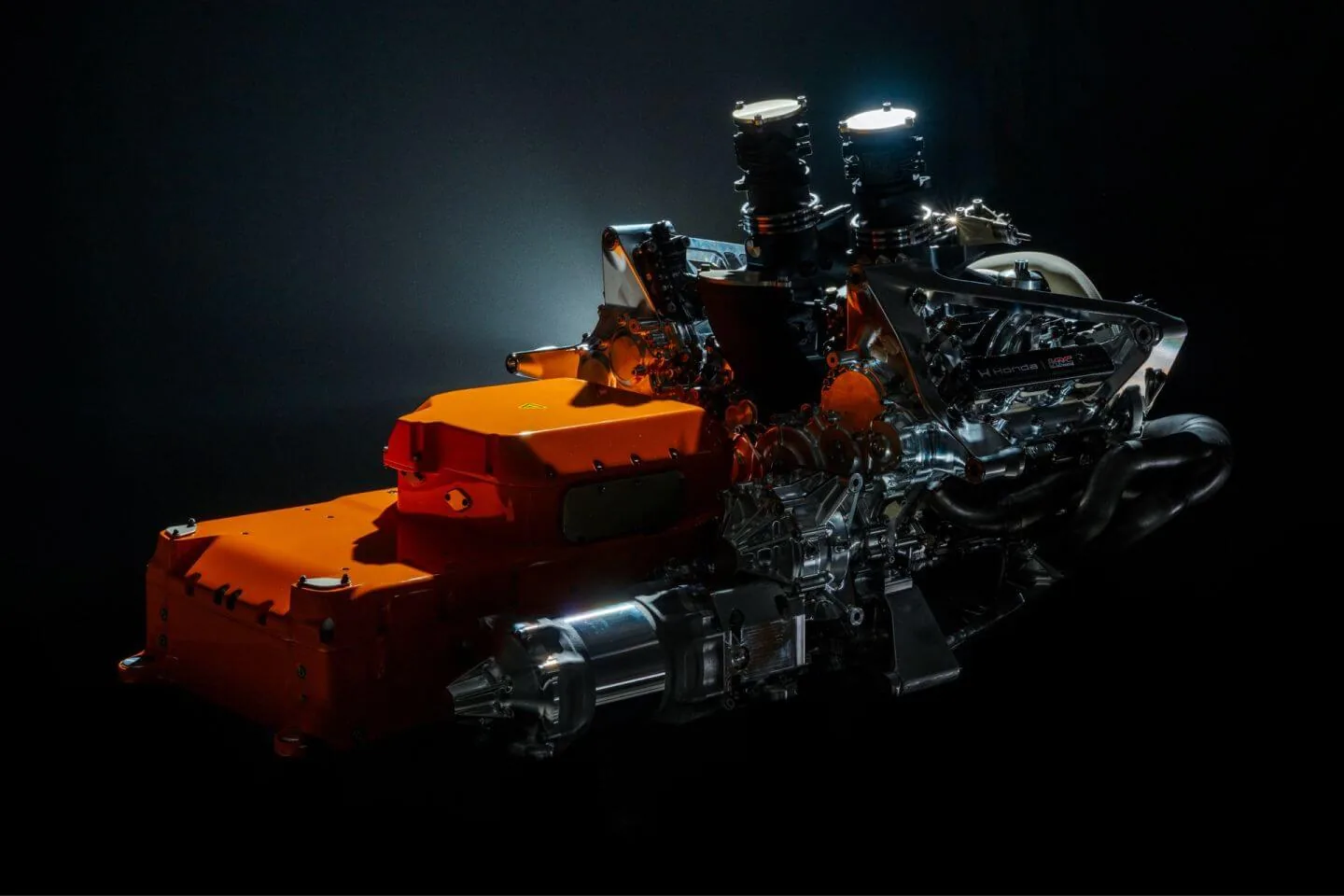
P.S. The title image of this post shows the Honda RA626H power unit for the 2026 season.
The most important information about the 2026 season can be found in a special category of articles, which can be seen under this link.
Read more The art of the pit stop and the impact of seconds in the pits on the fate of the title