


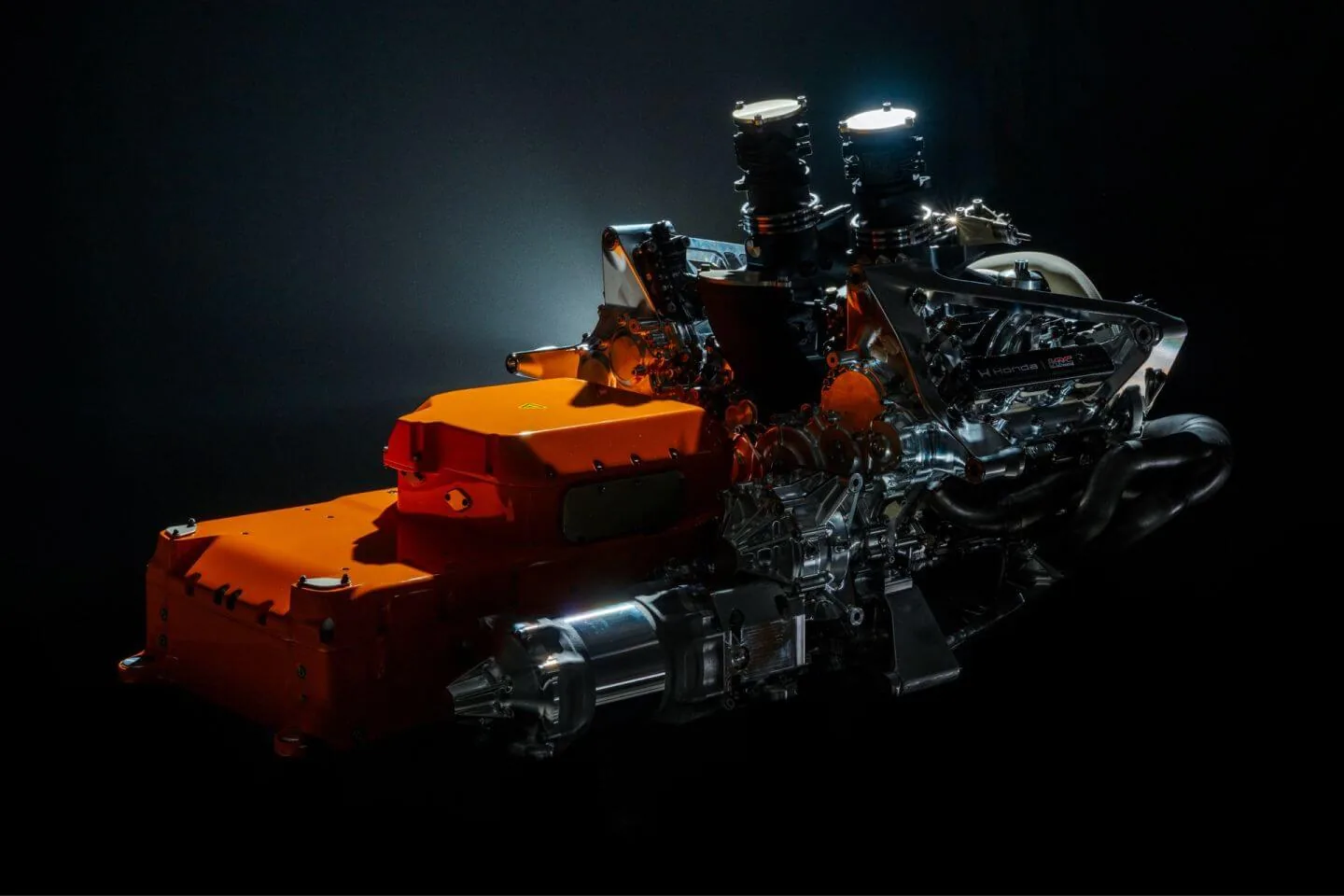
In April, certain regulatory changes should be approved to eliminate the biggest problems with the new power units in F1. However, let’s not expect significant modifications, as universal agreement will be difficult to achieve. In the text, I discuss four ideas on how to modify the current engine regulations in F1 in more detail.
Read more GianPiero Lambiase will move to McLaren in 2028
Plans for April meetings and what regulatory changes we can expect
In April, a total of four meetings will be held regarding proposed regulatory changes in Formula 1. To start, on April 9, a meeting of technical directors (or their representatives) of the teams and engine manufacturers with the FIA took place. The Federation released a short press release after it. The main topic of discussion was supposed to be issues related to insufficient electrical energy, which causes further problems. The FIA wrote that the first races this season were interesting, but there is a need to modify the regulations regarding energy management. There is talk of a “natural evolution of the regulations,” which is something that was suggested many months ago, long before the start of the season.
A meeting regarding modifications to the sporting regulations is planned for April 15, and another meeting of team technical experts with the FIA for April 16. Proposals for modifications to both regulations will be discussed. A decisive meeting of the F1 Commission is planned for April 20, which will decide on possible regulatory changes, which will later be approved by the FIA World Motor Sport Council so that they come into force as early as the Miami GP at the beginning of May (if possible).
According to media reports, revolutionary modifications to the rules should not be expected, but only minor changes to both regulations, which will mainly concern safety as well as qualifying. Regarding safety, it’s about limiting large differences in speed between cars, as this creates dangerous situations – Bearman’s crash in the Japanese GP. The second main topic is qualifying sessions, during which there is often a lack of energy for the entire length of the straights, which looks bad from the perspective of fans and drivers. Modifications giving drivers more influence over power unit energy management are also possible.
Possible changes regarding the performance of internal combustion engines would have to wait for the 2027 season; it seems that there is currently no support for such modifications. On the other hand, engine manufacturers need a lot of time to redesign their engines for next year, so they cannot wait long with such ideas. Therefore, if there were to be major changes for 2027, they must be approved now.
Four ideas on how to modify the current engine regulations in F1
Limiting maximum electrical power
The simplest change that can be introduced in the current regulations is limiting the maximum power coming from the electric motor. Currently, it is 350 kW (475 horsepower). As udowodniłem w moim wcześniejszym artykule, with a full battery, it realistically lasts for a maximum of 13-14 seconds of driving at full power if the driver has exactly 350 kW from the electric motor at their disposal. If this power were limited to, for example, 250 kW, a full battery would last for a longer distance and energy would not run out at the ends of long straights, except in extreme cases like Baku or Las Vegas. During testing in Bahrain, some teams, at the request of the FIA, tested driving with a maximum power of 250 kW. Such a regulatory change brings two problems. Lap times will drop by one, maybe two seconds per lap. Energy proportions will change; the FIA and engine manufacturers will no longer be able to talk about a 50/50 split, and it will become more like 65/35.
In my personal opinion, this is a simple modification of the regulations that will improve competition in qualifying. Lap times will drop by 1-2 seconds, but cars will accelerate until the end of the straights, there will be no drop in speed at the end of the straights and no deterioration of the cars’ sound. If it were up to me, on tracks where a lot of energy can be recovered, I would leave the current value of 350 kW and reduce it on “worse” tracks, matching it to the track configuration, similar to how the FIA does now with energy recovery limits. In this way, in qualifying, we wouldn’t have the poorly perceived running out of energy on the straights. I have seen simulations that the FIA could choose values from 200 kW to 350 kW. From a fan’s perspective, such differences between tracks would be unnoticeable, similar to tire selection, where Pirelli has five compounds but nominates three that are named the same.
I have seen suggestions that an interesting idea could be to maintain power at 350 kW but limit its use much earlier than currently (now it is cut off after exceeding 335 km/h). In my opinion, such a change would have significant negative effects because top speeds would decrease. The driver would be at full throttle, but his speed would start to drop after just a few hundred meters of the straight. It would look bad from the fans’ perspective.
Increasing battery size
In Formula 1, batteries with a capacity of 4 MJ are currently used. In the perspective of the following year, it would be possible to increase it. Thanks to this, on tracks where energy recovery is easy, drivers could have more energy to use on long straights. However, there would be significant side effects. A larger battery means an increase in the weight of the entire car and would also require a redesign of the power unit. Most importantly, the additional capacity would not be used often because there are not many places on F1 tracks where more than 4 MJ of energy can be recovered in a short section while not being used but stored in the battery. In my opinion, such a change will not happen.
Changing energy recovery limits
Changed energy recovery rules would be easy to introduce this season. Two very different proposals are emerging in the media. The first assumes increasing the energy recovery limit during “super clipping” from the current 250 kW to 350 kW. “Super clipping” is when the driver is at full throttle and part of the internal combustion engine’s power (the values I provided) charges the battery. Drivers do this at the end of selected straights or in selected corners. Increasing the limit will mean that the need for such driving will be reduced because energy recovery will be faster. In theory, it should also limit or eliminate “lift and coast,” i.e., drivers letting off the throttle. Currently, after letting off the throttle, energy recovery is at 350 kW. Drivers could drive at full throttle all the time, speed would drop during battery charging during “super clipping,” but the engine sound would be slightly better, and drivers would spend slightly less time charging the battery.
Read more Gianpiero Lambiase is set to move to McLaren
The second option, which I personally don’t like at all and whose introduction in my opinion will worsen racing, would be the FIA setting lower energy recovery limits per lap. This was already done during qualifying at the Suzuka circuit, when the maximum limit was reduced from 9 MJ to 8 MJ. The regulations allow the FIA to freely determine this value from 5 MJ to 9 MJ. Giving lower limits would mean that all energy would be easily recovered during normal driving, i.e., braking and in corners that are not taken at full throttle. However, such a regulatory change would mean that drivers would have much less energy at their disposal, so it would run out very quickly on the straights. In my opinion, even reducing the electrical power from 350 kW to, for example, 200 kW would not help in such a case. The pace of the cars would be much worse, and the speed drops on the straights would be greater.
Increasing the power of internal combustion engines
Current internal combustion engines generate 550-600 horsepower (specific numbers have not been given so far), which is significantly less than in previous regulations (close to 850-900 horsepower) for several reasons. Besides many restrictions, the main reason is the limitation of fuel availability. In 2025, F1 cars burned 100-110 kg of fuel per race; from this year, it is 70-80 kg (the value depends on the energy content of the fuel used). The fuel flow has decreased, which from this year is not measured in kg/h but limited to 3000MJ/h (to be able to compare fuels of different quality), so it is difficult to compare directly.
The FIA could increase fuel flow limits. This cannot be done this season because internal combustion engines are adapted to limits set several years ago. This would have to be a change for the 2027 season. Manufacturers would have to rebuild their internal combustion engines, and cars would have to have tanks holding several / a dozen additional kilograms of fuel. Such a change would increase the power of internal combustion engines, and the power proportions would change in favor of the internal combustion engine. If cars had more power coming from the internal combustion engine, running out of electrical power on the straights would not be as severe. It would also be easier to recover energy while driving in corners.
In my opinion, such a change will not happen because it would have a large impact on the hierarchy and there will be no agreement from engine manufacturers. Current internal combustion engines have a specific efficiency using the same dose of fuel. Theoretically, when this fuel dose increases, everyone will gain proportional power values, and thus the differences in efficiency will increase. Besides, it would require changes to internal combustion engines, and enlarging fuel tanks could lead to an increase in the length and weight of the cars.
This type of regulatory modification is an emergency exit if other ideas fail and panic arises in F1 due to problems with car performance / fan outflow.
Safety changes will be important for F1. The FIA can introduce this even with team opposition. The goal is to avoid accidents like the one Bearman had during the Japanese GP, when he was driving about 50 km/h faster than Colapinto. The driver behind must be better warned in such cases. A simple way will be a change regarding the rear lights so that they flash more intensely.
The second important issue is simplifying the regulations and making sure that drivers have more influence on the use of the power unit. At the beginning of the year, there were many problems with the software, which mostly controls when and how much energy to give to the drive. It happened that sometimes it gave more or less than the driver expected because he had driven specific corners slightly differently before. This is a very complicated issue because each engine’s software is different and is also constantly being developed. Changes in this regard are possible.
Summary
If anyone expects a revolution, a reversal of regulatory changes, and a return to the kind of competition in F1 seen in previous years, they will not see it. Personally, I expect safety and software changes 100%, because these are important and easy to implement. I also expect changes regarding energy use in qualifying, because that is the main problem with the current regulations; drivers do not drive on the limit there as they used to, and these sessions have lost much of their charm. This can be done in various ways; I will not be surprised if any modifications only partially solve the problems. I do not expect major changes for the 2027 season. They are possible in the middle of this year if the situation in F1 goes in the wrong direction.
Read more Assumptions and mathematics behind current F1 engines